Moroccan skincare · Complete guide · Updated October 2026
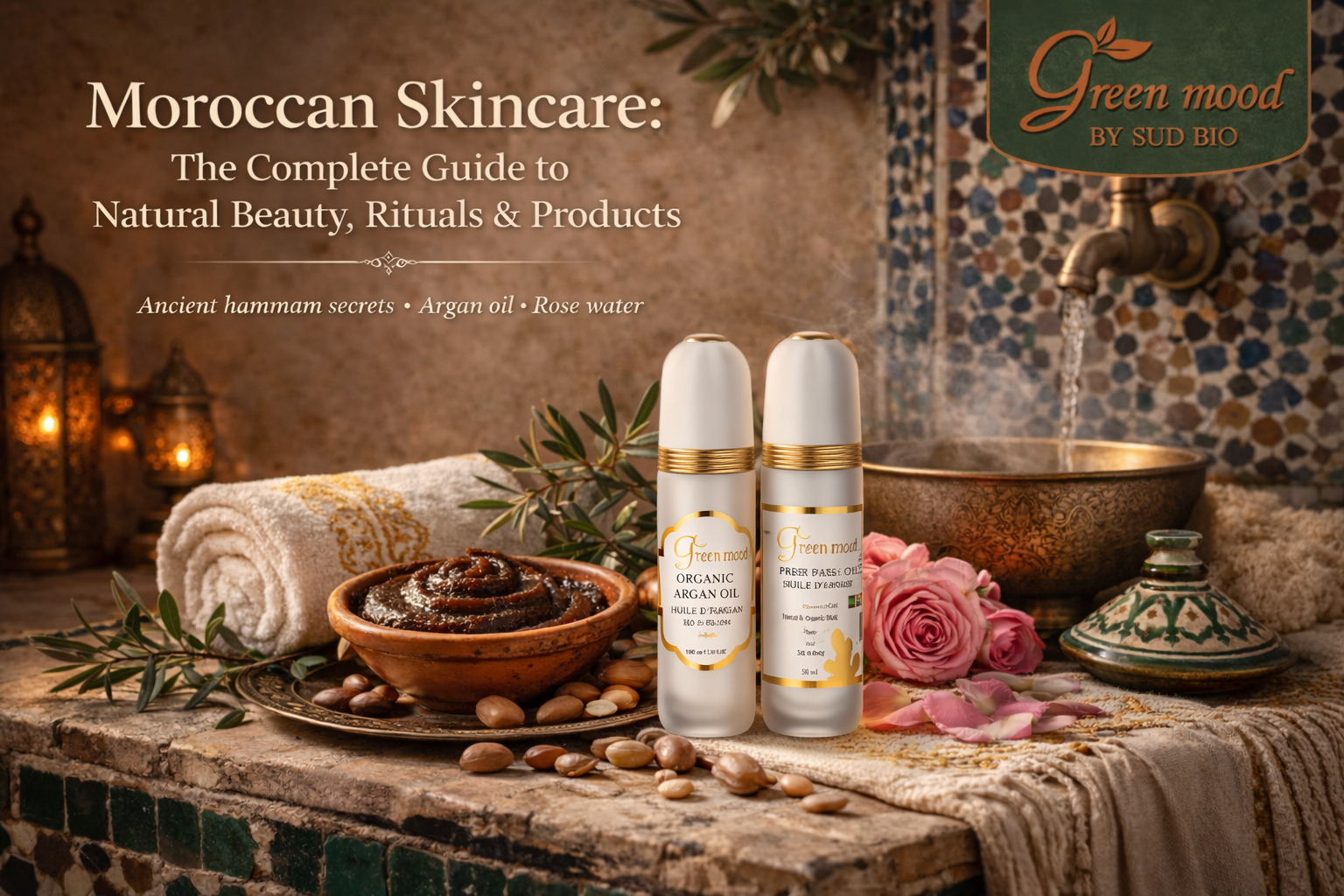
Moroccan Skincare: The Complete Guide to Natural Beauty, Rituals & Products
What Moroccan skin care is, the ingredients and rituals behind it, how to build a routine for face and body, and how to choose authentic products.
Moroccan skincare is a way of caring for the skin built on a short list of natural ingredients, argan oil, prickly pear seed oil, rose water, ghassoul clay and black soap among them, and on rituals practised regularly, the weekly hammam above all. It favours a few steps done well over long routines.
In Morocco, skin care is not rushed. It is intentional and sensory, passed from one generation to the next at home and in the hammam, and it rests on a simple idea: care for the skin with what nature provides, and give it time.
This guide brings together everything you need to understand Moroccan skincare: its philosophy, its ingredients, the face and body rituals, a routine you can follow at home, and how to choose products. Green Mood makes its products in Morocco. If you are here to shop rather than read, go straight to our Moroccan skincare products.
QUICK ANSWER
Moroccan skincare is a simple, ritual-based approach to skin care that uses natural ingredients from Morocco. Day to day it means three steps: cleanse gently, tone with rose water, nourish with argan or prickly pear seed oil. Once a week it adds the hammam: steam, black soap and exfoliation with a kessa glove, followed by a clay mask and oil.
What Is Moroccan Skincare?
Moroccan skincare is a holistic approach to beauty that combines three things:
Natural ingredients from the Moroccan land, starting with argan oil and prickly pear seed oil, then rose water, ghassoul clay, black soap, saffron and nila.
Traditional rituals, of which the hammam is the best known: a weekly session of steam, cleansing and exfoliation.
A short, consistent routine in which each product has a clear role.
Unlike many modern routines that rely on layering several formulas, Moroccan skin care focuses on fewer steps, high-quality ingredients and methods refined over generations. At its core, it is about working with the skin, not against it.
Is Moroccan Skincare Good?
Yes, for what it sets out to do. Moroccan skincare is good at three things: keeping skin comfortable and supple with plant oils, smoothing texture through regular exfoliation, and doing both with very few products. It is a cosmetic tradition, not a medical treatment, and it does not replace sunscreen.
What it does well
What it does not do
Softens dry, tight skin with argan and prickly pear seed oil
Treat acne, eczema or any skin condition
Smooths rough texture with the hammam, the kessa glove and ghassoul
Erase wrinkles or dark spots
Refreshes and tones gently with rose water
Protect the skin from the sun
Keeps a routine short and easy to maintain
Deliver overnight results: its logic is regularity
Two cautions apply. Quality varies widely, so the label matters, and the section on choosing products covers what to check. And the kessa glove is a firm exfoliation for the body: it is not meant for the face or for irritated or very sensitive skin.
The Philosophy Behind Moroccan Beauty and Skincare Rituals
Moroccan skincare is built on three essential pillars. Every Moroccan beauty ritual, from the weekly hammam to the evening oil, follows the same order.
PurificationDeep cleansing prepares the skin.
NourishmentNatural oils restore softness and comfort.
BalanceGentle care helps soothe and rebalance.
1. Purification
The skin must first be cleansed deeply. This is where the hammam plays its central role: through heat, steam and exfoliation, the skin is cleared of dead cells and prepared to receive care. The full sequence is set out in our Moroccan hammam routine.
2. Nourishment
Once the skin is clean, it takes up care more readily. Natural oils such as argan oil and prickly pear seed oil are applied to restore comfort, keep the skin supple and support its natural barrier.
3. Balance
Moroccan skincare avoids extremes. Floral waters, rose water first among them, soothe, tone and rebalance the skin between cleansing and oil. To learn more, read our article on the benefits of rose water for the face.
Moroccan Face Care: Simplicity That Works
Facial care in the Moroccan tradition is not about complexity. It is about choosing the right ingredients and applying them consistently. Four elements cover it.
Gentle cleansing
The skin is cleansed without being stripped. Mild cleansers and, once a week, a ghassoul clay mask keep it clean while leaving it comfortable.
Hydration and toning
Rose water is one of the most widely used elements in Moroccan face care. Applied after cleansing, it refreshes the skin and prepares it for oils and treatments. See how it compares with a classic toner in rose water vs toner.
Targeted nourishment
Different oils serve different needs. Argan oil is the everyday choice for hydration and protection: our guide to argan oil for face covers it in full. Prickly pear seed oil is the richer option for radiance and for mature skin: see the benefits of prickly pear seed oil.
Occasional treatments
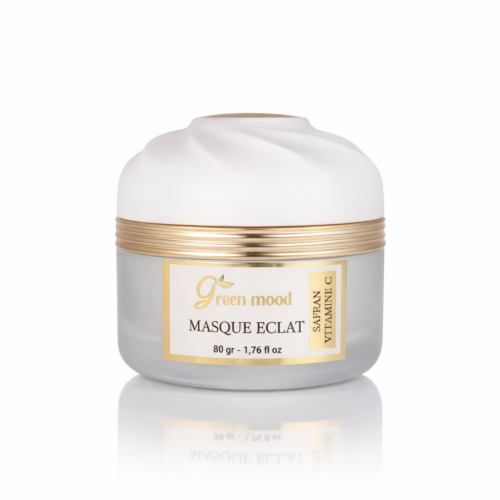
Face masks made from natural clays and botanical ingredients are used weekly to clarify, brighten the look of the complexion and refine skin texture. Ghassoul, saffron and nila are the three traditional bases.
Does Moroccan nila work?
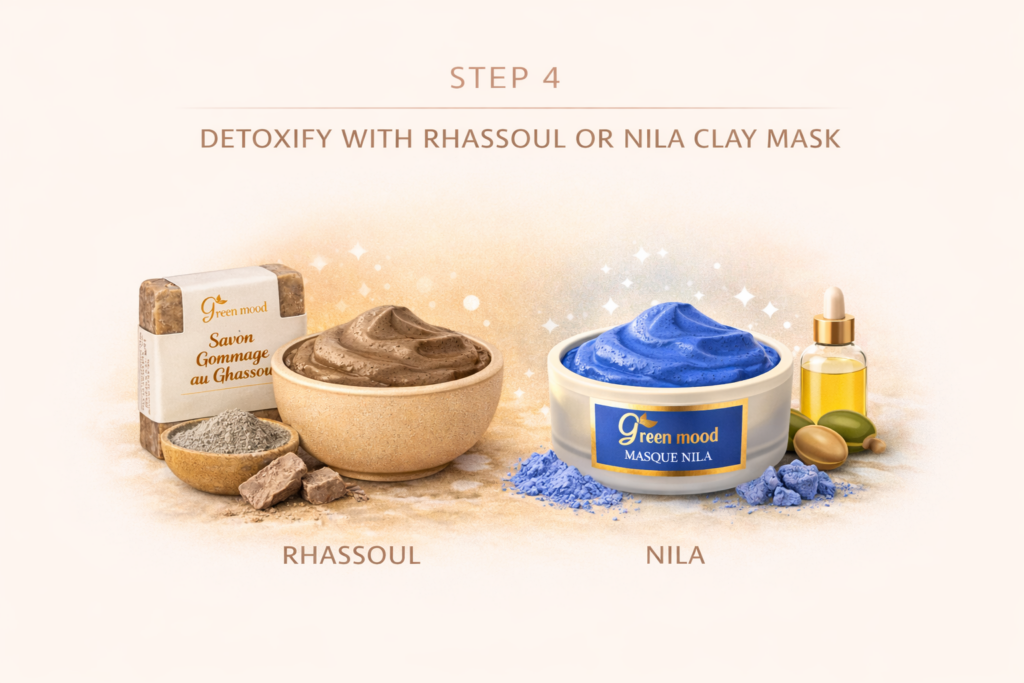
Nila is a blue powder obtained from the indigo plant, used in Morocco in masks for the face and body. It leaves the skin looking fresher and more even after rinsing, which is why it has its place before an occasion. It is a traditional cosmetic rather than a studied active, so expect a brighter look, not a change in pigmentation. Green Mood’s Nila Mask is the ready-to-use version.
Body care is where Moroccan skincare reveals its depth. It is not only about hydration: it is about renewal through ritual, with time set aside for the body and for the mind.
Moroccan Hammam: The Heart of the Ritual
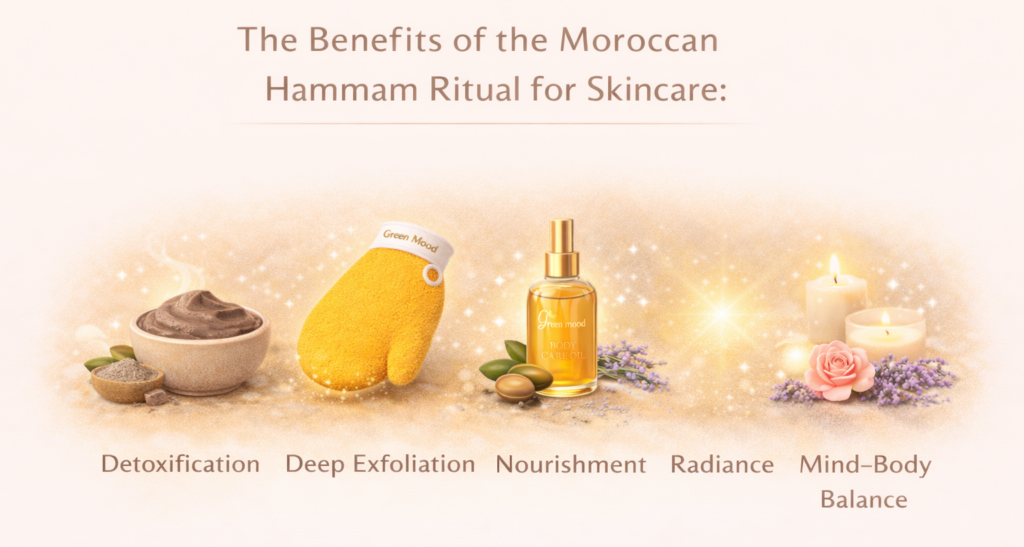
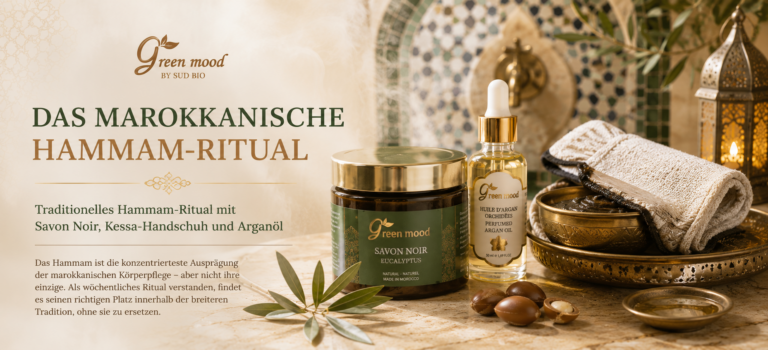
The Moroccan hammam is not just a way of washing. It is a complete skin renewal ritual in four movements.
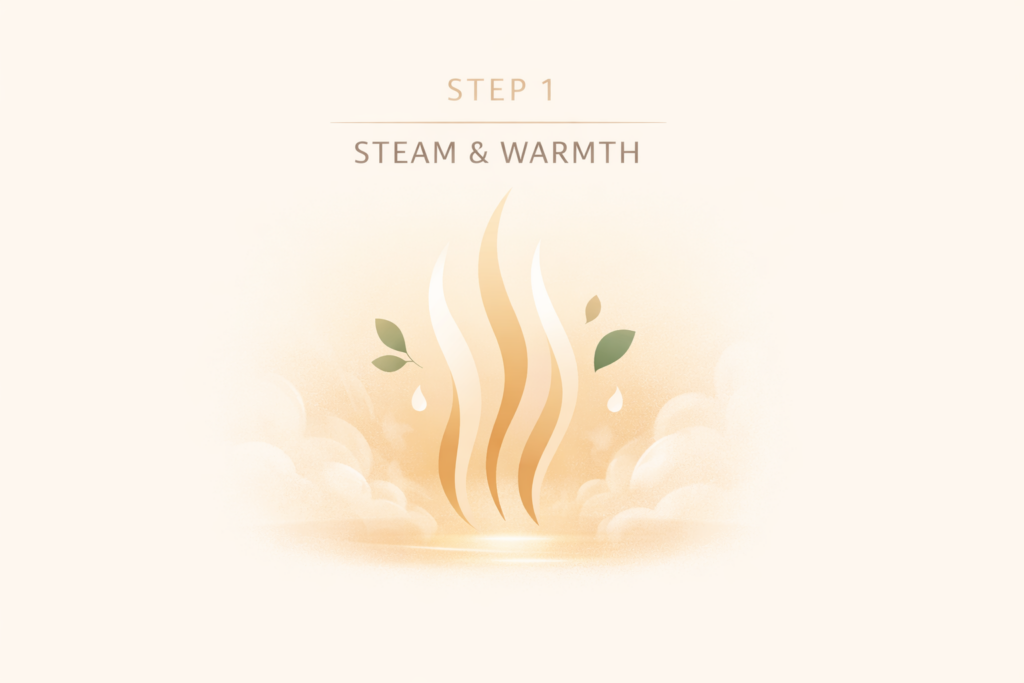
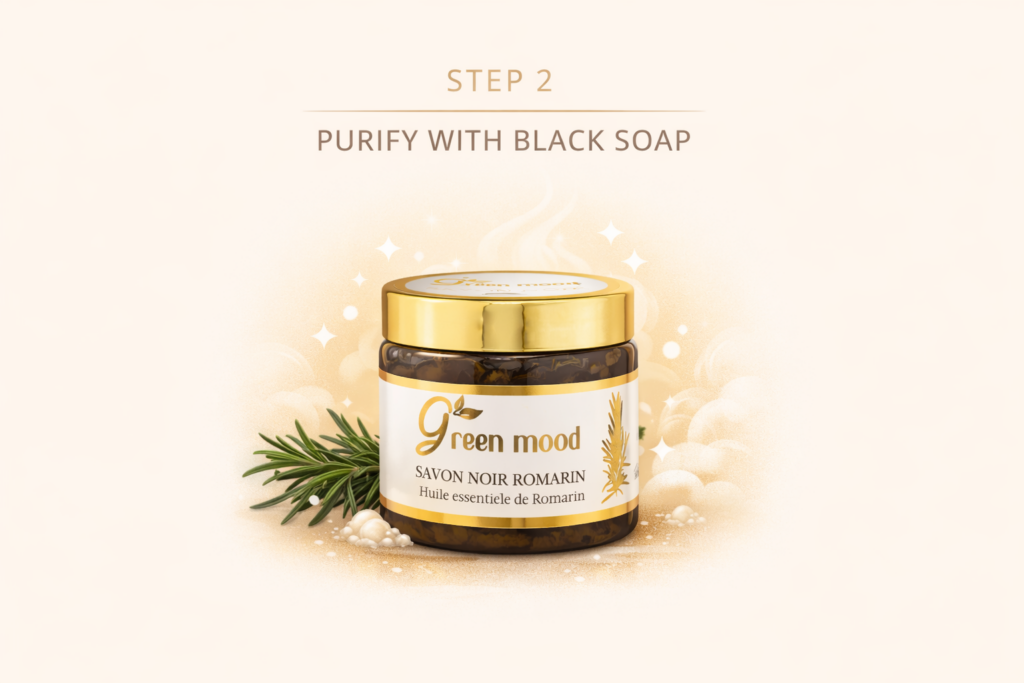
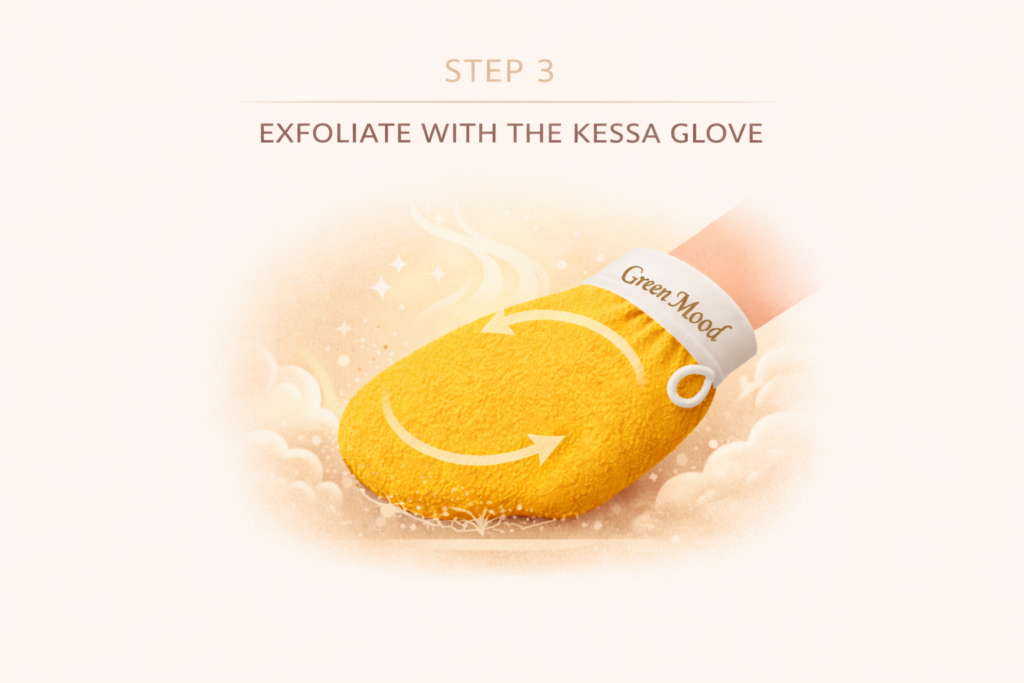
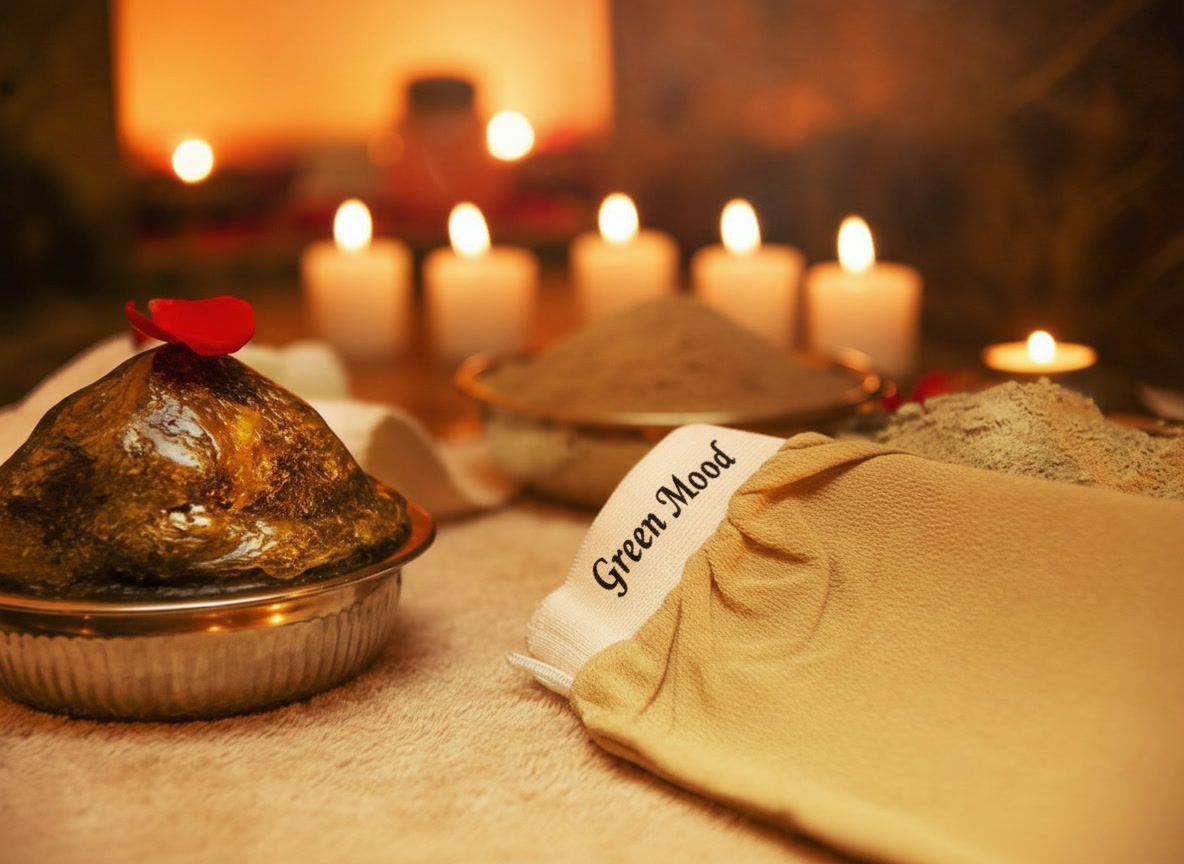
1. Steam. Ten to fifteen minutes of warmth soften the skin.2. Black soap. The olive-based paste is spread over the body and left for a few minutes.3. Kessa glove. Firm, long strokes lift dead skin.4. Rinse and nourish. A clay mask if wanted, then oil on skin that is still warm.
The combination of steam, exfoliation and natural products gives a smoothness that a daily shower does not. For the complete method, read the Moroccan hammam ritual, and for everything that comes between two sessions, our guide to Moroccan body care.
Why the Hammam Is So Effective
It removes the build-up of dead skin that makes the body feel rough
It improves skin texture from the first session
It leaves the skin ready for oils and creams
It is an hour of warmth and calm, which is half the point
Bringing the Hammam Home
The ritual adapts easily to a bathroom: a hot shower or bath for the steam, black soap, a kessa glove and an oil are enough. Once a week is the usual rhythm.
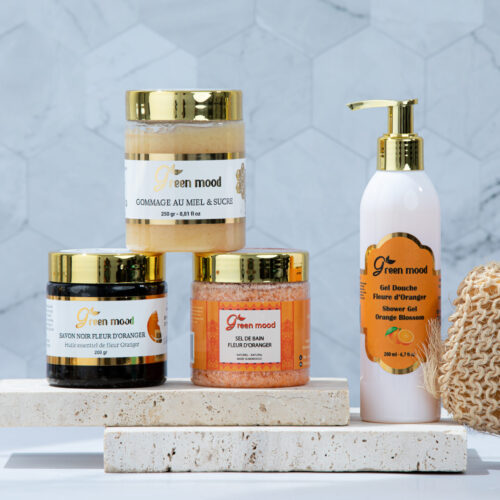
Discover the full Moroccan hammam ritual: cleanse, exfoliate and nourish your skin with traditional care. Explore Hammam Products
Moroccan skincare stands out because of its ingredients. These are not trends: they have been part of daily life in Morocco for generations, and each one has a precise use.
Ingredient
What it is
Used for
In the routine
Argan oil
Oil pressed from the kernels of the argan tree of south-western Morocco
Nourishing face, body and hair
Daily, as the last step
Prickly pear seed oil
Oil pressed from the small seeds of the Barbary fig
Dry or mature skin, eye contour
Evening, a few drops
Rose water
Distilled water of Damask rose petals
Toning and refreshing
After cleansing, morning and evening
Ghassoul (rhassoul)
Mineral clay from the Atlas Mountains
Cleansing mask for face, body and hair
Weekly
Black soap (savon beldi)
Soft soap paste made from olives
Preparing the skin for exfoliation
Weekly, in the hammam
Nila
Blue powder from the indigo plant
Masks for a fresher-looking complexion
Weekly or occasionally
Saffron
Dried stigmas of the saffron crocus, grown around Taliouine
Radiance care
In creams and masks
Aker fassi
Red powder of poppy petals and pomegranate bark
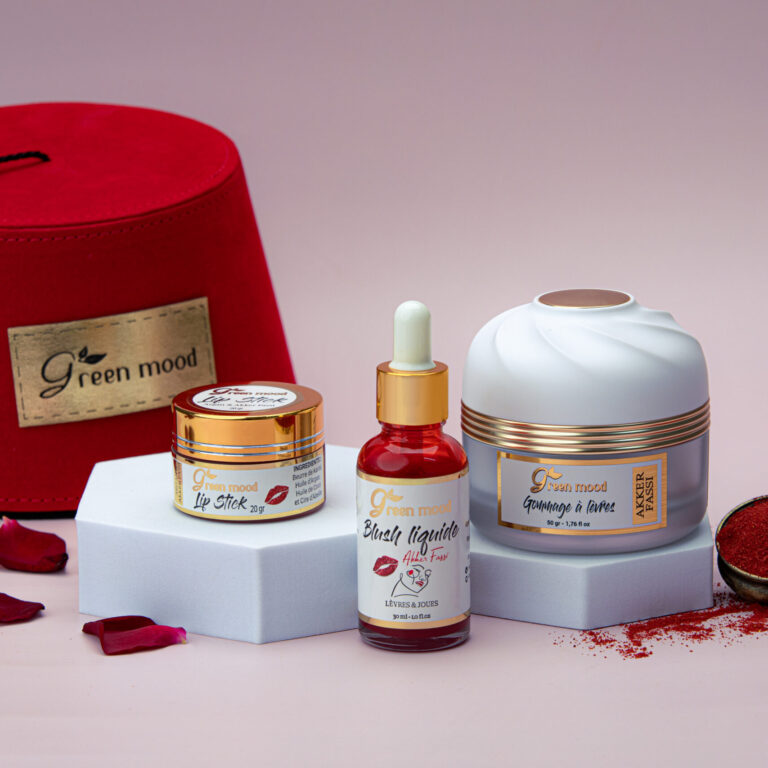
Natural tint for lips and cheeks
As make-up
Argan Oil: The Golden Standard
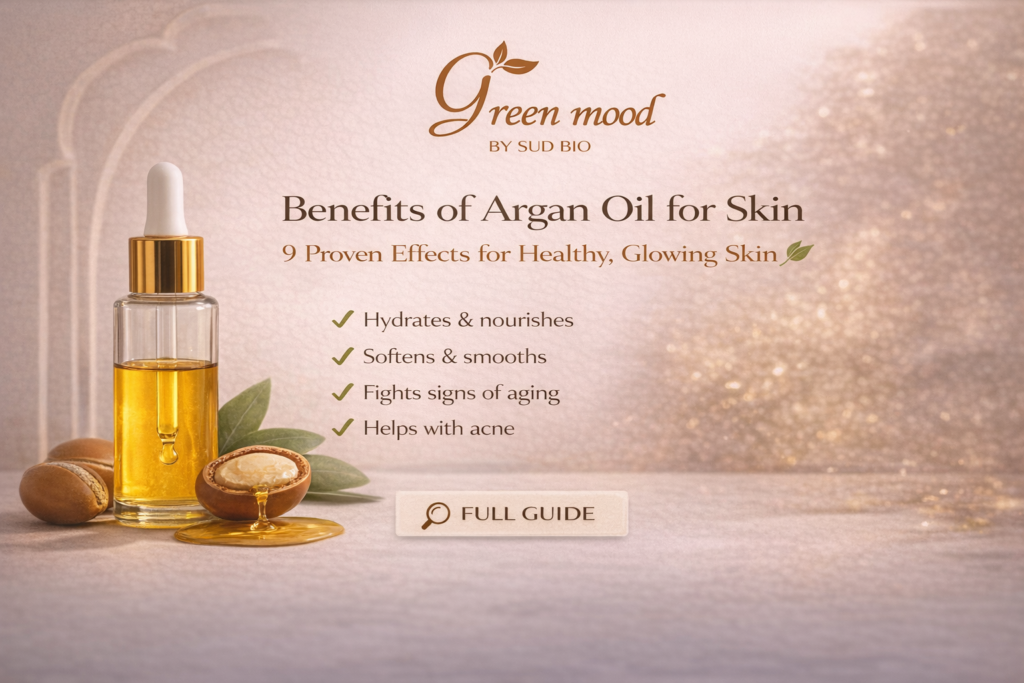
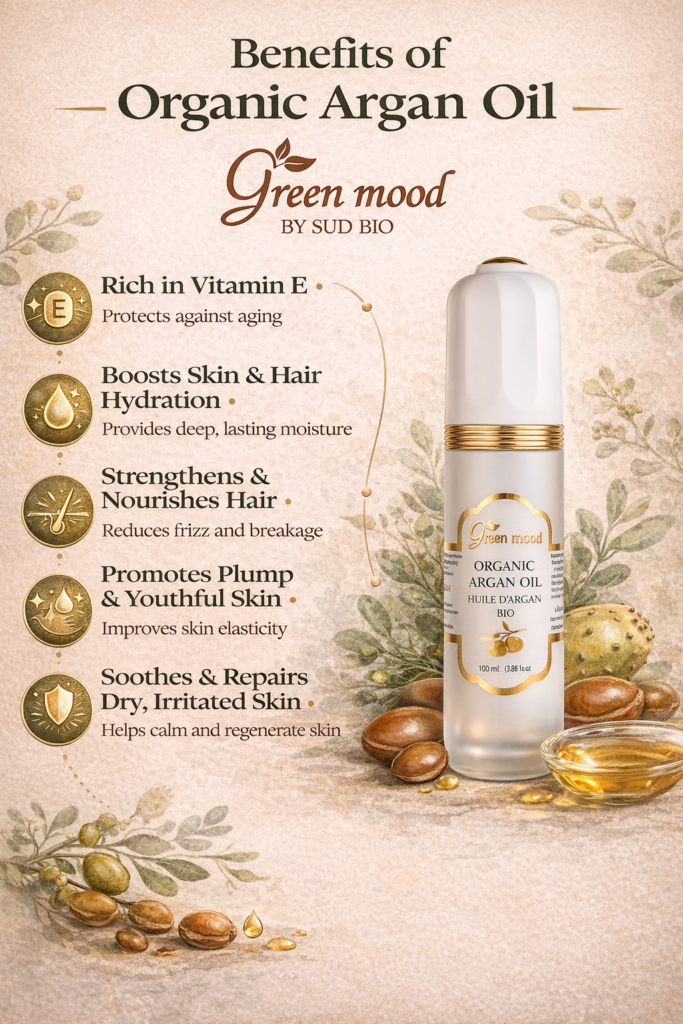
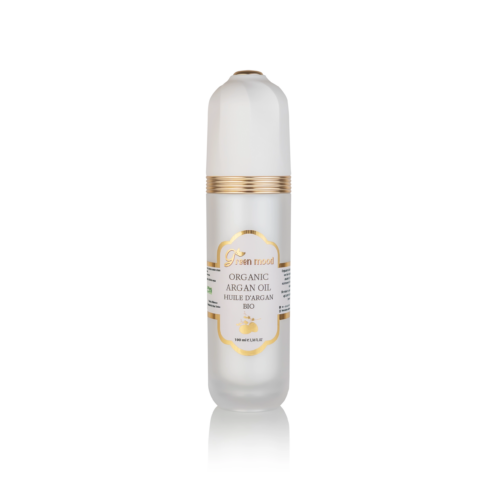
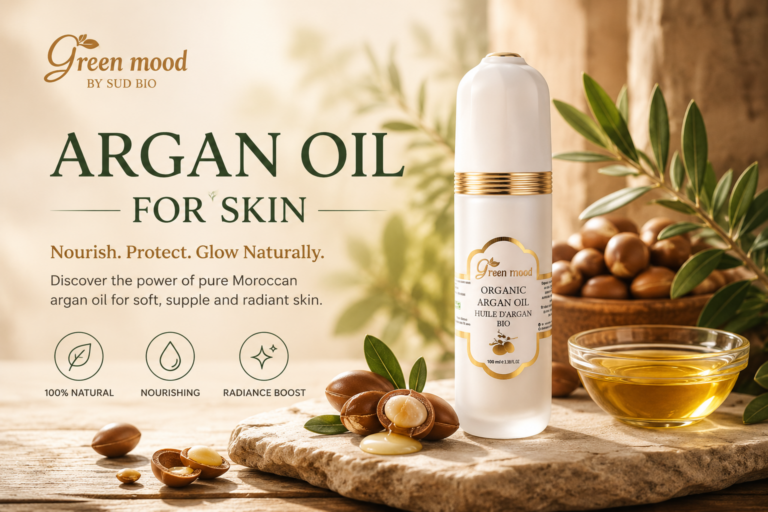
Extracted from the kernels of the argan tree, this oil is known for the comfort it gives dry skin, its natural vitamin E content and the support it lends the skin barrier. Quality of extraction and purity decide everything: a cosmetic argan oil should be cold-pressed, unrefined and made of a single ingredient.
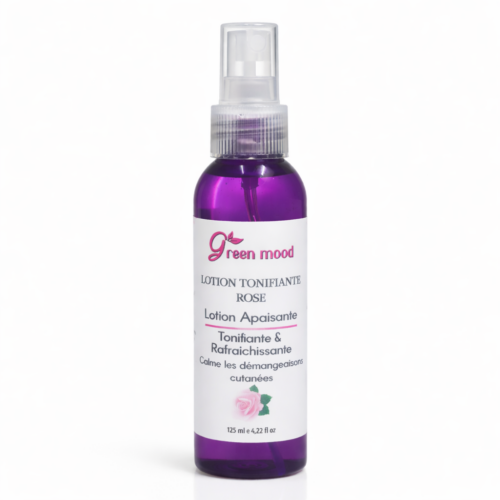
Used daily after cleansing, rose water helps the skin feel fresh and balanced, and it makes the oil that follows spread more easily. It is the step our Rose Water is made for.
Prickly Pear Seed Oil: Rare and Concentrated
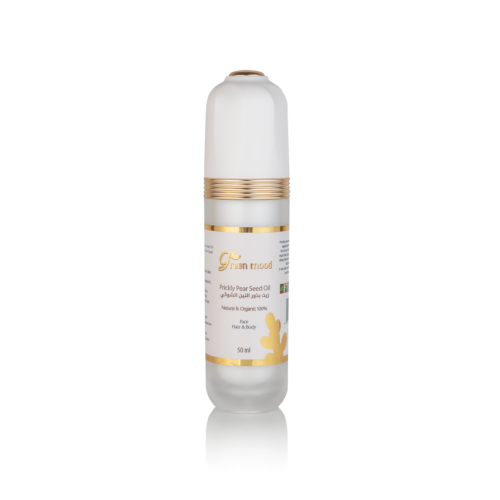
Prickly pear seed oil is naturally rich in vitamin E. It is used in small amounts, mostly in the evening, to improve the look of the skin, support its suppleness and bring out radiance. See our Prickly Pear Seed Oil.
Ghassoul, Black Soap and Aker Fassi
Ghassoul is a clay that cleans by absorption, without foam. Black soap softens the skin before the kessa glove. Aker fassi belongs to make-up rather than care: our article on what aker fassi is tells its story.
Modern skincare often focuses on fast results, several active ingredients and complex routines. Moroccan skincare focuses on consistency, ingredient quality and natural synergy.
Aspect
Moroccan skincare
Modern skincare
Focus
Regularity and ingredient quality
Fast, targeted results
Number of products
Three or four
Often six or more
Exfoliation
Weekly and physical: kessa glove, ghassoul
Frequent and chemical: acids
Key ingredients
Plant oils, clays, floral waters
Retinoids, acids, peptides
Sun protection
Not part of the tradition
Daily sunscreen
The difference is not about replacing one with the other. It is about understanding that simpler, well-designed routines are often easier to sustain. The two combine well: a Moroccan base of gentle cleansing, rose water, oil and a weekly hammam, plus a modern sunscreen every morning.
How to Build a Moroccan Skincare Routine
A Moroccan skin care routine has three daily steps, cleanse, tone with rose water and nourish with an oil, and one weekly ritual: exfoliation in the hammam, followed by a mask and oil.
Daily Routine
When
Steps
Morning
Cleanse gently, apply rose water, use a light oil or cream, finish with sunscreen
Evening
Cleanse, apply rose water, then a treatment oil: argan or prickly pear seed
Weekly Routine
Perform a hammam-inspired ritual: steam or a hot shower, then black soap
Exfoliate the body with a kessa glove
Apply a nourishing or clarifying mask: ghassoul, saffron or nila
Follow with oil while the skin is still slightly damp
By Skin Type
Skin type
What to favour
What to go easy on
Dry
Argan oil morning and evening, prickly pear seed oil on drier areas
Clay masks: once a week at most
Oily or combination
Two or three drops of argan oil on damp skin in the evening, a weekly ghassoul mask
Heavy layers of oil in the morning
Sensitive
Rose water and a few drops of argan oil, tested first on a small area
The kessa glove on the face, frequent masks
Mature
Prickly pear seed oil in the evening, argan oil in the morning
Skipping sunscreen
Choosing the Right Moroccan Skincare Products
Not all products labelled “Moroccan” are authentic. When choosing Moroccan skin care products, focus on four points:
Ingredient purity. A pure oil lists one ingredient. A long list means a formulated product, which is fine as long as it is sold as one.
Stated origin. “Made in Morocco” is a fact you can check. “Moroccan-inspired” is not.
Minimal processing. Cold-pressed, unrefined oils keep their natural composition.
Certification and consistency. Organic certification and a recognised manufacturing standard show how a product is made, batch after batch.
What are the best Moroccan skin care products to start with?
Three products cover most of the tradition: a pure argan oil, a rose water, and a hammam set of black soap and kessa glove for the weekly exfoliation. Add prickly pear seed oil for mature skin, ghassoul for oily skin, or a nila or saffron mask for radiance.
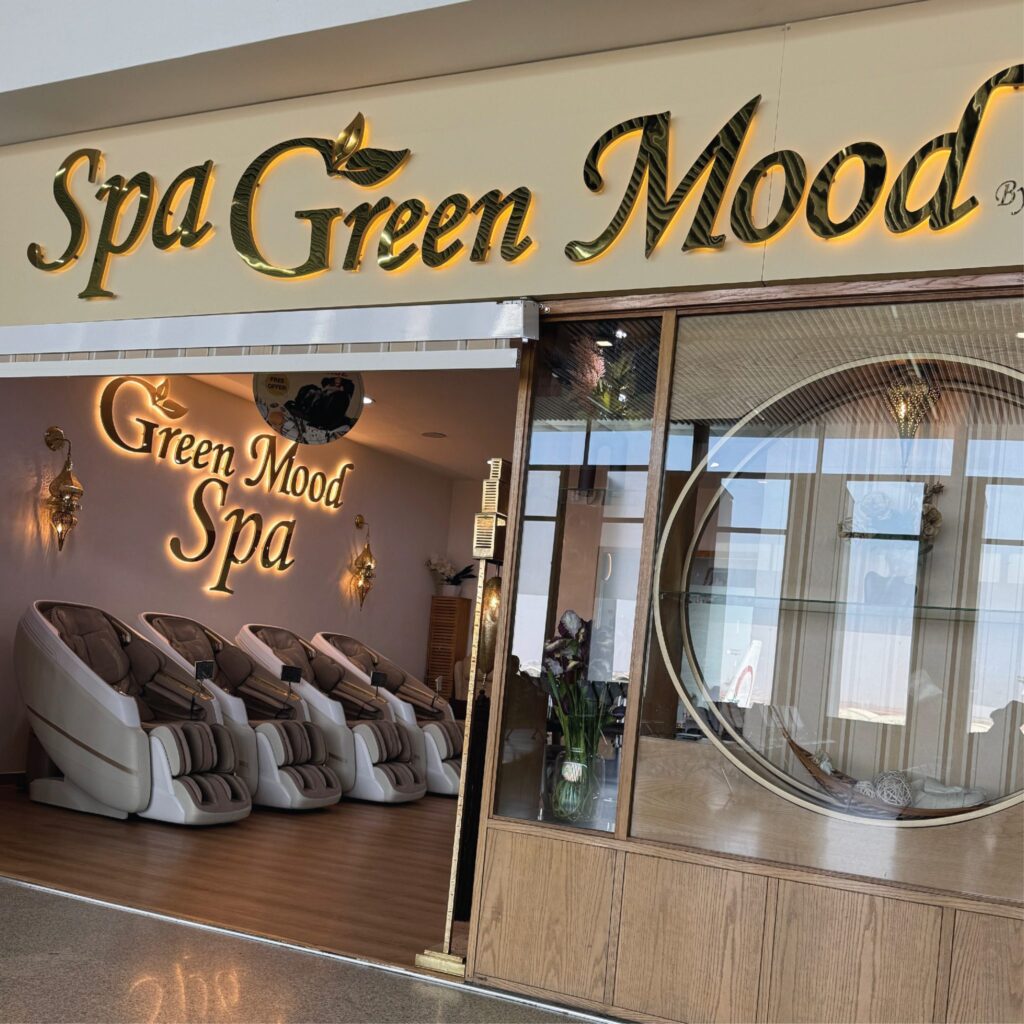
Green Mood’s approach is built around authenticity, effectiveness and respect for tradition. Our products are made in Morocco, our pure oils are certified organic (USDA Organic, AB, CCPB) and production follows the ISO 22716 standard. Details are on our certifications page, and you can try everything in person in our stores, including the airport boutiques in Casablanca, Agadir and Marrakech.
378 MAD–540 MADPrice range: 378 MAD through 540 MAD
Why Moroccan Skincare Continues to Grow Worldwide
Moroccan skincare is gaining attention around the world because it answers three current concerns:
The desire for natural products with short ingredient lists
The need for care that is effective yet gentle
A renewed interest in traditional beauty rituals
It offers a different perspective: less complexity, more intention.
FAQ — Moroccan Skincare
What makes Moroccan skincare different?
It combines natural ingredients, ritual-based care and simplicity, and it focuses on long-term skin comfort rather than quick fixes. Few products are used, each with a clear role.
Does Morocco have good skin care?
Yes. Morocco is the home of argan oil and ghassoul clay, of a long tradition of rose water and prickly pear seed oil, and of the hammam, a thorough exfoliation ritual. The quality of the product still depends on the producer, so check purity and origin.
Is Moroccan skincare suitable for all skin types?
Yes, with adjustments. Oils and rose water suit most skin types, including sensitive skin, when tested first on a small area. Sensitive or irritated skin should avoid firm exfoliation with the kessa glove.
What is the best Moroccan skincare routine?
A simple one: cleanse, tone with rose water and nourish with argan oil every day, then exfoliate once a week with black soap and a kessa glove, followed by a mask and oil.
How often should I do a Moroccan hammam?
Once a week is enough to keep the skin smooth. Every two weeks suits dry or sensitive skin better.
Can I use argan oil daily?
Yes. Argan oil is suitable for daily use on the face and the body. Two or three drops are enough for the face.
Is rose water a toner?
Yes. It acts as a natural toner that refreshes the skin after cleansing and prepares it for oil or cream.
What are the best Moroccan skin care products?
The essentials are a pure argan oil, a rose water, black soap with a kessa glove, and a ghassoul clay. Prickly pear seed oil and nila or saffron masks come next, depending on your skin.
Does Moroccan nila actually work?
Nila masks leave the complexion looking fresher and more even after rinsing. It is a traditional cosmetic, not a studied active, so it brightens the look of the skin without changing its pigmentation.
Where can I buy authentic Moroccan skincare products?
From a producer that states where and how its products are made. Green Mood makes its range in Morocco and sells it online with worldwide delivery, and in its boutiques in Morocco.
Final Thought
Moroccan skincare is not about trends. It is about understanding that the skin responds best to consistency, quality and respect.
By combining traditional knowledge with modern expectations, it becomes more than a Moroccan skin care routine. It becomes a real, meaningful ritual.