Moroccan Body Care: Traditional Rituals, Ingredients & Products
For centuries, body care in Morocco has been more than a daily habit. It has been a ritual — a way of marking time, of preparing the body, of caring for the skin with what the land already provides.
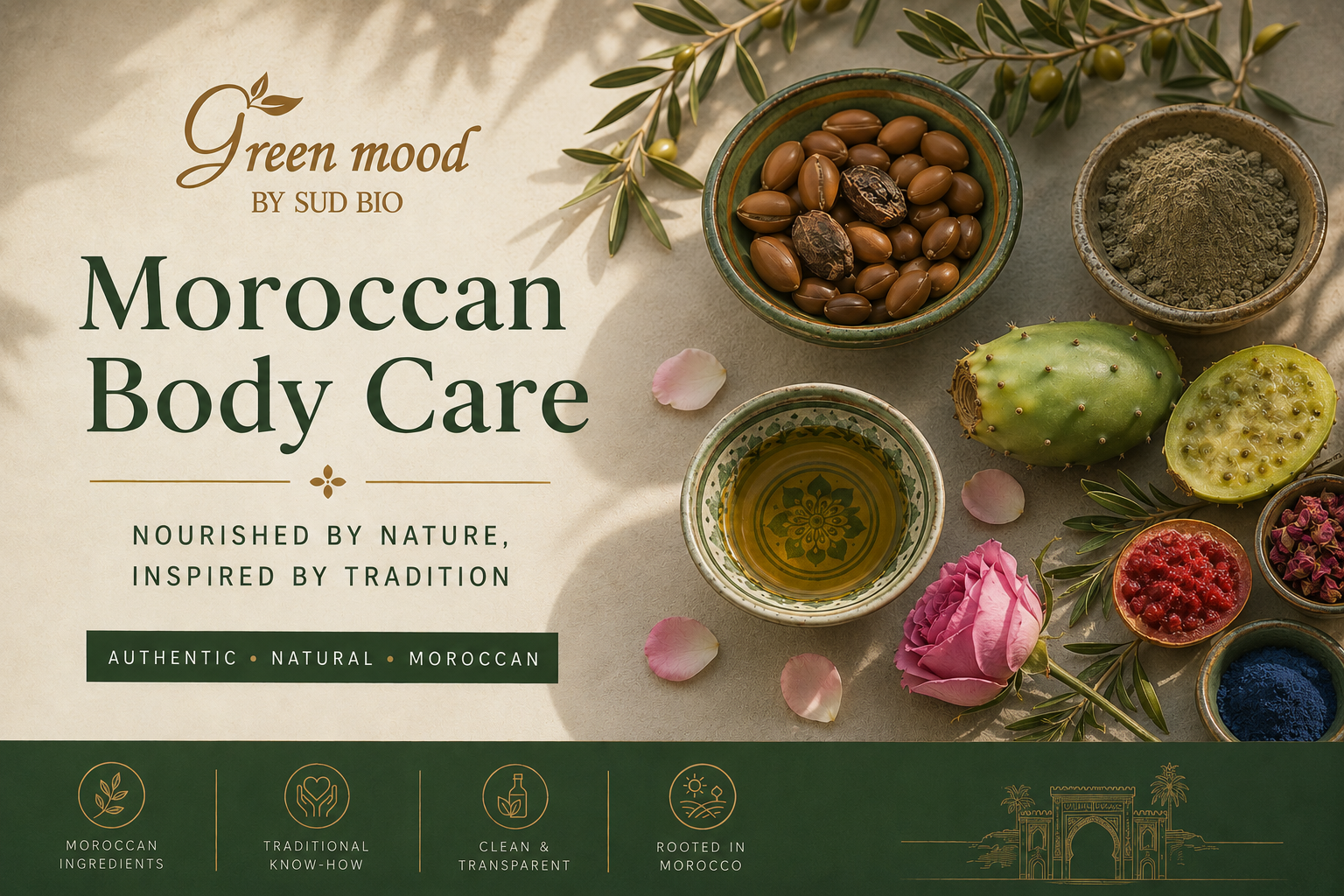
The Moroccan approach is not built around products that promise quick fixes. It is built around an ecosystem: a small set of recognisable ingredients, a sequence of gentle gestures, and a rhythm that adapts to the seasons and the climate. Argan oil pressed in the Souss. Prickly pear seed oil from the cactus groves of the centre. Rhassoul mined in the Atlas Mountains. Olive paste turned into the famous black soap. Rose water from the Dadès Valley. Orange blossom distilled in spring.
The hammam holds a central place in this tradition, but it is not the whole of it. Moroccan body care is also the daily ritual of a few drops of argan oil after the shower, the weekly polish with a clay soap, the seasonal shift from light scented oils in summer to richer formulas in winter. It is broader than any single product, and that breadth is what gives it depth.
This guide brings the entire tradition together in one place — the philosophy, the ingredients, the seasonal adjustments, the products, the routine, and how to bring it into a modern life without losing what makes it worth doing.
What Is Moroccan Body Care?
Moroccan body care is a sequenced approach to caring for the skin of the body, built around three movements: deep cleansing, manual polishing, and slow nourishment with plant oils. It is rooted in a beauty tradition that predates modern cosmetics by more than a thousand years, refined inside the hammam but extending well beyond it — into everyday soaps, body oils, scented argans, hand creams and bath salts that all carry the same principles.
What separates Moroccan body care from the body care most people are used to is what it does not do. It does not chase shortcuts. It does not layer dozens of synthetic formulas. It does not treat the skin as something to be corrected. Instead, it works with the body’s own rhythm — prepare the skin, then feed it, then leave it alone.
The result, when done consistently, is skin that feels softer, smoother and more even — not because of any single product, but because the sequence works.
The Three Pillars of Moroccan Body Care
Every authentic Moroccan body care routine, whether performed in a traditional hammam or recreated at home, follows the same three-part structure. Understanding the pillars makes everything that follows in this guide easier to navigate.
Purification
The body is prepared with heat and a deep, foaming cleanse — most often with savon noir, the traditional Moroccan black soap made from olive paste and potassium. Heat opens the pores. The soap dissolves what daily life leaves behind. Nothing else can move forward until this step is done properly.
Polishing
Once the skin is softened, it is exfoliated by hand using the kessa, a coarse glove woven from goat hair or tightly twisted plant fibre. The kessa lifts away dead cells in long, methodical strokes. This is the step that gives Moroccan body care its reputation. The texture change after a proper kessa session is immediate and unmistakable.
Nourishment
Polished skin absorbs more, and absorbs faster. This is when Moroccan body care reaches for its richest oils — argan, prickly pear seed, sweet almond — to rebuild the skin barrier and lock in moisture. The body cools, the skin softens, and the work is done.
Every product mentioned later in this guide belongs to one of these three movements. Holding that structure in mind makes the rest of the tradition easy to follow.
The Moroccan Ingredients That Make the Difference
Moroccan body care is built on a short list of ingredients refined over centuries. None of them are trends. All of them have a specific role in the three-step structure above, and several of them have travelled far beyond Morocco precisely because they work.
Argan Oil
Argan oil is the most internationally recognised of all Moroccan body care ingredients, and for good reason. Cold-pressed from the kernels of the argan tree — a species endemic to the Souss-Massa region in the southwest of Morocco — it is rich in vitamin E, essential fatty acids and natural sterols that help nourish the skin barrier and support its elasticity.
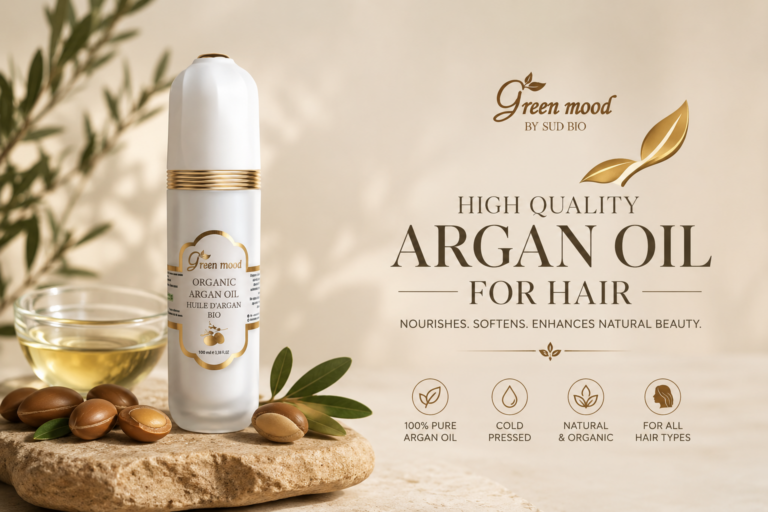
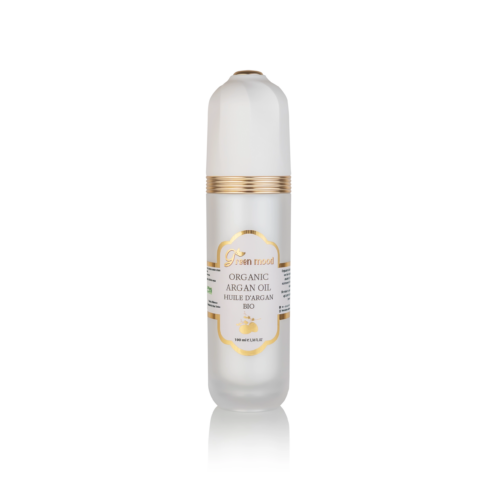
For the body, argan oil is used in two ways. Pure, as a finishing oil applied to damp skin after the bath or shower — the Green Mood Pure Argan Oil is cold-pressed in Morocco to preserve its natural vitamin E content. And blended — into scented body oils, into shower gels, into hand creams — where it carries the active nourishment alongside lighter botanical extracts.
Argan oil’s reputation is so strong that authenticity matters more than category. Not every product labelled “argan” contains pure Moroccan argan. To understand what real argan oil is and how to identify it, the dedicated guide on the benefits of argan oil for skin covers the topic in depth.
Prickly Pear Seed Oil
Prickly pear seed oil is the most precious of all Moroccan plant oils. It takes nearly a ton of fruit to produce a single litre — which is what places it at the top end of any Moroccan body care routine.
The composition justifies the rarity. Prickly pear seed oil contains an exceptionally high concentration of vitamin E, linoleic acid, and natural antioxidants — a profile that supports skin firmness, smoothness and radiance over time. Used on the body, a few drops are enough to treat the décolleté, the inside of the arms, the back of the hands, and any area where the skin tends to thin earlier.
Savon noir, also called beldi, is the cornerstone of the hammam. It is made from olives — pulped fruit, sometimes whole olives — saponified with potassium to produce a soft, dark, almost butter-like paste. It has no resemblance to commercial bar soap.
Applied to warm damp skin and left to rest for five to ten minutes, savon noir softens the outer layer of the skin and prepares it for exfoliation. It is the single most important product in Moroccan body care, and there is no real substitute for it.
Traditional Moroccan black soap is often scented with neroli (orange blossom), rosemary, or eucalyptus — each variation giving the ritual a different character without changing what it fundamentally does.
Rhassoul (Ghassoul) Clay
Rhassoul is a mineral-rich clay mined in the Atlas Mountains, and one of the oldest body care ingredients on the African continent. It is one of the few clays soft enough to be used on both the face and the body without drying the skin.
In body care, rhassoul is found in two main forms: as a bar soap with gentle exfoliating action, and as a loose clay used in body and hair masks. Its mineral content — silica, magnesium, potassium, iron — gives it a softening effect that distinguishes it from harsher clay options.
Rose Water
Rose water is mostly associated with face care, but in the Moroccan body care tradition it has a quieter role: as a finishing mist after the bath, applied to the skin before the oil. The cool, lightly floral mist refreshes the body, calms heat from the hammam, and adds a layer of comfort to the final step of the ritual. The Dadès Valley, between the High Atlas and the Sahara, is the historic centre of Moroccan rose cultivation.
Orange blossom — the flower of the bitter orange tree, distilled into orange blossom water or extracted as neroli essential oil — is the signature scent of Moroccan body care. It appears in soaps, in bath salts, in shower gels, in scented argan oils, and in home fragrance. Its character is soft, floral, slightly powdery — instantly recognisable as Moroccan.
Beyond its scent, orange blossom is gently calming and is used in body care for its comforting effect as much as its aroma.
Moroccan Body Care Ingredients at a Glance
The role each ingredient plays inside the body care ritual, in one view.
Ingredient
Role in body care
Argan Oil
Daily nourishment, finishing oil after bath
Prickly Pear Seed Oil
Targeted firmness and radiance care
Black Soap (Savon Noir)
Deep cleansing before exfoliation
Rhassoul Clay
Mineral-rich purification and softening
Rose Water
Refreshing post-bath finish
Orange Blossom
Calming signature scent across the range
The Broader Moroccan Beauty Palette
Moroccan body care draws from a small core of ingredients, but it sits inside a much wider beauty palette that is worth knowing — even when the focus is the body.
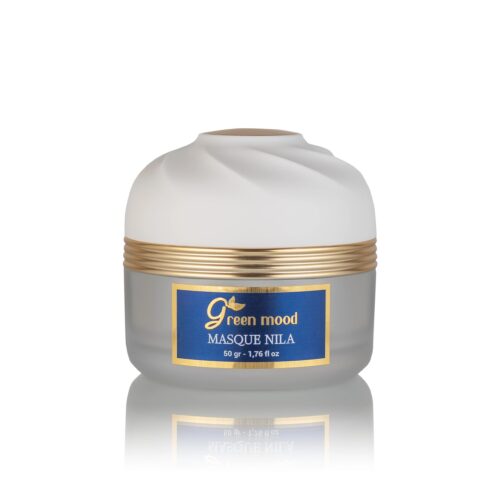
Nila — botanically Indigofera suffruticosa — is the dark blue-grey botanical used in traditional Moroccan face masks for its purifying and refining action. It is primarily a face care ingredient rather than a body one, but it sits at the heart of the same Moroccan beauty heritage. The Green Mood Nila Mask is the product expression of this tradition in our range.
194 MAD–270 MADPrice range: 194 MAD through 270 MAD
Aker Fassi is a deep red colourant traditionally derived from dried poppy petals and pomegranate skin, used historically as a natural lip and cheek tint. The dedicated guide covers aker fassi’s benefits and origins in detail.
Saffron from the Taliouine region appears in face masks and soaps for its radiance-supporting properties, and henna from the southern oases has been used for centuries on hair, skin and nails. These ingredients do not belong to the body care routine itself, but they share its philosophy: short ingredient lists, native to Moroccan soil, refined by tradition rather than marketed by trend.
Moroccan Body Care Through the Seasons
One thing rarely discussed in Western coverage of Moroccan beauty is how deeply the tradition has been shaped by Moroccan climate. The country sits between the Atlantic, the Mediterranean, the Atlas Mountains and the Sahara — a geography that includes humid coastal cities, snowy mountain ranges, hot dry inland plains, and desert edges. Body care evolved as a practical answer to those conditions, and the seasonal adjustments are still part of how Moroccans use the tradition today.
Summer Body Care in Morocco
Moroccan summers are long, hot and intensely sunny — especially inland. The body care routine adapts to the heat with lighter textures and more frequent cleansing.
The hammam becomes shorter and cooler. Scented argan oils take precedence over heavier creams — argan oil with hibiscus, orchid and orange blossom are the favourites for their freshness. Rose water is sprayed throughout the day, sometimes kept in the fridge for a cooling effect. Bath salts replace the heavier weekly scrubs. Hand creams disappear almost entirely except in the evening.
The principle is simple: when the climate is doing the work of softening the skin, the routine steps back.
Winter Body Care in Morocco
Winters in the Atlas Mountains and inland cities like Fes and Meknes are cold and dry. The body care routine adjusts in the opposite direction.
The hammam becomes longer and more deeply heated. Rich, pure argan oil — sometimes warmed slightly between the palms before application — replaces the lighter scented versions. Body milks become standard. Hand and foot creams are applied every evening. The weekly kessa session is paired with a richer finishing oil and sometimes a second oil layer on the elbows, knees and heels.
Older generations also use a thicker home preparation: a paste of rhassoul, argan oil and a few drops of essential oil, applied to dry areas before the bath and rinsed off after the steam has done its work.
Caring for the Skin in a Dry Climate
Anyone who has spent time in central or southern Morocco — Marrakech in August, Ouarzazate any month of the year — knows what dry air does to the skin. The Moroccan tradition has its own answer: a layered approach, applied to slightly damp skin.
The principle is to seal moisture in rather than chase it. A rose water mist on damp skin, immediately followed by a pure argan or prickly pear oil, traps the water at the surface where it can be absorbed gradually. This is more effective than reapplying a single product several times a day, and it costs less.
For dry climate care specifically, prickly pear seed oil’s role becomes more important — its antioxidant profile supports the skin’s resilience in conditions where water loss is constant.
Preparing the Skin Before Sun Exposure
Moroccan body care has never claimed to replace sunscreen. Modern UV protection belongs in any sensible summer routine, in Morocco as anywhere else. But traditional practice does include a pre-sun ritual that complements modern protection.
The night before extended sun exposure — a long beach day, a hike in the south — the skin is treated with a deeper nourishment: a kessa session, followed by a generous layer of pure argan oil. The exfoliation removes the dulled cells that would otherwise burn first, and the argan oil reinforces the barrier. The skin tolerates the sun better the next day, and the tan, when it comes, is more even.
One practical note: photosensitising essential oils — citrus, bergamot, certain spice notes — should be avoided before sun exposure. Pure argan and pure prickly pear are safer choices in the morning.
Body Care After the Sun
Post-sun is when Moroccan body care shows its full effect. A cool shower with a gentle clay soap. A rose water mist on damp skin to calm the heat. A light scented argan oil — orange blossom is the classic — applied while the skin is still slightly moist. If the skin feels tight, the prickly pear oil comes out for a more concentrated repair.
For long sun exposure, the evening ritual sometimes extends to a full bath with orange blossom or verbena bath salts — both deeply associated with the Moroccan summer evening tradition.
The Hammam Tradition
The hammam is one expression of Moroccan body care — the most concentrated one, but not the whole of it. Treated as a standalone weekly ritual rather than the entirety of body care, the hammam takes its proper place within the broader tradition.
For the full step-by-step ritual, the dedicated guide here covers each phase in detail: the Moroccan hammam routine. The summary below is enough to understand its role inside body care.
Why the Hammam Works
The hammam is effective because it does several things at once that are difficult to combine outside of it. The heat softens the outer skin layer and opens the pores. The black soap, applied to warm damp skin and left to act for several minutes, dissolves sebum and superficial impurities. The kessa, used immediately after, lifts away the layer of dulled cells that no shower can remove. The final cool rinse closes everything back down.
The benefits people describe — smoother texture, more even tone, a calmer feel — are not marketing. They are the consequence of doing four things in the right order, with the right products.
Bringing the Hammam Home
The full hammam experience belongs to the traditional bathhouse, but the essentials of the ritual can be recreated at home with a hot shower or bath, a quality black soap, a real kessa glove, and a finishing oil. A weekly home hammam is enough to maintain most of the benefits.
For anyone wanting to start without assembling each piece separately, the Hammam Essentials kit brings together everything the ritual needs in one place.
To explore the full body care range built around the hammam tradition, the Moroccan hammam products collection gathers every essential of the ritual.
Moroccan Body Care Products Worth Knowing
The ingredients above translate into a defined set of products, each one belonging to a specific step in the body care routine. The following are the categories every authentic Moroccan body care collection should cover — and the ones to look for when building a routine from scratch.
Moroccan Black Soap (Savon Noir)
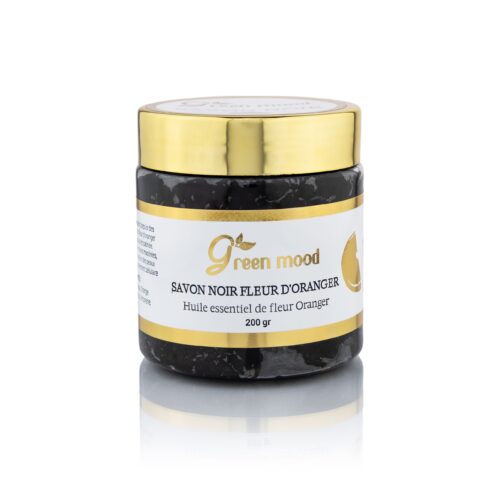
The starting point of any traditional Moroccan body care routine. Real savon noir is olive-based, dark in colour, and almost paste-like in texture rather than a hard bar. The classic scent variations — orange blossom, rosemary and eucalyptus — each tie to a slightly different mood within the hammam ritual.
For the full range of traditional Moroccan body soaps — black soap, clay soaps, saffron soap, charcoal — the traditional soap collection covers every option.
The Kessa Glove
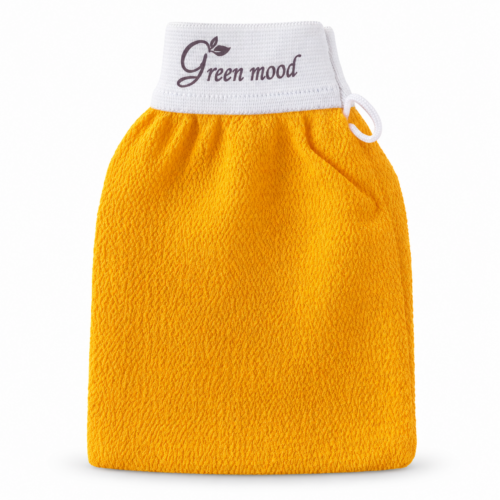
The kessa is non-negotiable in Moroccan body care. It is a coarse glove, traditionally made from goat hair or a tightly woven plant fibre, used to exfoliate softened skin after the black soap has done its work.
A real kessa is not the same as a loofah or a plastic exfoliating mitt. The texture is firmer, the weave tighter, and the result is a level of polish that no granular scrub or chemical exfoliant can replicate. One kessa lasts for years if rinsed properly after each use.
Traditional Clay Soaps
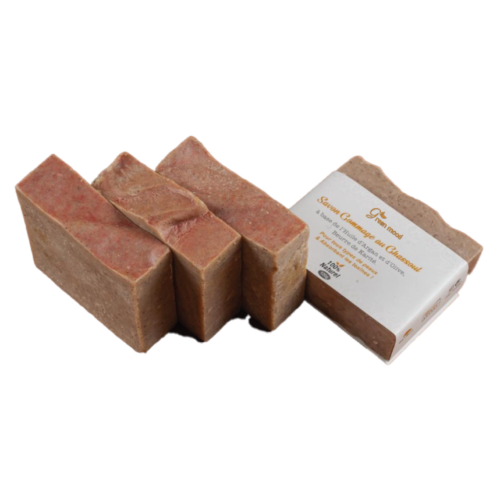
Beyond black soap, the Moroccan body care tradition includes a wide family of bar soaps built around mineral clays and natural extracts — ghassoul (rhassoul), white clay, pink clay, red clay, saffron, activated charcoal, coffee. Each one carries a slightly different action: clays for purification, saffron for radiance support, coffee for stimulation, charcoal for clarifying.
These are the soaps that fill the gap between the weekly hammam ritual and daily showering — gentler than savon noir, more interesting than commercial soap, and rooted in the same tradition.
Body Scrubs and Bath Salts
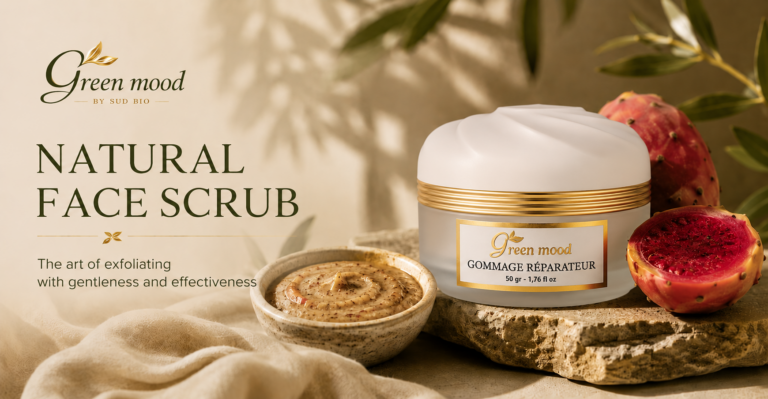
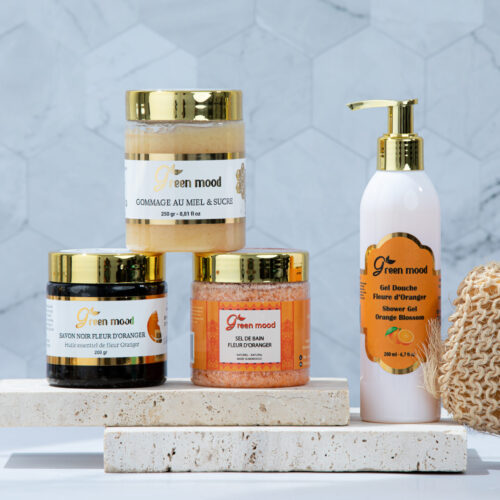
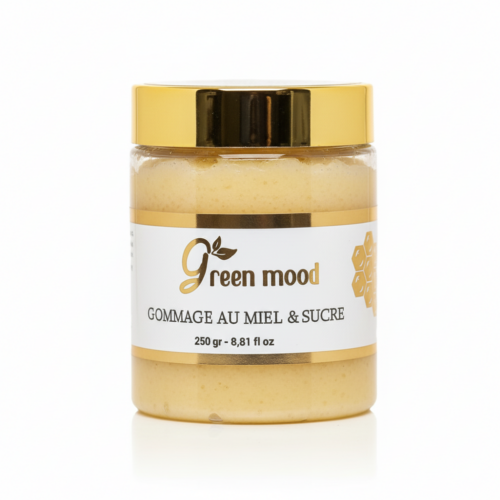
Between full hammam sessions, lighter scrubs and bath salts maintain the polished feel without the intensity of a kessa exfoliation. Moroccan bath salts are typically scented with orange blossom or verbena — both calming, both deeply associated with Moroccan relaxation rituals. For a softer granular polish that suits the body in between hammam sessions, an exfoliating sugar-based scrub works well.
The full scrubs and exfoliators range includes the traditional kessa, bath salts, and granular body scrubs for those who prefer a different exfoliation texture.
Argan-Based Body Oils
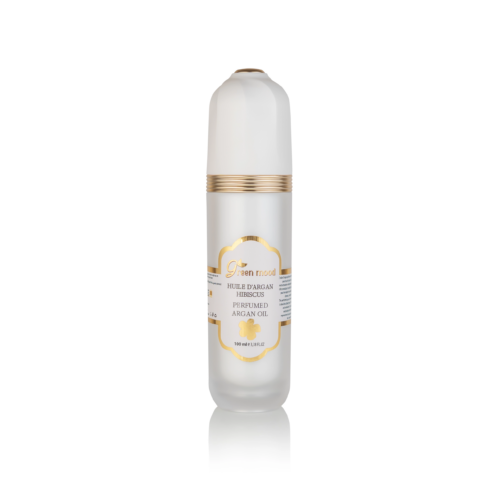
The nourishment step of the routine. Pure argan oil is the most direct option — a few drops in the hand, warmed between the palms, applied to damp skin straight after the bath. For those who prefer a scented oil, the scented argan range adds a subtle layer of fragrance — hibiscus, musk, orchid, orange blossom, candy — without altering the oil’s nourishing core.
281 MAD–378 MADPrice range: 281 MAD through 378 MAD
The full body milk and oils collection covers every scent variation alongside the unscented pure argan, prickly pear, and hand-and-foot creams.
Natural Shower Gels
For daily use between hammam sessions, a gentle plant-based shower gel keeps the skin clean without stripping it. Quality Moroccan shower gels are formulated around argan oil with floral scents — orange blossom, rose — to extend the Moroccan body care character into everyday showering.
Body Milks
Body milks bridge the gap between the lightness of a mist and the richness of a pure oil. Formulated around argan oil and lighter plant extracts, they sink in quickly without leaving a film — the right choice for morning use, for hotter months, or for anyone who finds pure oil too rich for daily application.
Hand and Foot Creams
The hands and feet take more daily wear than the rest of the body, and Moroccan body care reflects that with dedicated creams enriched with argan oil and either hibiscus or orange blossom. Used at night, they soften areas that the rest of the routine sometimes neglects.
The Complete Body Care Collection
Every product above belongs to the same tradition, and the full Moroccan body care collection brings them together in one place — black soaps, kessa gloves, clay soaps, scented and pure argan oils, body milks, bath salts, shower gels, hand and foot creams.
How to Build a Moroccan Body Care Routine
The full Moroccan body care system has three layers: a daily routine for maintenance, a weekly ritual for renewal, and the seasonal adjustments covered earlier in this guide. Done together, they take less time than most modern body care routines and deliver more lasting results.
Daily Routine
The everyday version is intentionally short. The point is not to do everything every day — the point is to do less, but do it properly.
Morning. Cleanse with a gentle natural soap or shower gel. Pat dry. Apply a light body oil or hand cream to the areas that need it. Spray rose water on the décolleté and inner arms if the skin feels dry.
Evening. Cleanse if needed. Apply a richer oil or body milk to damp skin. Pay particular attention to elbows, knees and feet.
That is the daily routine. Six to eight minutes, twice a day. Done consistently, it carries most of the benefit.
Weekly Hammam-Inspired Ritual
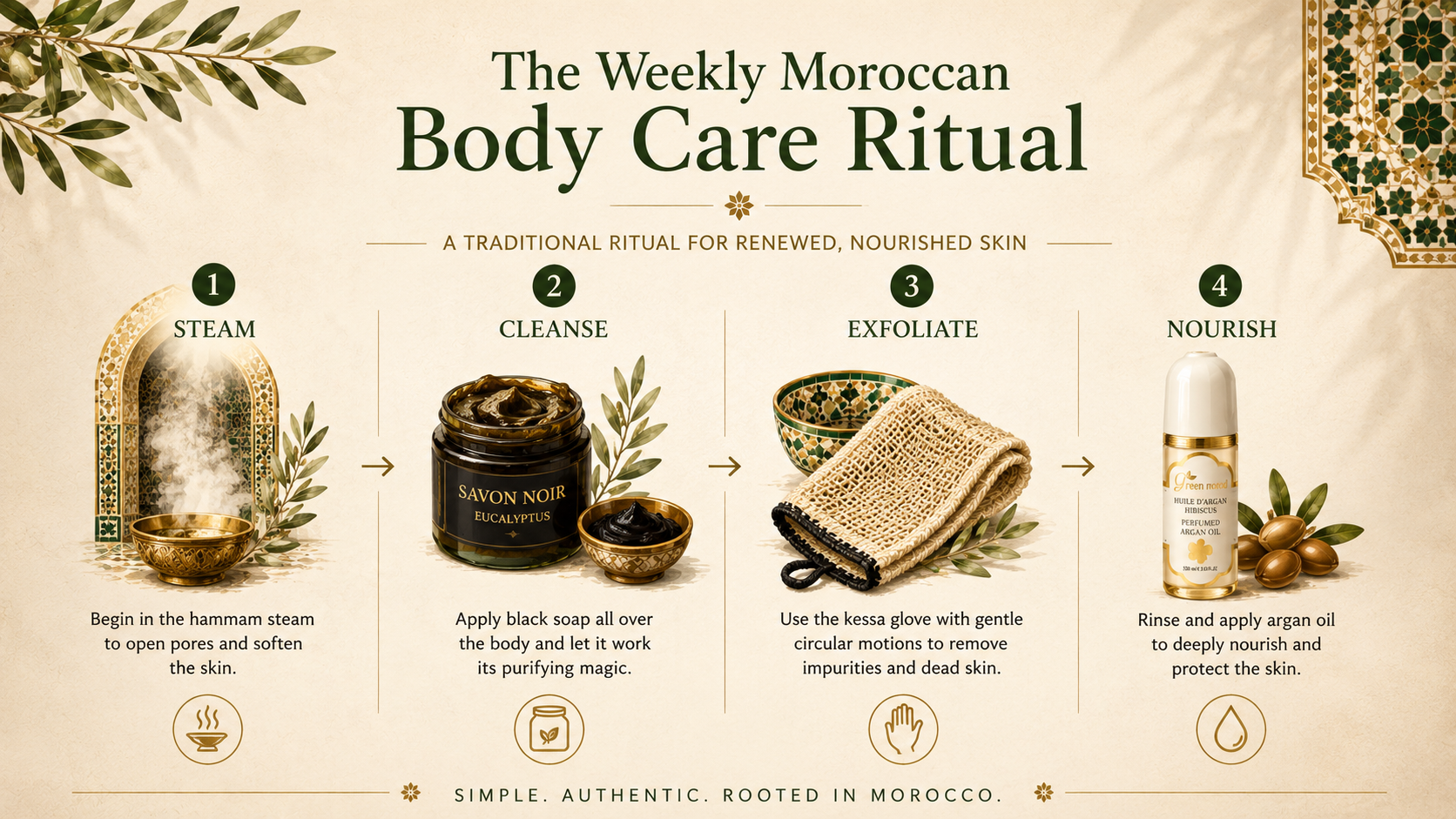
Once a week, the routine becomes a ritual. This is when the kessa, the black soap, and the deeper oils come out.
Steam. Run a hot shower or bath. Stay in the steam for five to ten minutes — the skin needs to be warm and slightly damp for everything that follows.
Apply the black soap. Spread a generous layer of savon noir over the whole body. Leave it on for five to ten minutes. Do not rush this step.
Exfoliate. Rinse the soap off, then exfoliate with the kessa in long, firm strokes. Work systematically — limbs first, then torso, then back. The skin will pinken and feel different almost immediately.
Rinse. Rinse thoroughly with cool water. Pat the skin dry but leave it slightly damp.
Nourish. Apply a pure or scented argan oil to the still-warm skin. Let it absorb for a few minutes before dressing.
This ritual is the foundation of Moroccan body care. Doing it once a week is enough to maintain the texture and tone benefits over time.
How to Choose Authentic Moroccan Body Care Products
Moroccan body care has become popular enough that the market is now full of products labelled “Moroccan” that have very little to do with the tradition. A few practical filters help separate the authentic from the marketed.
Look at the ingredient list, not the packaging
A real Moroccan black soap will have olive paste (or olive oil) high in the INCI. A real argan oil will list Argania spinosa kernel oil as the first or only ingredient. If the list is dominated by water, synthetic emollients and fragrance, the “Moroccan” claim is decorative.
Check the origin
Authentic Moroccan body care ingredients are pressed, distilled or extracted in Morocco. Argan, prickly pear, rhassoul and orange blossom are all native — they should not need to be sourced anywhere else.
Be careful with absolute claims
“100% natural” requires a clean INCI all the way down — including any preservatives. Any product making that claim should be able to show the full ingredient list without hesitation.
Look for traceability
Brands that document their quality standards and certifications openly are easier to trust than resellers who buy in bulk and re-label. Green Mood’s full certifications and quality standards are documented in detail.
The Green Mood Approach to Moroccan Body Care
Green Mood is a Moroccan brand based in Casablanca, with physical boutiques at Mohammed V Terminal 1 in Casablanca and Al Massira Airport in Agadir. The range covers every step of the Moroccan body care ritual — savon noir, kessa, traditional clay soaps, scented and pure argan oils, prickly pear seed oil, body milks, hand and foot creams — built around the ingredients native to the Moroccan land.
The approach is deliberately narrow. The range stays close to what Moroccan body care has always been, with formulations that prioritise ingredient quality and ritual integrity over marketing differentiation. Each product is designed to belong inside the three-pillar structure — purify, polish, nourish — rather than to stand alone.
For more on the brand and its standards, see the About Us page and the certifications page.
Where to Buy Authentic Moroccan Body Care
For visitors to Morocco, the full Green Mood body care range is available at the two airport boutiques — Casablanca Mohammed V Terminal 1 and Agadir Al Massira Airport. The store locations page lists each boutique with details and opening hours.
For everyone else, the full collection is available online, shipped worldwide with free shipping above €150. The complete body care collection covers every product mentioned in this guide.
Moroccan Body Care vs Conventional Body Care
The contrast between Moroccan body care and conventional body care is not really about ingredients — it is about philosophy.
Conventional body care is built around rapid results: a single product that hydrates, firms, smoothes, brightens. The pace is fast, the layering is dense, and the marketing emphasises what the product does in the first ten minutes.
Moroccan body care is built around consistency. A short list of high-quality ingredients, applied in a specific order, over time. The first session is good. The tenth session is where the difference becomes obvious.
Neither approach is wrong. But for anyone who has cycled through several routines without lasting results, the Moroccan structure offers something different — fewer products, more discipline, and a feeling at the end of each ritual that is hard to describe but easy to recognise.
For the broader picture across the entire Moroccan beauty tradition — face, body, hair — the complete Moroccan skincare guide extends the discussion beyond body care alone. The companion Moroccan face care guide covers the equivalent for the face.
Frequently Asked Questions About Moroccan Body Care
What is Moroccan body care?
Moroccan body care is a traditional approach to caring for the skin of the body, structured around three steps: deep cleansing with savon noir, manual exfoliation with the kessa glove, and nourishment with plant oils like argan and prickly pear. It is anchored in the hammam ritual and built on consistency rather than quick results.
What are the most important Moroccan body care products?
The four products that anchor the entire tradition are Moroccan black soap (savon noir), the kessa glove, pure argan oil, and a finishing rose water or orange blossom water. With those four, the full ritual is possible. Everything else — scented argans, body milks, clay soaps, bath salts, hand creams — extends the routine but is not strictly necessary to begin.
How often should I do a full Moroccan body care ritual?
Once a week is enough to maintain the benefits for most people. The daily routine — gentle cleansing and a light body oil — handles maintenance between sessions. Doing the full kessa-and-black-soap ritual more than once a week can over-exfoliate the skin.
What is the difference between Moroccan black soap and regular soap?
Moroccan black soap is made from olive paste saponified with potassium. It has a soft, almost buttery consistency rather than a hard bar shape. It is designed to be applied to damp warm skin and left to act for several minutes before exfoliation — not used as a daily cleanser. Regular soap is for cleansing alone; black soap is for preparing the skin to be exfoliated.
Can I do a Moroccan body care routine at home without a hammam?
Yes. A hot shower or bath provides enough steam to soften the skin for the black soap and kessa. The full traditional hammam experience adds intensity, but the home version captures most of the benefits if the steps are followed properly.
Is argan oil better than prickly pear oil for the body?
They have different roles. Argan oil is excellent for daily nourishment of the whole body — it is rich, accessible, and works well as a finishing oil after the bath. Prickly pear seed oil is more concentrated and more expensive, and is typically reserved for areas where skin firmness matters more — décolleté, inside of the arms, hands. Many routines use both: argan for daily, prickly pear for targeted care.
How does Moroccan body care change with the seasons?
Significantly. In summer, the routine lightens — shorter hammam sessions, lighter scented argans, more frequent rose water mists, bath salts instead of heavier scrubs. In winter, the routine deepens — longer hammam sessions, pure or richer argan, body milks, hand and foot creams every evening. The seasonal adaptation is one of the most distinctive features of the Moroccan tradition.
How long does a kessa glove last?
A good kessa lasts one to two years with regular use, provided it is rinsed thoroughly after every session and allowed to dry completely between uses. If the texture loses its bite or the weave starts to break down, it is time to replace it.
Can Moroccan body care work on sensitive skin?
Yes, with adjustments. People with sensitive skin should leave the black soap on for less time (three to five minutes instead of ten), use lighter pressure with the kessa, and stick to gentler scented oils. The orange blossom and pure argan options are usually well tolerated.
What is the best Moroccan body care product to start with?
For someone new to the tradition, the most representative starting point is the combination of black soap, kessa glove, and a pure argan oil — the three pieces that anchor the entire ritual. A complete kit like the Hammam Essentials brings them together in one purchase.
Are Moroccan body care products natural?
Authentic Moroccan body care products are built around natural ingredients — argan, prickly pear, olive, rhassoul, plant extracts. The level of “naturalness” varies by product and brand, so the ingredient list is the only reliable check. Be careful with any “100% natural” claim that is not backed by a clean, fully disclosed INCI.
Where does authentic Moroccan body care come from?
Authentic Moroccan body care products are produced in Morocco, with ingredients native to Moroccan soil — the argan tree groves of the southwest, the prickly pear plantations of the centre, the rhassoul mines of the Atlas, the orange blossom fields of the Tadla and the rose valley of Dadès. Brands rooted in Morocco — including Green Mood, with boutiques in Casablanca and Agadir airports — are the most reliable source.
A Final Thought
Moroccan body care is not complicated. The structure is the same one Moroccan women and men have used for centuries: prepare the skin, polish it, feed it. The products that support each step are simple. The ingredients are recognisable. The pace is unhurried — adjusted only by the seasons, the climate, and the rhythm of life around it.
What it asks for, more than anything else, is consistency. Done once, the difference is noticeable. Done weekly for a few months, the difference becomes the new baseline.
That is the gift of the Moroccan tradition — not a single product that promises to change everything, but a routine that quietly, repeatedly, delivers what it says it does.



 Moroccan Ritual
 Complete TreatmentMoroccan Ritual
 Best SellerMoroccan Ritual
 Moroccan Ritual
 Moroccan Ritual
 Best SellerMoroccan Ritual
 Best SellerPure Botanical
 Best SellerSignature Scent