🌍 Free shipping above 150 € worldwide.


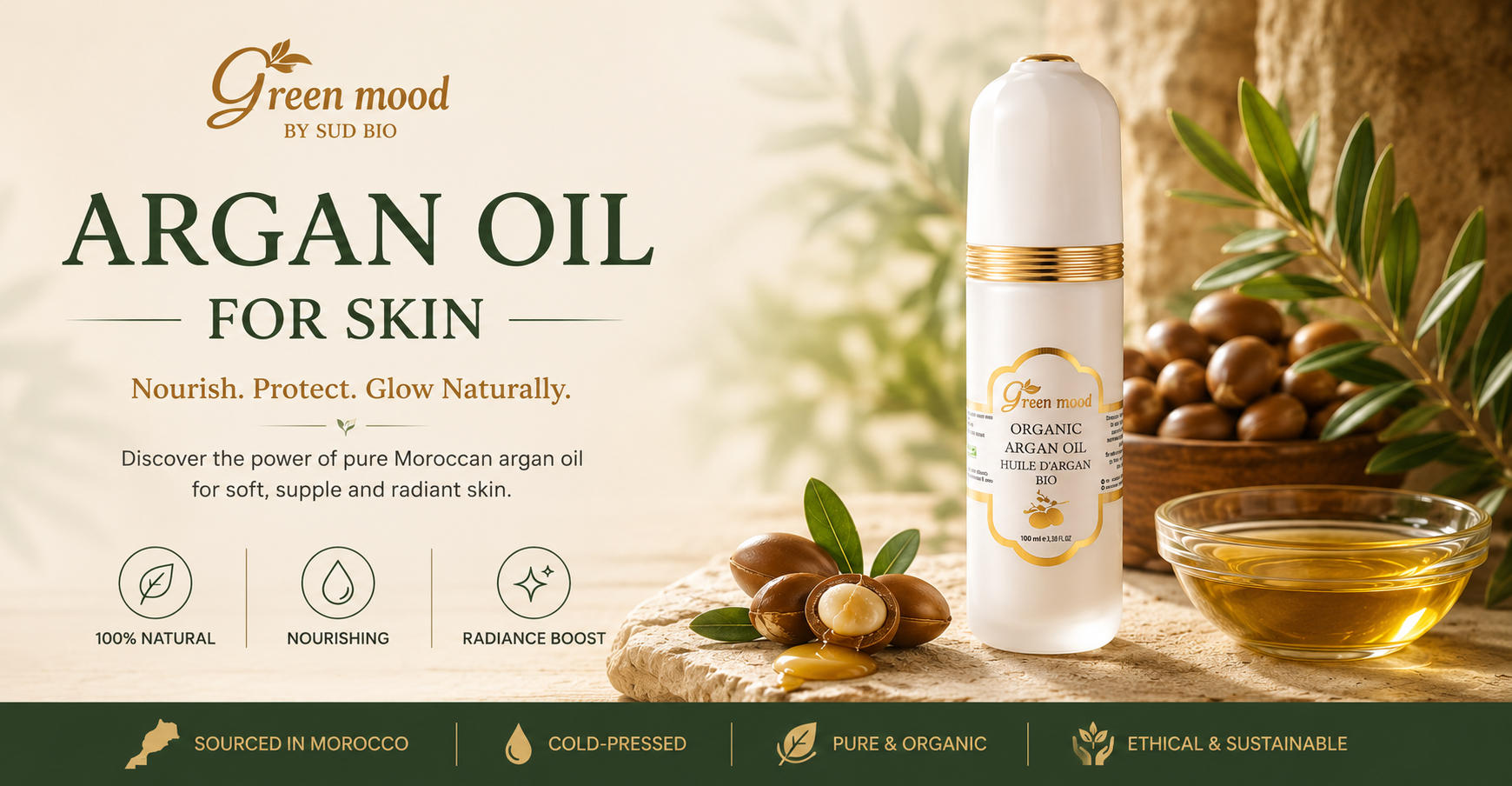
Few natural oils have earned a lasting place in skincare the way argan oil has. Cold-pressed from the kernels of the Argania Spinosa tree, which grows only in Morocco, argan oil for skin offers a rare combination: deep nourishment, a lightweight texture, and a composition naturally suited to the needs of the skin barrier. This guide covers what argan oil actually does for skin, which skin types benefit most, how to apply it correctly, and how to choose an oil pure enough to deliver these results.
Why Argan Oil Works So Well on Skin
The reputation of argan oil is not built on tradition alone. Its effectiveness comes from a naturally rich composition that aligns closely with what skin needs to stay soft, supple, and comfortable.
- Unsaturated fatty acids: Argan oil is particularly high in oleic acid and linoleic acid (omega-6). These lipids support the skin’s moisture retention and contribute to a healthier-looking skin barrier — the outer layer responsible for keeping hydration in and everyday irritants out.
- Vitamin E (tocopherol): A well-documented antioxidant that helps protect skin from oxidative stress caused by sun exposure, pollution, and daily environmental factors.
-
 Best SellerPure Botanical
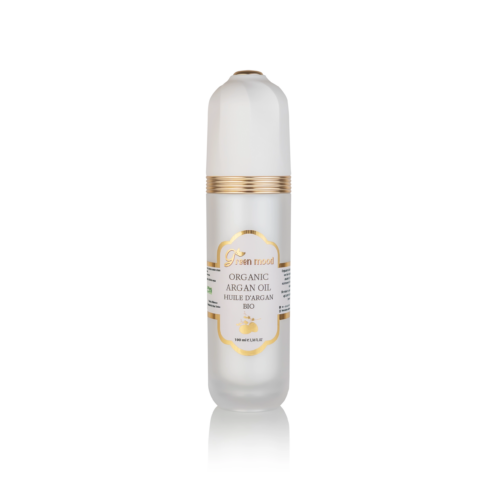
Pure Argan Oil
Price range: 194 MAD through 281 MAD - Sterols and squalene: Compounds naturally present in argan oil that are structurally close to the skin’s own lipids, which is part of why the oil absorbs so comfortably without a greasy film.
- Polyphenols: Plant antioxidants that complement vitamin E in supporting the skin’s defense against oxidative damage.
Because this profile mirrors the skin’s own needs so closely, pure argan oil can serve as a complete facial oil, a body treatment, and a targeted care product for dry areas — all from a single ingredient: Argania Spinosa Kernel Oil.
Argan Oil Benefits for Skin
1. Deep, Lasting Hydration
Dry and dehydrated skin loses water quickly through a weakened surface layer. The fatty acids in argan oil help seal moisture into the skin, restoring comfort and softness without heaviness. Applied to slightly damp skin, a few drops are enough to maintain hydration through the day or overnight.
2. Support for Skin Elasticity
With regular use, argan oil helps support the skin’s firmness and flexibility. This makes it a natural companion for mature skin, as well as for areas of the body prone to dryness and stretching — a reason it is often massaged into the abdomen, hips, and thighs as part of a body care routine.
3. Antioxidant Care Against Early Signs of Aging
The vitamin E and polyphenol content of argan oil helps protect skin from the oxidative stress that contributes to premature aging. Used consistently, it supports a smoother, more even, and more youthful-looking complexion. For a complete facial routine built around this benefit, see our detailed guide on argan oil for the face.
4. Comfort for the Skin Barrier
Skin that feels tight, reactive, or uncomfortable after cleansing often has a compromised moisture barrier. The lipid profile of argan oil helps replenish this barrier, which is why the oil is appreciated by people with dry and sensitive skin. It nourishes while remaining gentle and free of added fragrance in its pure form.
5. Natural Radiance
Well-nourished skin reflects light better. Argan oil revives dull-looking skin and enhances its natural glow — one of the reasons it has been part of Moroccan beauty rituals for generations.
6. Softness for Body, Hands, Nails, and Cuticles
Argan oil for skin extends well beyond the face. Massaged into elbows, knees, heels, and hands, it softens rough patches. A single drop per nail strengthens brittle nails and protects cuticles from dryness. Its versatility is covered step by step in our complete guide on how to use argan oil.
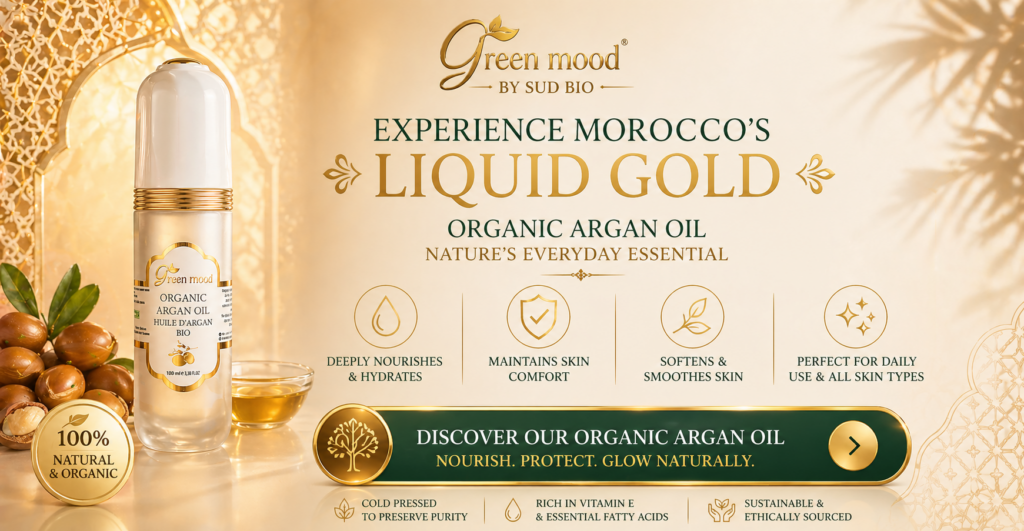
One oil, one ingredient. Green Mood Pure Argan Oil contains only Argania Spinosa Kernel Oil — cold-pressed, unrefined, with no additives, no dilution, and no artificial fragrance. This is the product referenced throughout this guide:
Which Skin Types Can Use Argan Oil?
One of the most practical advantages of argan oil for skin is how broadly it suits different skin types. Because it is lightweight, fast-absorbing, and generally non-comedogenic, it fits into most routines without conflict.
| Skin type | How argan oil helps | Suggested use |
|---|---|---|
| Dry skin | Replenishes lipids, seals in moisture, relieves tightness | Morning and evening, on damp skin |
| Sensitive skin | Single-ingredient, fragrance-free nourishment with low irritation potential | Evening, a few drops pressed gently into skin |
| Mature skin | Supports elasticity and antioxidant protection | Nightly, alone or over a serum |
| Combination skin | Balances dry zones without overloading the rest | Targeted application on dry areas |
| Oily skin | Light texture; small amounts can help skin feel balanced rather than stripped | 2 drops at night, sparingly |
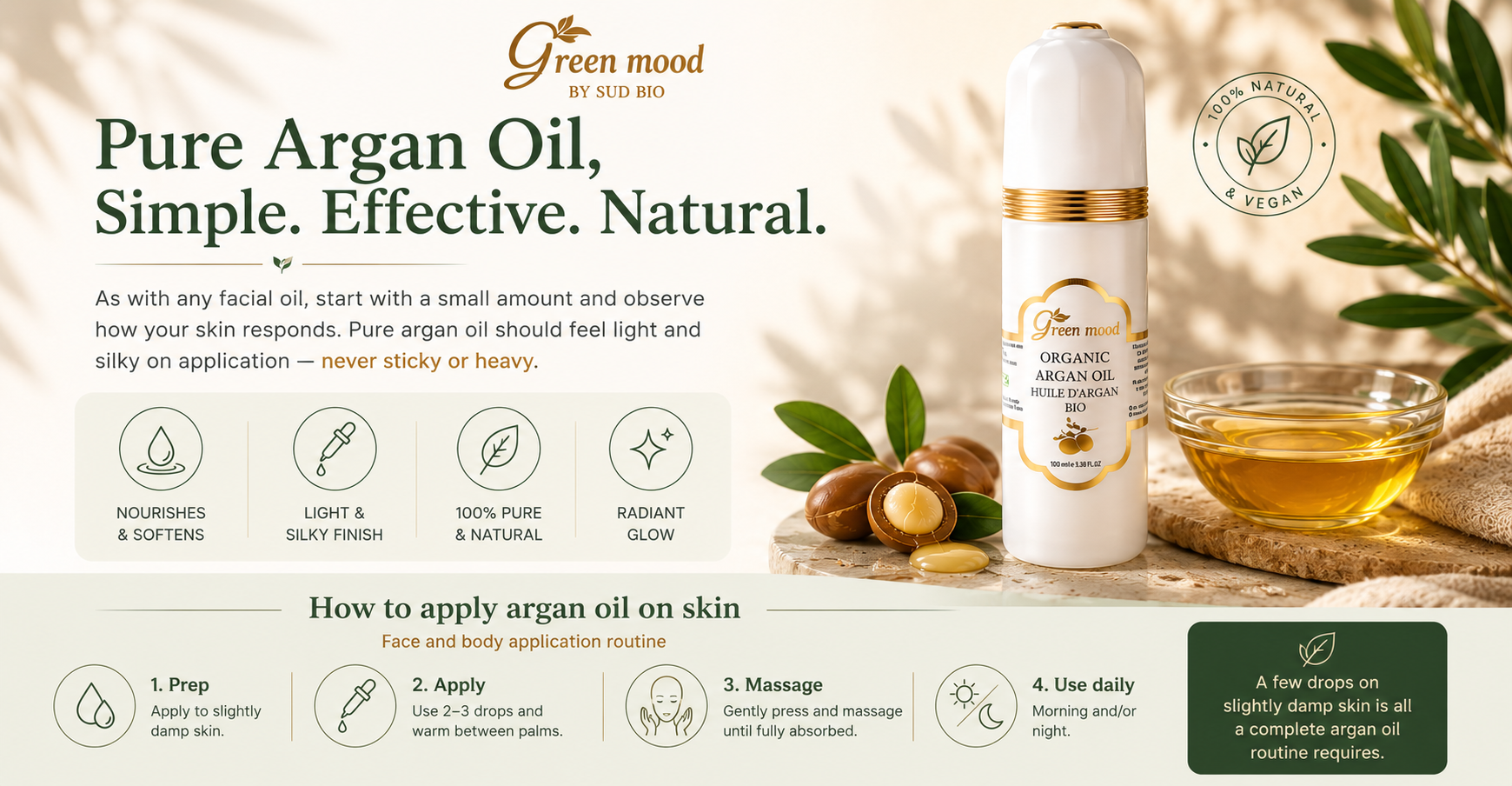
As with any facial oil, start with a small amount and observe how your skin responds. Pure argan oil should feel light and silky on application — never sticky or heavy.
How to Use Argan Oil on Skin
On the Face
Apply 2–3 drops to clean skin, ideally in the evening as the final step of your routine. Warm the oil between your fingertips and press it gently into the face and neck. During the night, the skin naturally shifts into recovery mode, and argan oil supports this process by reinforcing moisture retention while you sleep. It can be used alone, layered over a serum, or mixed with your usual cream.
On the Body
The most effective moment is right after showering, while the skin is still slightly damp. Massage a small amount per area — moisture on the skin improves absorption and prevents an overly oily finish. Focus on zones prone to dryness: elbows, knees, heels, shins, and hands.
On Targeted Areas
For rough patches, cuticles, or areas of the body where skin is stretched or losing suppleness, consistent daily massage with a few drops delivers the best results over time. With argan oil, consistency matters far more than quantity — applying excessive amounts does not improve results.
Quality determines results. Diluted, refined, or heat-treated oils lose much of the composition described above. Before buying, it is worth learning how to recognize pure argan oil — by its golden color, light nutty scent, fast absorption, and a label listing a single ingredient.
Pure or Scented Argan Oil: Which One for Your Skin?
Green Mood offers argan oil in two forms, and each has its place in a skin routine.
Pure Argan Oil is the reference for facial care and for sensitive skin: one ingredient, no fragrance, full concentration. If your priority is barrier support, facial hydration, or care for reactive skin, this is the version to choose.
Scented Argan Oils keep the same cold-pressed Moroccan argan oil base and add a refined natural fragrance. They are designed for body care, massage, and after-shower routines — delivering the same nourishing lipids while leaving a delicate scent on the skin. For daily body hydration where a sensory dimension is welcome, they are an elegant alternative to conventional body milks.
A simple way to structure a routine: pure argan oil for the face, a scented argan oil for the body. These are the signature scented variations from the collection:
How to Choose an Argan Oil That Actually Delivers
Not every bottle labeled “argan oil” offers the same purity, origin, or care. Skin results depend directly on these criteria:
- Single ingredient: The label should list only Argania Spinosa Kernel Oil. No added fragrance, no carrier oils, no dilution.
- Cold-pressed and unrefined: Extraction without heat or solvents preserves vitamin E, essential fatty acids, and antioxidants. Refined or deodorized oils lose much of this profile.
- Moroccan origin: The argan tree grows naturally only in Morocco, particularly in the southern regions. Authentic argan oil states its Moroccan origin clearly and traceably.
- Dark glass packaging: Protects the oil from light degradation and preserves its properties over time.
- Sensory check: Golden color, a light nutty aroma, and fast absorption without residue are the marks of a genuine cosmetic-grade oil.
-
 Best SellerSignature Scent
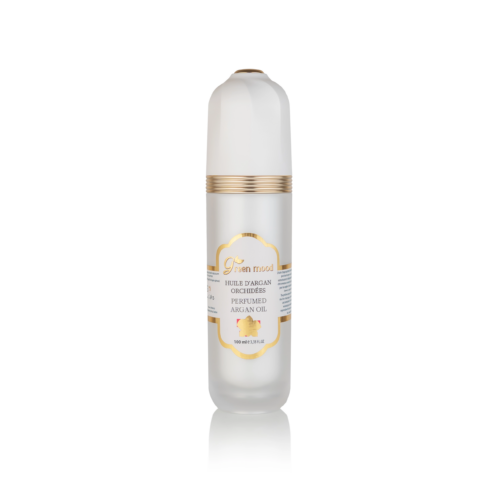
Argan oil with Orchid
Price range: 281 MAD through 378 MAD -
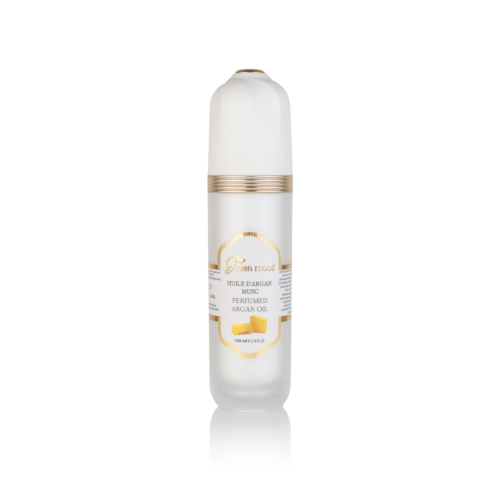 Best SellerSignature Scent
Argan Oil with Musk
Price range: 281 MAD through 378 MAD -
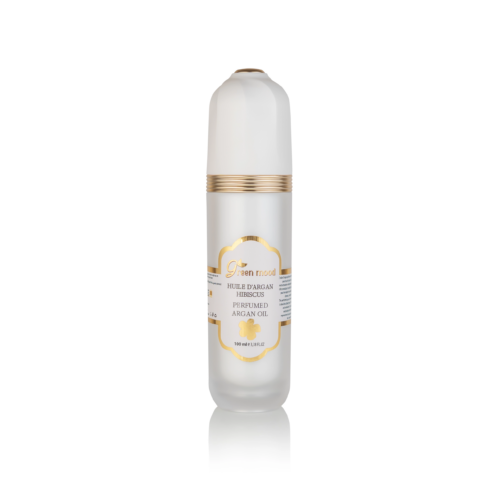 Best SellerSignature Scent
Argan Oil with Hibiscus
Price range: 281 MAD through 378 MAD
Green Mood Pure Argan Oil: Sourced and Pressed in Morocco
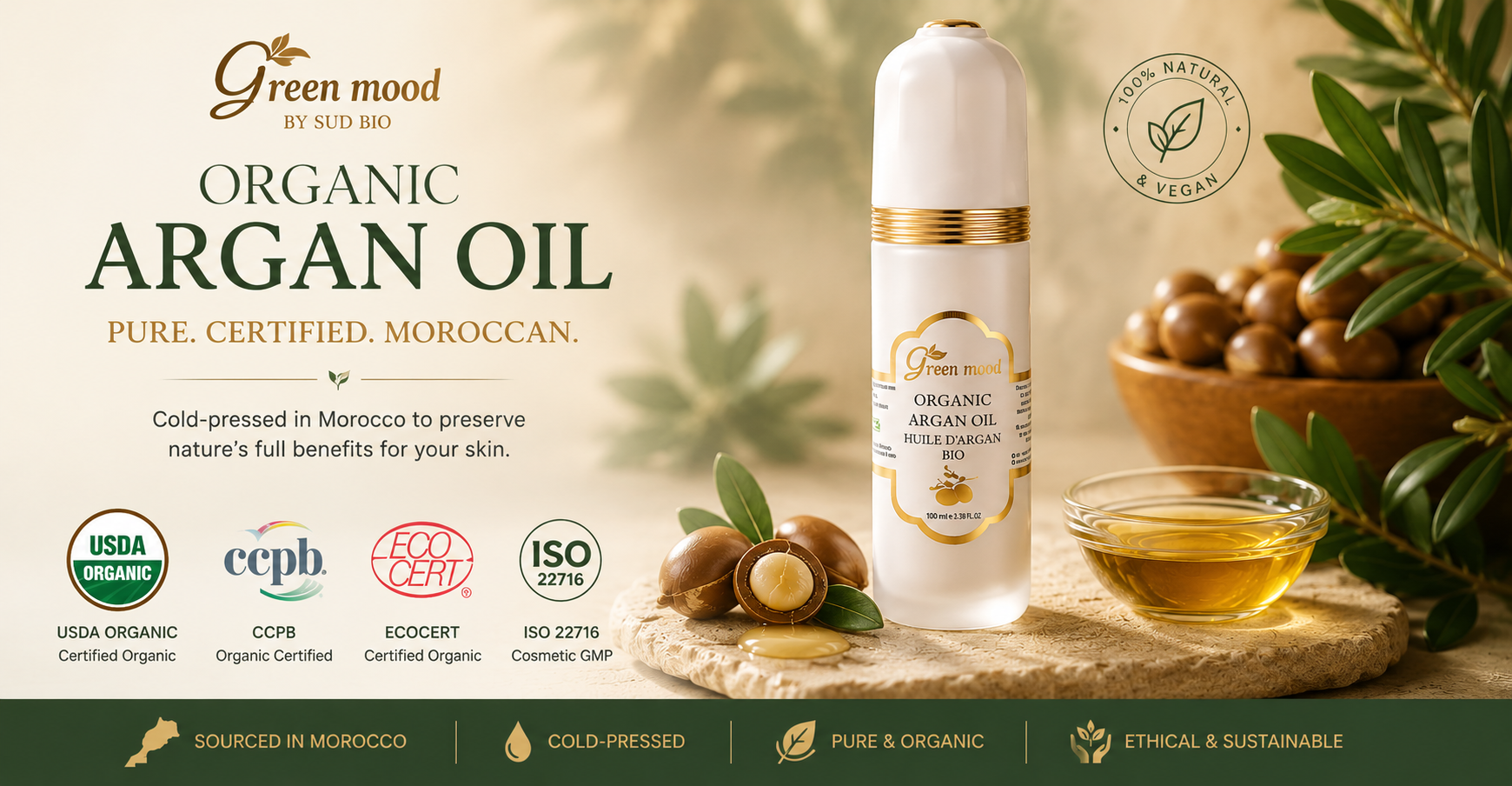
Green Mood is a Moroccan brand, and every bottle of our argan oil is harvested and cold-pressed in Morocco — at the origin of the ingredient itself. Our production is backed by internationally recognized certifications, including USDA Organic, CCPB, and ISO 22716 cosmetic manufacturing standards, alongside Moroccan health and quality accreditations.
This origin-first approach means three things for your skin:
- Full traceability from Moroccan argan kernels to the finished bottle, in partnership with local cooperatives.
- Unrefined integrity: a slow cold-press method that keeps the oil’s natural composition intact.
- Honest formulation: a single ingredient, verified purity, and no unnecessary additives.
You can order online with worldwide delivery, or visit one of our Green Mood boutiques across Morocco, including our airport locations in Casablanca, Marrakech, and Agadir.
Ready to build your routine? Start with the essential — the same cold-pressed oil covered throughout this guide:
-
Best SellerPure Botanical
Pure Argan Oil
Price range: 194 MAD through 281 MAD
Frequently Asked Questions: Argan Oil for Skin
Can I use argan oil on my skin every day?
Yes. Daily use is recommended for consistent results. A few drops morning and evening on the face, and a small amount on the body after showering, are sufficient. Consistency matters more than quantity.
Does argan oil clog pores?
Pure argan oil is generally considered non-comedogenic. Its lightweight, fast-absorbing texture nourishes the skin while allowing it to breathe, which is why it suits combination and even oily skin when used in small amounts.
Should I apply argan oil before or after moisturizer?
Most people apply argan oil after their serum, either instead of moisturizer in a minimalist routine or as a final layer over cream to help seal in hydration. On very dry skin, applying it over your cream at night improves overnight comfort.
Is argan oil suitable for sensitive skin?
Yes. In its pure form, argan oil contains a single ingredient with no added fragrance, which keeps irritation potential low. As with any new product, test on a small area first if your skin is highly reactive.
What is the difference between pure and scented argan oil for skin?
Both are built on the same cold-pressed Moroccan argan oil. The pure version is a single ingredient, ideal for the face and sensitive skin. The scented versions add a refined natural fragrance and are designed for body care, massage, and after-shower hydration.
Can argan oil be used on skin and hair with the same bottle?
Yes. Pure argan oil is a multi-purpose oil: face, body, nails, cuticles, and hair. For hair-specific techniques, see our guide on the use of argan oil for hair.
How do I know my argan oil is authentic?
Check for a single-ingredient label (Argania Spinosa Kernel Oil), a stated Moroccan origin, cold-pressed extraction, dark glass packaging, a golden color, and a light nutty scent. Our full guide on recognizing pure argan oil covers every verification step.
The Bottom Line
Argan oil for skin is one of the rare cases where a traditional remedy and a well-composed cosmetic ingredient are the same thing. Its fatty acids, vitamin E, sterols, and squalene make it a complete answer to dryness, dullness, and loss of suppleness — for the face, the body, and every skin type in between. The only condition is purity: a cold-pressed, unrefined, single-ingredient oil of verified Moroccan origin.
To go further: