
🌍 Free shipping above 150 € worldwide.


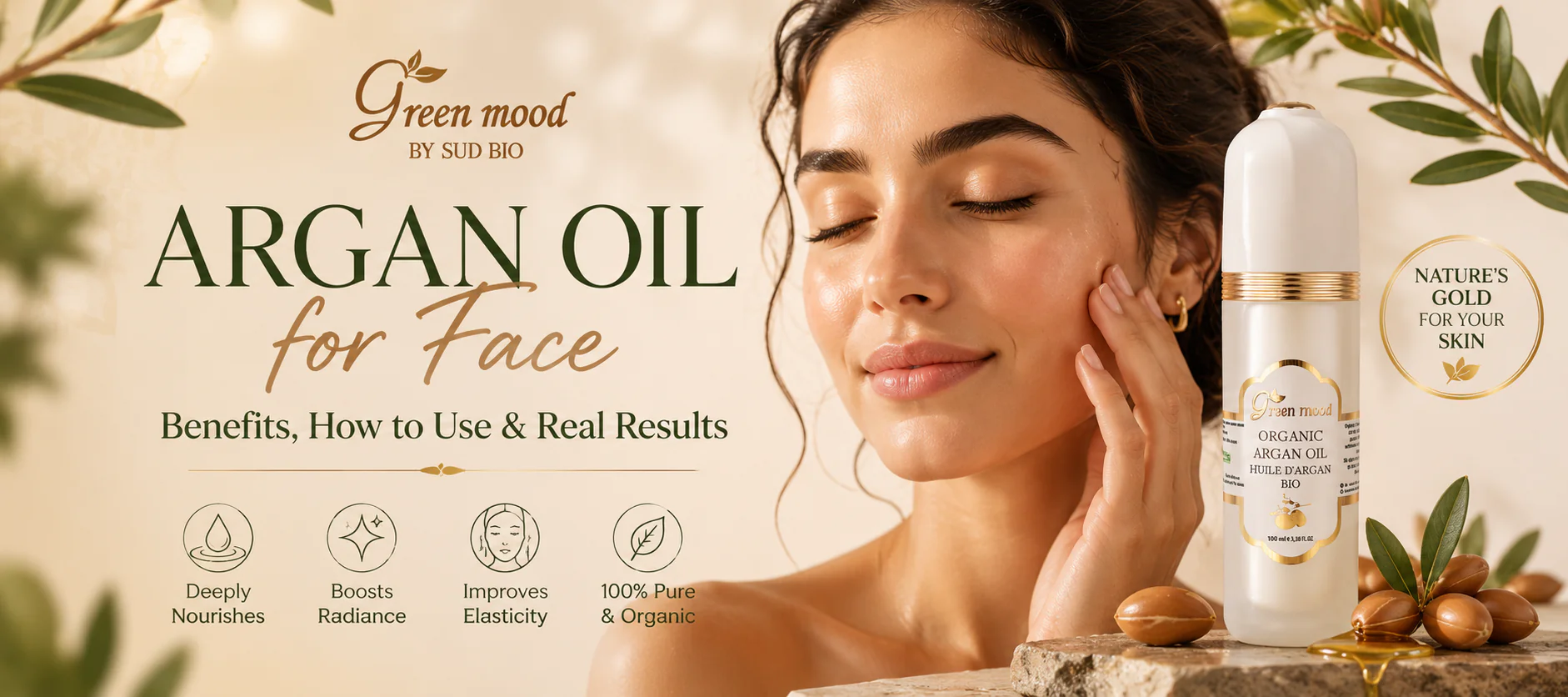
Argan oil is one of the most versatile facial skincare products in the world — a single-ingredient plant oil that hydrates, smooths and supports skin barrier function on the face, without the heaviness of thicker oils or the synthetic gloss of silicone serums. When it is genuinely pure and cold-pressed, it does what a good face serum does, at a fraction of the ingredient list.
This guide covers what argan oil actually does on facial skin, exactly how to use it (five methods, dosage by skin type), what to expect week by week, and the mistakes that make people give up too early. Everything below is written for the grade of oil Green Mood produces — cold-pressed, unrefined, single-ingredient. For the broader picture of what argan oil does on skin generally, see the argan oil for skin guide. For its use on the hair, see argan oil for hair.
Quick answer
Argan oil is good for the face when used in the right dose and at the right step of the routine. Two to three drops on damp skin after cleansing — as a serum, under moisturiser, or alone at night — give visible hydration and radiance within one wash cycle. It is non-comedogenic for most people, suits oily and combination faces as much as dry ones, and works alongside actives like vitamin C, hyaluronic acid or retinol. The only variables that matter are purity (cold-pressed, single-ingredient) and dosage.
Why Argan Oil Suits the Face
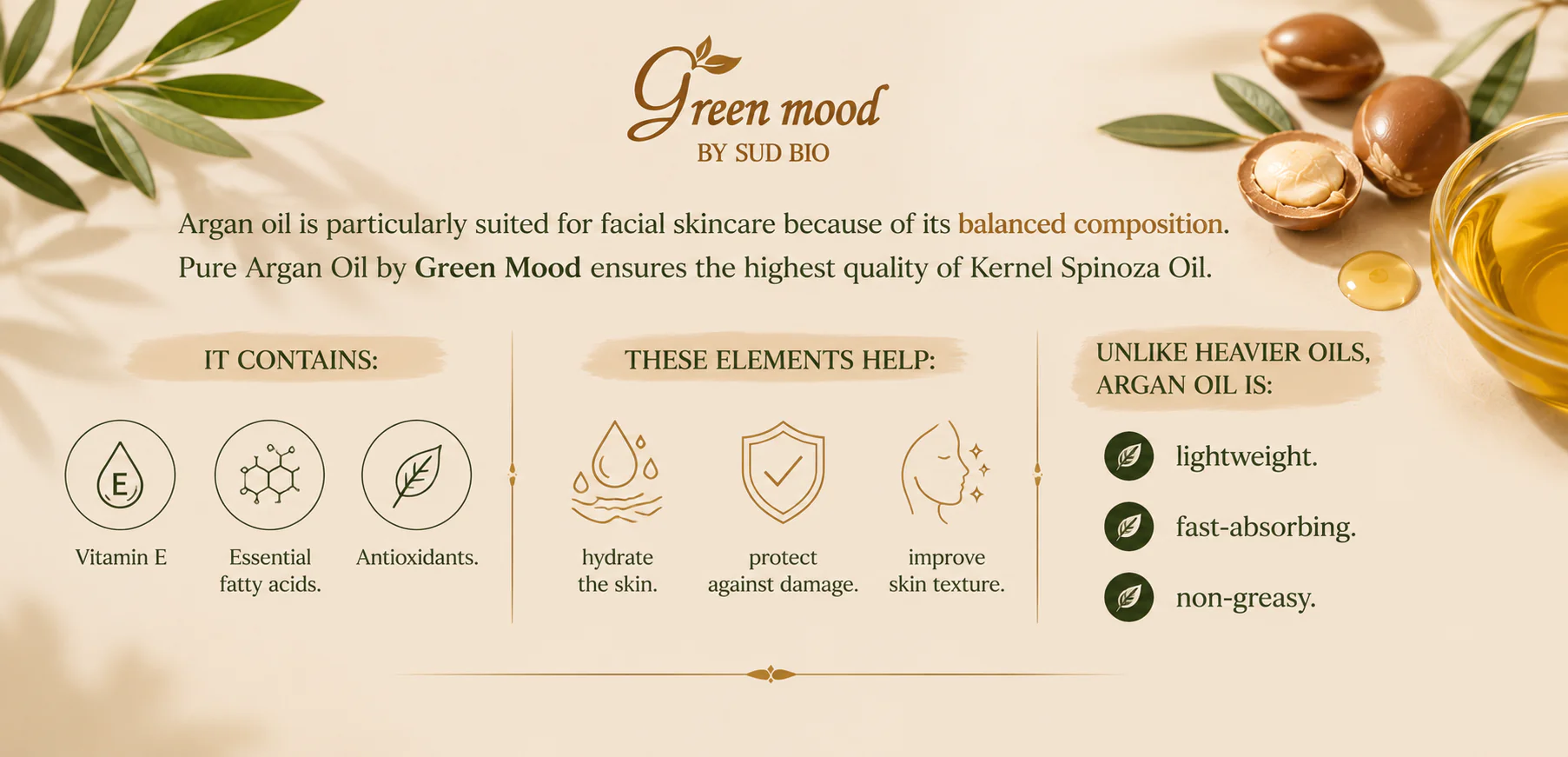
Facial skin is thinner, more exposed, and more reactive than skin on the body. It shows dehydration faster, marks fine lines earlier, and reacts to heavy or occlusive products with clogged pores or breakouts. Argan oil (Argania spinosa kernel oil) fits facial use for three specific reasons:
- Balanced fatty-acid profile. Roughly 80% unsaturated — mainly oleic and linoleic acids — which are close in structure to the skin’s own lipids. This is why the oil is absorbed rather than sitting on the surface.
- Naturally light texture. Compared with coconut, castor or olive oils, argan absorbs quickly and leaves no film. That matters on the face, where heavier oils translate into shine and congestion.
- Non-comedogenic on most skin. Argan oil scores 0 on the standard comedogenicity scale — the lowest possible. It does not typically clog pores when used at a reasonable dose. Very acne-prone skin should still patch-test.
What you get, in practice, is an oil that behaves more like a facial serum than a body oil. That behaviour is exactly what makes it work as a daily face product — and why Green Mood’s Pure Moroccan Argan Oil was designed for facial use as much as for hair or body.
Benefits of Argan Oil for Face
The benefits below are what pure argan oil delivers on facial skin. Immediate effects show up in a single application; structural effects build over three to four weeks of consistent use.
1. Deep hydration without clogged pores
Argan oil helps the outer layers of the skin retain moisture and softens the feel of dry, tight areas — cheeks, forehead, around the nose. Because it is light and non-comedogenic, it hydrates without the trade-off of clogged pores or breakouts common with heavier facial oils.
2. A non-greasy, natural finish
Applied at 2 to 3 drops on damp skin, argan oil finishes matte within a few minutes. Skin looks moisturised and healthy rather than shiny. This is the single feature that separates argan from most facial oils on the market.
3. Radiance and even tone
By smoothing the surface of the skin and filling in micro-gaps in the outer layer, argan oil helps light reflect more evenly. The visible result is a natural radiance — no glitter, no chemical sheen. Skin tone appears more even after two to three weeks of consistent use.
4. Fine lines and elasticity
The vitamin E and antioxidant content of argan oil helps limit the oxidative damage caused by pollution, sun and heat — the everyday drivers of premature aging. It also supports skin elasticity, which shows up as fewer fine lines around the eyes and mouth over time. Argan is not a substitute for a targeted anti-aging serum, but it complements one well.
5. Comfort for sensitive and reactive skin
Argan oil’s fatty-acid profile has a calming effect on skin that feels tight, red, or reactive. Applied after a stripping cleanser, after sun exposure, or during seasonal changes, it delivers rapid comfort. This is where first-time users often notice the difference within a single application.
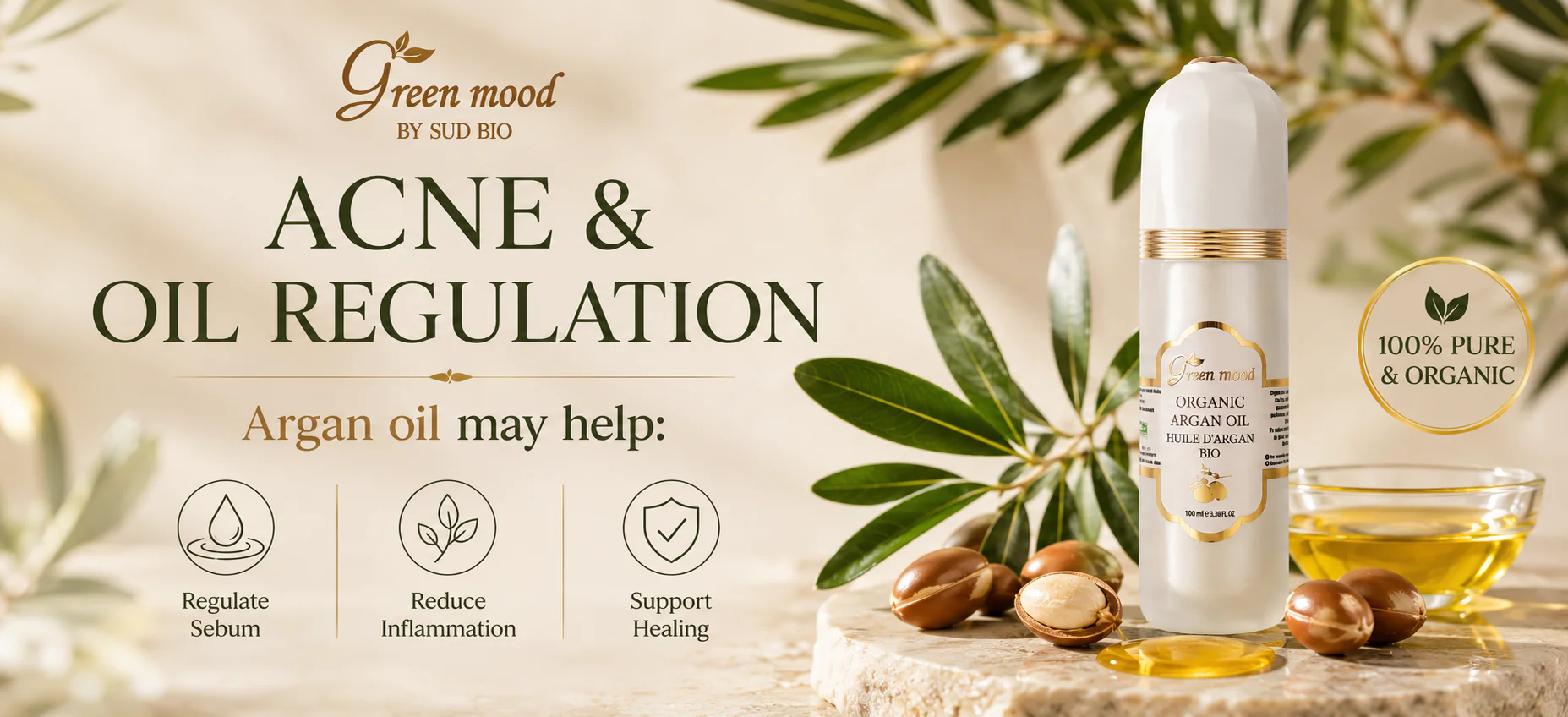
6. Support for acne-prone skin
Contrary to a common assumption, argan oil suits many acne-prone faces. Its non-comedogenic profile means it does not typically add to congestion, and its linoleic acid content — high compared to sebum in acne-prone skin — can help rebalance the surface lipid layer. It does not replace targeted acne treatments (salicylic acid, benzoyl peroxide, retinoids), but it soothes the irritation those treatments can leave behind.
7. Post-active recovery
On evenings when the routine includes retinol, AHAs, BHAs or vitamin C — actives that can leave skin sensitised — argan oil applied afterwards helps restore the barrier. A single drop pressed onto the cheeks and forehead is often enough.
8. Better makeup application
A single drop of argan oil pressed into the skin under foundation smooths the base, prevents makeup from settling into fine lines, and adds a natural glow that a matte primer cannot replicate.
-
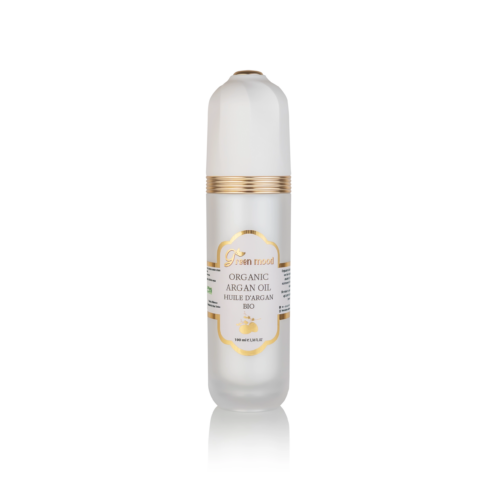 Best SellerPure Botanical
Pure Argan Oil
Price range: 194 MAD through 281 MAD
How to Use Argan Oil on the Face: 5 Methods
The same bottle of pure argan oil covers most of a facial routine. The dose and the timing change depending on which method you use.
Method 1 — As a face serum (daily)
- Cleanse the face and pat dry, leaving skin slightly damp.
- Warm 2 to 3 drops of argan oil between your palms.
- Press gently onto the face — do not rub. Work outward from the centre.
- Wait 30 seconds, then apply moisturiser or SPF as usual.
Best moment: morning and evening, as a serum step between rose water and moisturiser.
Method 2 — As a night treatment (overnight)
- After evening cleanse and toner, apply 3 to 4 drops of argan oil.
- Press across the face, neck and décolleté.
- Leave overnight; no moisturiser needed on top for most skin types.
- Cleanse in the morning as usual.
Best moment: two to three evenings a week for dry and mature skin; once a week for oily and combination.
Method 3 — As a moisturiser replacement
- After cleansing and toning, apply 3 drops of argan oil on damp skin.
- Press evenly across the face.
- Skip the moisturiser — the oil serves as the sole hydrating layer.
- Apply SPF over the top in the morning.
Best moment: for minimalist routines and normal-to-dry skin. Works less well for very oily skin, which usually still benefits from a light water-based moisturiser.
Method 4 — Under makeup
- Cleanse, tone and hydrate as usual.
- Press 1 drop of argan oil onto the cheeks and forehead — the areas that need glow.
- Wait 2 minutes for full absorption.
- Apply foundation as usual.
Best moment: any day you wear foundation, especially in dry weather. Also excellent mixed with a drop of liquid foundation for a natural finish.
Method 5 — Face massage
- Warm 4 to 5 drops of argan oil between your palms.
- Apply across the face, neck and décolleté.
- Massage in upward, outward movements for 3 to 5 minutes — with fingers, a gua sha tool, or a jade roller.
- Leave the excess to absorb, or blot with a tissue before makeup.
Best moment: once or twice a week in the evening as part of a longer skincare ritual.
How Much Argan Oil to Use on the Face
Dosage is where most people go wrong. Argan oil is a concentrated single-ingredient product — a few drops cover the entire face.
| Skin type | Daily face serum | Overnight treatment |
|---|---|---|
| Oily / combination | 1–2 drops | 2 drops (weekly) |
| Normal | 2 drops | 3 drops (twice weekly) |
| Dry | 2–3 drops | 3–4 drops (2–3× weekly) |
| Mature / dehydrated | 3 drops | 4 drops (2–3× weekly) |
| Sensitive / reactive | 1–2 drops | 2 drops (weekly) |
Start on the low end. If your skin feels dry after 24 hours, add one drop. If it looks shiny, reduce. Two drops is enough for most faces on most days — assuming the oil is the pure grade. A diluted or refined argan oil often behaves as if it were half the strength; adjust accordingly.
When and How Often to Apply
- Twice daily (morning and evening) as a serum: the default for most skin types.
- Evening only: if morning application feels heavy or interferes with SPF.
- Overnight treatment: two to three evenings a week for dry and mature skin; once a week for combination.
- After actives: apply after retinol, AHA/BHA or vitamin C to restore comfort. Wait 5 to 10 minutes after the active.
- On damp skin: always more effective than on completely dry skin — a light layer of water beneath the oil helps it spread and absorb.
Consistency matters more than intensity. Two drops every day beats a spoonful once a fortnight.
Argan Oil by Face Skin Type
Oily and combination skin
Argan oil is one of the few facial oils that suits oily faces well. Its non-comedogenic profile and lightweight texture mean it can hydrate the drier zones (cheeks, jawline) without adding to the T-zone shine. Use 1 to 2 drops on damp skin, avoiding the forehead and nose if they are already oily.
Dry and dehydrated skin
Argan oil delivers the most visible immediate improvement on dry facial skin. Two to three drops as a serum, plus an overnight treatment two to three times a week, will noticeably change how the skin feels within one week. Pair with a hydrating serum (hyaluronic acid) applied underneath for compounding results.
Sensitive and reactive skin
Argan oil is one of the gentlest facial oils available. It suits skin that reacts to fragrance, essential oils, and complex formulations. Patch-test on the inner arm before daily face use if your skin is highly reactive.
Acne-prone skin
Argan oil scores 0 on the comedogenicity scale and is compatible with active acne treatments. Apply after your treatment (salicylic acid, benzoyl peroxide, retinoid) to soothe irritation. Skip during severe active breakouts if your skin feels highly reactive — reintroduce as the flare-up settles.
Mature and dehydrated skin
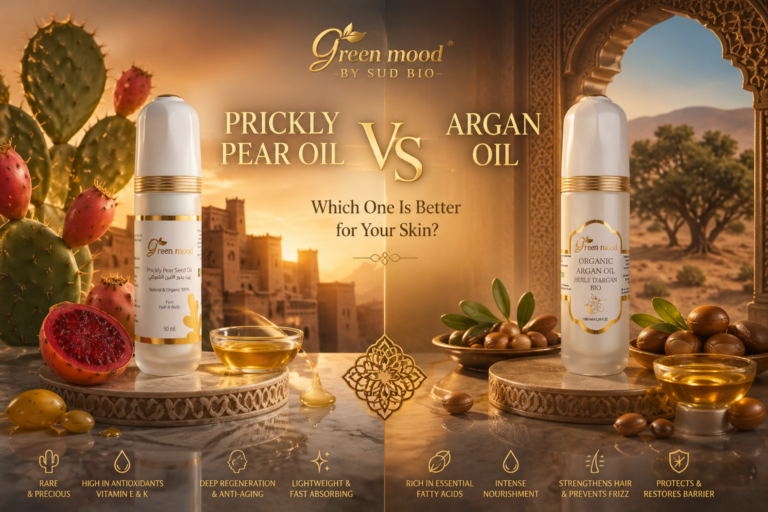
Consistent argan oil use supports skin elasticity and helps address the visible dehydration that often accompanies mature skin. Combine with a dedicated anti-aging serum for compounding effect. For a more concentrated anti-aging oil, prickly pear seed oil — with its exceptionally high vitamin E content — is a natural next step; the full case for its use is in the benefits of prickly pear seed oil guide.
Normal skin
Argan oil is a low-effort daily maintenance product. Two drops in the evening, layered under a light moisturiser or alone, keeps normal skin comfortable and radiant without any complicated routine.
What Results to Expect
Argan oil is a natural product. Results build in stages.
Immediately, after the first application
- Skin feels softer and less tight
- Visible radiance on the cheeks and forehead
- Fine lines around the eyes look less pronounced
- Makeup applies more smoothly if applied under
After 1 to 2 weeks
- Dehydration lines soften
- Reactive areas feel calmer
- Overall texture feels more even to the touch
After 3 to 4 weeks
- Skin tone appears more even
- Dry patches (cheek, forehead) recede
- Barrier feels more resilient — less reactive to weather and stress
After 2 to 3 months
- Fine lines less visible where consistent hydration has been maintained
- Overall complexion feels healthier and looks brighter
- Fewer flare-ups from actives thanks to consistent barrier support
Argan Oil vs Face Cream
The question comes up often: does argan oil replace a face moisturiser, or complement it?
Argan oil can replace a face cream for normal-to-dry skin in a minimalist routine. Its lipid layer alone provides sufficient hydration retention for most skin types most of the time. This is the traditional Moroccan approach — a single oil layer, no cream.
Argan oil complements a face cream for dry, mature, or dehydrated skin in a modern layered routine. Apply the oil first on damp skin, then the cream on top. The oil helps the cream spread and penetrate, and the cream provides an additional occlusive layer.
The one thing argan oil does not do is provide sun protection. Whichever setup you use, SPF still goes on top in the morning.
Common Mistakes to Avoid
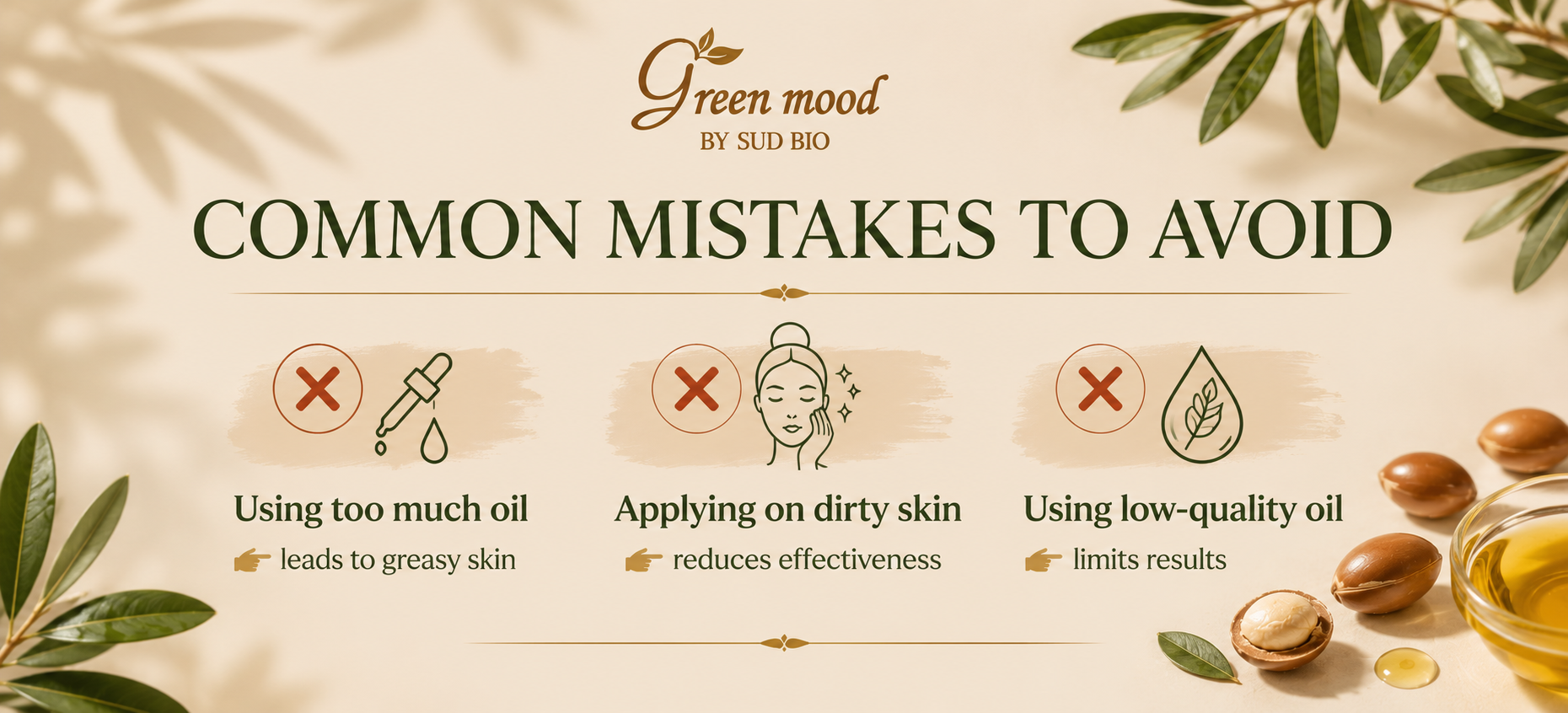
Using too much oil
The most common mistake. Argan oil is concentrated — 2 drops cover the entire face. More than that translates into shine, heaviness, and the false impression that argan oil “doesn’t work for my skin.”
Applying to dry, non-cleansed skin
Argan oil applied on top of makeup, sunscreen, or the residue of an old routine cannot penetrate. Always cleanse first, and ideally apply on slightly damp skin.
Applying it as the last step in the morning
Oil applied over sunscreen dilutes the SPF. Apply argan oil before SPF in the morning, or skip morning application entirely and use it evenings only.
Choosing a diluted or refined argan oil
A face-grade argan oil should be cold-pressed, unrefined, and single-ingredient (Argania spinosa kernel oil, nothing else). Refined argan oils are odourless but have lost part of their fatty acid profile and vitamin E. See how to recognize pure argan oil.
Expecting instant repair of long-term damage
Argan oil delivers real, measurable improvement — but it is not a repair treatment for years of accumulated sun damage or barrier disruption. Set a four-week benchmark for hydration and comfort, three months for texture and fine lines.
Storing it in the light
Oil kept in direct sunlight or heat degrades faster. Store your argan oil in the cupboard, ideally in its original dark or opaque bottle. Refrigeration is not necessary but does extend shelf life.
How to Choose a Pure Argan Oil for the Face
For facial use in particular, purity matters more than for any other application. Facial skin is thin and reactive — a diluted or synthetic-adulterated oil will show its shortcomings within a few days.
- Single ingredient. The INCI list should read Argania spinosa kernel oil and nothing else. No added fragrance, no carrier oil, no preservative.
- Cold-pressed and unrefined. Refining destroys part of the vitamin E and antioxidant load. “Cold-pressed” and “unrefined” should be stated on the label.
- Certified organic. A recognised certification (USDA Organic, ECOCERT, CCPB) confirms the sourcing and processing chain.
- Moroccan origin. The argan tree grows almost exclusively in southwestern Morocco. Origin should be verifiable and stated.
- Sensory signature. Pure argan oil has a light, nutty aroma that fades within minutes on the skin. A perfumed smell means added fragrance; no smell at all often means refined.
Green Mood’s Pure Argan Oil meets all five criteria — cold-pressed, unrefined, single-ingredient, USDA/ECOCERT/CCPB certified organic, sourced from Moroccan cooperatives. It is the argan oil this guide is written around.
The Green Mood Standard
Green Mood’s Pure Argan Oil for facial use is:
- Cold-pressed from certified organic argan kernels
- Single-ingredient — Argania spinosa kernel oil, nothing else
- Unrefined, preserving the full fatty acid profile and vitamin E content
- Certified by USDA Organic, ECOCERT and CCPB
- Produced under ISO 22716 cosmetic good manufacturing practice
- Sourced from Moroccan cooperatives, single-origin
For a broader look at what argan oil does across all skin surfaces, see the argan oil for skin guide. For hair-focused use, the argan oil for hair guide. For the full comparative context — argan vs coconut, castor, or prickly pear — start with the complete argan oil guide.
Frequently Asked Questions
Can I use argan oil on my face every day?
Yes. Two to three drops daily on damp skin after cleansing are safe on all skin types, including sensitive and oily. Reduce to evening-only if morning use feels too heavy.
Is argan oil good for oily skin on the face?
Yes. Argan oil is non-comedogenic and light — it hydrates the drier zones without adding to T-zone shine. Use 1 to 2 drops maximum, avoiding the forehead and nose if they are already oily.
Can argan oil replace my face moisturiser?
For normal-to-dry skin in a minimalist routine, yes. For very dry, mature or dehydrated skin, use argan oil first, then layer a moisturiser on top. SPF still goes on top in the morning either way.
Will argan oil clog my pores?
No — argan oil scores 0 on the standard comedogenicity scale, the lowest possible rating. Very acne-prone skin should still patch-test before daily use.
Can I use argan oil under makeup?
Yes. Press one drop onto the cheeks and forehead, wait 2 minutes for absorption, then apply foundation. It smooths the base and prevents foundation from settling into fine lines.
Can I use argan oil overnight on my face?
Yes. Three to four drops applied to clean skin before bed, left overnight. Two to three times a week for dry and mature skin, once a week for combination. Cleanse in the morning as usual.
How much argan oil should I use on my face?
Two to three drops for the entire face is enough. Oily skin: 1 to 2 drops. Dry and mature skin: 2 to 3 drops. More than that leads to shine and heaviness without any additional benefit.
When should I apply argan oil to my face — morning or night?
Both work. Morning use adds glow under makeup and supports the barrier through the day; apply before SPF, not after. Evening use is the deepest treatment moment. If choosing one, evening is more impactful.
Does argan oil help with wrinkles?
Argan oil helps soften the appearance of fine lines caused by dehydration, and its vitamin E content supports skin against oxidative damage. It is not a substitute for a targeted anti-aging serum, but complements one well.
Is argan oil good for face wrinkles under the eyes?
Yes, with a small dose. Pat half a drop under each eye with the ring finger, avoiding direct contact with the eye. Skin under the eyes is thin and benefits from consistent gentle hydration.
Can I mix argan oil with my foundation?
Yes. One drop mixed into liquid foundation gives a natural, dewy finish. Test the ratio — one drop per pump of foundation is a good starting point.
Argan oil vs Moroccan oil — are they the same for facial use?
Not always. “Moroccan oil” is often a branded serum containing a small percentage of argan mixed with silicones and fragrance. Pure argan oil has a single INCI ingredient: Argania spinosa kernel oil. For facial use, purity matters — always check the ingredient list.
The Bottom Line
Pure argan oil is one of the most versatile facial products in natural skincare. Applied correctly, it hydrates, calms, supports elasticity, and gives a natural radiance — for all skin types, at any age, in any routine.
The two variables that determine your results are purity — cold-pressed, unrefined, single-ingredient — and dosage — two to three drops on damp skin, not a spoonful in the palm. Get both right, and a bottle of pure argan oil earns its place as the daily face product you reach for first.
Continue reading: argan oil for skin · argan oil for hair · complete argan oil guide · how to recognize pure argan oil.
Nice
good info and good job on presentation