Argan oil · Hair care guide · Updated October 2026
Argan Oil for Hair: Benefits, How to Use It, and How Much to Apply
What does Argan oil do to hair, what are its limits, the dosage for your hair type, and what changes upon usage after one wash, one month and three months.
Argan oil is good for hair in a specific, limited way: it conditions the hair fibre from the outside. A few drops reduce friction between strands, lay the cuticle flatter and slow the moisture exchange that causes hair frizz. On the other side, Argan oil does not repair a split end nor change how fast hair grows or replace a heat protectant, and most disappointment when it comes to argan oil is due to wrong expectations or from using too much.
Green Mood produces cold-pressed Argan oil in Morocco, and this guide is written for a pure, single-ingredient oil such as our Pure Argan Oil. It covers what the oil does, the benefits you can expect, the dose by hair type, the roots question, growth, and an honest before-and-after timeline. For the step-by-step routines across hair, face and body, see our guide on how to use argan oil.
QUICK ANSWER
Yes, Argan oil is good for hair when the dose is small and it goes on the lengths, not the roots. Two to four drops on damp mid-lengths and ends add shine, calm frizz and cut the friction that breaks hair. A weekly pre-shampoo mask softens dry or coloured hair. It does not make hair grow faster, and too much of it leaves hair flat and greasy.
What Does Argan Oil Do for Hair?
Argan oil coats each hair fibre in a thin film of lipids. That film does three things: it lowers friction between strands, so hair tangles and snaps less; it smooths lifted cuticle scales, so light reflects evenly and hair looks shinier; and it slows the exchange of moisture with the air, which is what makes hair frizz in humid weather.
The reason lies in its composition. Argan oil (INCI: Argania spinosa kernel oil) is roughly 80% unsaturated fatty acids, mostly oleic acid (about 43 to 49%) and linoleic acid (about 29 to 36%), with tocopherols (vitamin E), plant sterols and squalene alongside.
Oleic and linoleic acids stay fluid at room temperature, which is why the oil spreads thinly and does not set into a waxy layer the way coconut oil can.
Tocopherols are antioxidants. They keep the oil itself from turning rancid quickly, and they are why argan is often described as a vitamin E oil.
Nothing else is in a pure oil. No silicone, no water, no fragrance. It washes out with one or two shampoos.
What it does not do matters as much. Hair is not living tissue once it leaves the scalp, so no oil feeds it, heals it or closes a split end. Argan oil changes how the fibre behaves and looks for as long as the film is there, which is why small regular doses matter more than one heavy application. For the oil itself, where it comes from and how it is pressed, see what argan oil is.
WHAT THE RESEARCH SAYS
Published work on argan oil and hair is thin, and it is worth being exact about it. A small 2013 laboratory study on bleach-dyed hair found less protein loss when a conditioner containing argan oil was used after colouring. A 2024 study on textured hair detected argan oil molecules inside bleached fibres, yet the treated hair was not measurably stronger in tensile tests. Read together: argan oil conditions and lubricates hair well. It does not rebuild it.
Benefits of Argan Oil for Hair
The benefits of argan oil for hair fall into two groups: cosmetic effects you see on the first use, and protective effects that show up as less damage over several weeks.
Benefit
Why it happens
When you notice it
Shine
A smoother cuticle reflects light evenly
First application
Less frizz
The lipid film slows moisture exchange with the air
First application
Softer, easier to comb
Lower friction between fibres
First application
Softer dry ends
Regular lipid top-up on the oldest part of the hair
1 to 2 weeks
Less breakage
Fewer tangles, less snapping under the brush
3 to 4 weeks
Help with heat and colour stress
The film limits sudden drying; conditioning after colouring
Over months
Scalp comfort
An emollient on dry, tight skin
1 to 2 weeks of scalp use
1. Shine without silicone
Dull hair is usually hair with a rough surface. By filling the gaps of a lifted cuticle, argan oil lets light reflect in one direction instead of scattering. The shine is visible straight away and looks natural rather than glassy, because the film is thin.
2. Frizz and flyaway control
Frizz is a humidity problem: the cuticle lifts, the fibre swaps moisture with the air and strands separate. A thin layer of oil on the mid-lengths and ends slows that exchange. Because argan oil is light, the hair stays mobile instead of going flat.
3. Softness and easier detangling
Oiled fibres slide past each other. On damp hair this means the comb passes with less pulling, and on dry hair the ends stop catching on each other and on clothing.
4. Softer ends on dry, brittle hair
The ends are the oldest part of the hair and the furthest from the scalp’s own sebum. Hair dried out by colouring, heat or hard water feels like straw there first. Regular drops of argan oil give the ends back their flexibility.
5. Less breakage and fewer split ends
Most breakage comes from mechanical wear: brushing, tying, towel-drying, friction on a pillow. Lower friction means less snapping. Argan oil cannot mend a split end, since only scissors do that, but it helps prevent the next one.
6. Support with heat styling and colouring
A few drops on damp hair before blow-drying limit how abruptly the fibre dries out. After colouring or bleaching, a weekly argan oil mask is one of the simplest ways to keep processed hair supple. It works alongside a heat protectant, not instead of one.
7. Comfort for a dry scalp
Massaged into a dry, tight scalp once a week and then washed out, argan oil acts as an emollient and eases the feeling of tightness. It is a comfort measure, not a treatment for dandruff or any scalp condition.
An eighth benefit is often claimed: faster growth. That one needs a closer look, and it has its own section below.
194 MAD–281 MADPrice range: 194 MAD through 281 MAD
How to Use Argan Oil on Hair
To use argan oil on hair, warm two to four drops between your palms and smooth them over damp mid-lengths and ends after washing, stopping a hand’s width from the scalp. That is the everyday method. The four others below are occasional argan oil hair treatments, each for a different goal.
What you want
Method
Amount
How
Shine, less frizz, daily softness
Leave-in
2–4 drops
Damp mid-lengths and ends, every wash
Softer dry, coloured or bleached lengths
Pre-shampoo mask
1–3 teaspoons
Dry hair, 30–60 minutes, shampoo twice, once a week
Deep care for very dry or coarse hair
Overnight mask
1–3 teaspoons
Dry lengths, hair tied and wrapped, shampoo twice in the morning
Relief for a dry, tight scalp
Scalp massage
5–8 drops
Massage 3–5 minutes, leave 20–30 minutes, wash out
Smoother blow-dry
Before heat styling
2–3 drops
Damp mid-lengths and ends, then dry as usual
Each of these routines is set out step by step, together with the face and body uses, in our complete guide on how to use argan oil. The points below are the ones that come up most for hair.
Wet or dry hair?
Damp hair is better for conditioning, dry hair for finishing. On towel-dried hair the oil spreads further on fewer drops and helps with detangling. On dry hair, a single drop smoothed over the surface tames flyaways and adds polish. Soaking-wet straight hair is the one case to avoid, because the oil slides off with the water. Curly and coily hair is the exception and takes oil well when very wet.
When to apply it: before or after washing?
Both, for different reasons. Before washing, a generous amount works as a mask that the shampoo then removes. After washing, a few drops stay in as a leave-in. If your hair is very dry, do both on the same day: mask before, drops after.
Can you put pure argan oil straight on your hair?
Yes. A pure argan oil needs no dilution and no mixing. Put it in your palms first rather than pouring it onto your head, so that the dose stays small and spreads evenly.
Argan oil and heat styling
Two or three drops on damp hair before blow-drying are enough. An oil is not a heat protectant: for straighteners and curling tongs at around 200 °C, use a dedicated thermal product and keep the argan oil for the finish.
How Much Argan Oil to Use on Hair
Most people need two to four drops of argan oil per application. Fine hair needs one or two, thick or curly hair up to six. A mask uses far more, one to three teaspoons, because it is washed out afterwards.
Hair type
Leave-in, per application
Weekly mask
Fine or thin
1–2 drops
Skip, or 1 teaspoon every 2 weeks
Medium
2–3 drops
1 to 1½ teaspoons
Thick or coarse
3–5 drops
2 teaspoons
Curly or coily
4–6 drops, on wet hair
2–3 teaspoons
Bleached or coloured
2–4 drops
2 teaspoons
Oily roots, dry ends
2 drops, ends only
1 teaspoon, ends only
These doses assume shoulder-length hair. For hair that reaches the middle of the back, add one or two drops. For a short cut, one drop is often enough.
The one-hour test: an hour after application your hair should feel soft and look glossy, not wet. If it still looks oily, halve the dose next time. If the ends still feel rough, add one drop at a time.
A 50 ml bottle holds roughly 1,000 drops. Used as a leave-in it lasts most people eight to twelve months, while weekly masks use it up in about a season. That is the practical argument for a pure, cold-pressed argan oil over a diluted serum: you use very little of it.
Should You Apply Argan Oil to the Roots or Scalp?
Do not apply argan oil to the roots as a leave-in: oil on the first few centimetres of hair flattens volume and makes it look greasy within a day. Applying it to the scalp itself is a different matter, and fine as an occasional treatment that you wash out.
Where
Verdict
Why
Hair at the roots
No
Weighs hair down, flattens volume, looks greasy
Scalp skin
Yes, once a week, washed out
Eases dryness and tightness; rinsing avoids residue
Mid-lengths and ends
Yes, every wash
The driest part of the hair, where the oil is useful
Is argan oil good for the scalp?
For a dry, tight scalp, yes, as a weekly treatment. Warm 5 to 8 drops between your palms, apply with the fingertips along partings, massage for 3 to 5 minutes, leave for 20 to 30 minutes, then shampoo.
Skip the scalp routine if your scalp is naturally oily. Skip it also if you have oily, yellowish flakes or persistent itching: that pattern is usually dandruff or seborrhoeic dermatitis, which oil does not treat and can aggravate. A pharmacist or dermatologist is the right first step there.
The rule is simple: oil on the scalp is a treatment you rinse out, and oil on the roots of the hair is a styling mistake.
How Often to Use Argan Oil, and How Long to Leave It In
Use argan oil as a leave-in every wash day, or daily on the ends if they are dry, and as a mask once a week at most.
Use
How often
How long it stays in
Leave-in drops
Every wash, or daily on dry ends
Until the next wash
Pre-shampoo mask
Weekly for dry, coloured or bleached hair; every 2 weeks for normal hair
30 to 60 minutes
Overnight mask
Every 1 to 2 weeks, very dry or coarse hair only
6 to 8 hours
Scalp massage
Weekly, dry scalp only
20 to 30 minutes
Before blow-drying
Each time
Until the next wash
Can you use argan oil on your hair every day?
Yes, on the ends and in small amounts: one or two drops on dry ends between washes. Daily use becomes a problem only when the dose creeps up or the oil reaches the roots. If your hair starts to look dull or feel coated, skip a few days and wash as usual.
Can you leave argan oil in overnight?
Yes, on the lengths, for very dry, thick, coloured or bleached hair. Tie the hair loosely, wrap it in a scarf or lay a towel over the pillow, and shampoo twice in the morning. Fine hair gains little from an overnight mask and often ends up limp.
Small regular doses do more than occasional heavy ones. Two drops every wash day beat one oil bath a month.
194 MAD–281 MADPrice range: 194 MAD through 281 MAD
Argan Oil by Hair Type and Concern
Argan oil suits most hair types. What changes from one to the next is the dose and the place it goes.
Fine or thin hair
One or two drops, on the ends only, on damp hair. Skip overnight masks, and keep pre-shampoo masks to a teaspoon every two weeks at most. Fine hair shows excess oil quickly.
Thick or coarse hair
Three to five drops per application, and a weekly mask of about two teaspoons. Thick hair absorbs oil readily and tolerates overnight masks well.
Curly and coily hair
Curls are drier along the length because sebum travels poorly down a spiral. Apply four to six drops on very wet hair after washing, over a water-based leave-in if you use one, then scrunch. The oil helps define the curl pattern and limits frizz as it dries.
Bleached, coloured or heat-damaged hair
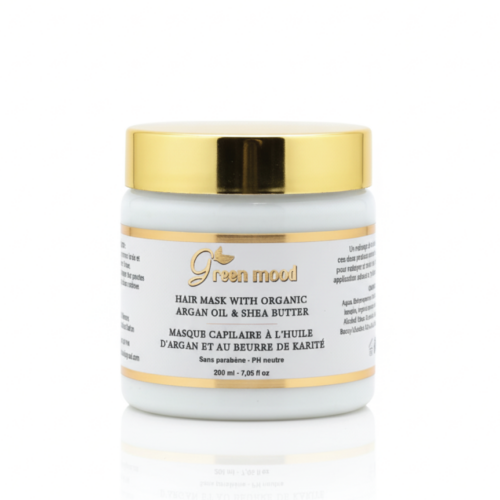
This is where the difference is most visible. Combine two to four drops after every wash with a weekly mask of two teaspoons, and add an overnight mask every two weeks. Processed hair is more porous, so it takes up oil quickly and also loses it quickly, which is why regularity counts. For a ready-made version of the weekly step, the Argan Oil Hair Mask does the same job with less mess.
Two drops on the last ten centimetres only. Keep masks to the ends as well. The oil never needs to go higher than the ears.
Frizzy hair
Apply on damp hair straight after towel-drying, before the frizz forms, then add a single drop on dry hair to settle the surface. In very humid weather, a little more on the outer layer of the hair helps.
Low-porosity and high-porosity hair
Low-porosity hair, where water beads on the surface and products tend to sit on top, needs the lightest dose, on damp hair. High-porosity hair, which soaks up water fast and dries fast, as bleached hair does, takes more oil and benefits from it most.
Does Argan Oil Help Hair Growth?
No study shows that argan oil makes hair grow faster or thicker, whether the oil is pure, Moroccan, organic or all three. Hair grows from the follicle at about one centimetre a month, and an oil applied to the fibre does not change that rate.
What argan oil can do is help you keep the length you grow:
Less breakage. Many people who feel their hair has stopped growing are growing it at a normal rate and losing it at the ends. Reduce the breakage and the length stays.
A more comfortable scalp. A weekly massage eases dryness and tightness. The massage itself is pleasant and harmless, though it is not a growth treatment either.
“Pure Moroccan argan oil for hair growth”: what the label means
Bottles sold as argan oil for hair growth contain the same oil as any other pure argan oil. The growth claim is marketing. The criteria that count are purity and freshness, covered in choosing a pure argan oil below.
If the concern is shedding or thinning
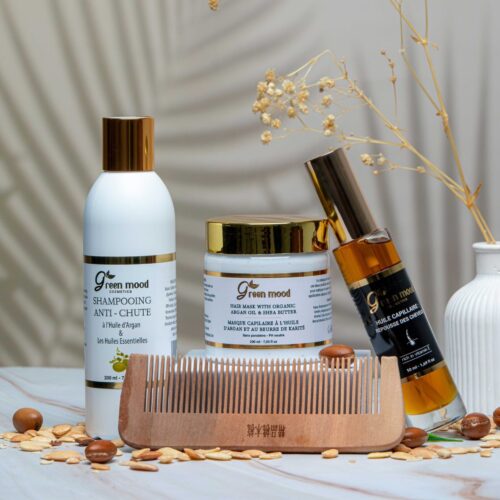
Sudden, patchy or persistent hair loss is a medical question, and a doctor or dermatologist is the right person to ask. For everyday scalp care, a formula made for the scalp is a better tool than an oil made for the lengths. Green Mood’s Anti-Hair Loss Serum is applied at the roots to care for the scalp and support root vigour, and the Anti-Hair Loss Pack combines it with the argan shampoo and the argan hair mask as one routine.
Argan Oil for Hair, Before and After: What Changes and When
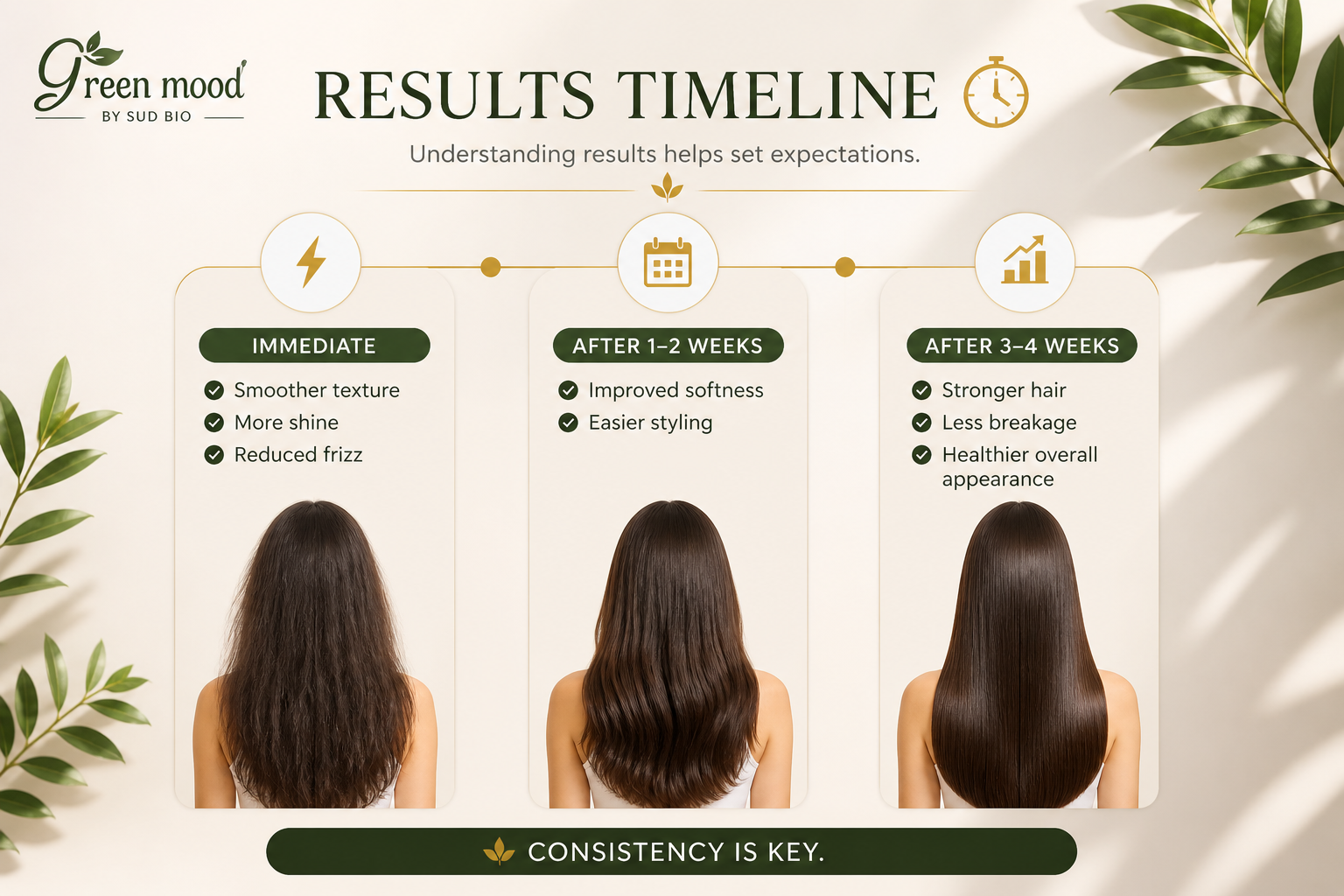
The difference argan oil makes shows first as shine and smoothness, then as softer ends, then, after a month or more, as less breakage. It does not show as new length or extra thickness.
When
What you can see or feel
First application
Smoother to the touch, visible shine on the lengths, calmer frizz, easier combing
1 to 2 weeks
Ends feel softer; styling takes less time
3 to 4 weeks
Less hair snapping in the brush; ends look less dry
2 to 3 months
More length kept between trims; fewer split ends to cut; a more comfortable scalp if you use the scalp routine
What will not change
The speed at which your hair grows
The number of hairs on your head
Split ends that already exist, which only a trim removes
Your natural curl pattern or colour
How to take a fair before-and-after photo
Photograph dry, unstyled hair in the same spot and the same light on day one and again at week four. Many before-and-after pictures online compare unstyled hair with freshly blow-dried hair. The shine is real. The rest is styling.
Disadvantages of Argan Oil for Hair, and Mistakes to Avoid
The main disadvantages of argan oil for hair are that it can weigh down fine hair, look greasy when overdosed, and disappoint anyone expecting growth or repair. A pure oil also costs more than a blended serum. Nearly every other complaint comes down to one of the mistakes below.
Too much oil. “It makes my hair greasy” is a dosage problem. Start with two drops and add only if needed.
Oil at the roots. Keep a hand’s width between the oil and the scalp when using it as a leave-in.
Treating fine hair like thick hair. One drop, ends only, no overnight masks.
Using it as a heat protectant. It helps with blow-drying. It does not replace a thermal product under a straightener.
One shampoo after a mask. A single wash leaves a film. Shampoo twice.
Buying “with argan” instead of argan. A serum with a long ingredient list is a different product from a pure oil.
Expecting a week to undo years. Hair that has been bleached repeatedly needs months of regular care. Judge at week four, not day four.
Skipping the patch test. Argan oil is pressed from the kernel of a tree nut. Reactions are rare, but if you have a nut allergy or reactive skin, test a drop on the inner arm for 24 hours first.
Poor storage. Keep the bottle closed, away from light and heat. A sharp or sour smell means the oil has oxidised and should not be used.
Argan Oil vs Other Hair Oils
No single oil is right for every job. Argan is among the lighter of the common hair oils, which makes it a natural everyday choice. Others earn their place as occasional treatments.
Oil
Texture
Where it works on hair
Main limit
Argan
Light, fluid
Daily leave-in, weekly mask
Costs more when pure
Coconut
Heavy, solid when cool
Pre-wash treatment
Too heavy as a leave-in for many hair types
Castor
Thick, sticky
Scalp and brows, in small amounts
Hard to spread and to wash out
Rosemary (essential oil)
Used diluted
Scalp only, in a carrier oil
Not for the lengths; irritating if undiluted
Prickly pear seed
Light, dry touch
Drop by drop on brittle ends
Rare and expensive
“Moroccan oil” serums
Silky
Fast cosmetic shine
Mostly silicone, with a small share of argan
Argan oil vs coconut oil
Coconut oil has the most published evidence for limiting protein loss when applied before washing, but it is heavy and sets solid in cool weather, which makes it a poor leave-in for most hair. Argan oil is lighter and suits daily use. Many routines use both: coconut as an occasional pre-wash, argan as the finish. See the full comparison of argan oil vs coconut oil.
Argan oil vs castor oil
Castor oil is thick and sticky, and is used mostly on the scalp, brows and lashes. It is hard to apply on the lengths and hard to rinse out. Argan oil is the easier of the two for everyday hair care. See argan oil vs castor oil.
Argan oil vs rosemary oil
They do different jobs, so the choice is not one or the other. Rosemary is an essential oil used diluted on the scalp, and the interest in it comes from a small number of scalp studies. Argan is a carrier oil for the lengths. The two combine well: two or three drops of rosemary essential oil in a teaspoon of argan oil for the weekly scalp massage. Never apply an essential oil undiluted.
Products sold as “Moroccan oil” or “argan oil of Morocco” are usually silicone serums with fragrance and a small percentage of argan oil. They give quick slip and shine and are perfectly usable, but they are formulated products, not argan oil. The label tells you which one you have: a pure oil lists a single ingredient. Our guide on how to recognize pure argan oil goes through the checks.
Pure Argan Oil for Hair: How to Choose One
The right argan oil for hair is a cosmetic-grade, cold-pressed, unrefined oil with one ingredient on the label: Argania spinosa kernel oil. Five checks cover it.
One ingredient. No added fragrance, no carrier oil, no silicone.
Cosmetic, not culinary. Culinary argan oil is pressed from roasted kernels and smells of toasted nuts. It is a food. Cosmetic oil is pressed from raw kernels.
Cold-pressed and unrefined. Refined or deodorised oil has no smell and has lost part of its tocopherols.
Certified organic. A recognised certification such as USDA Organic, AB or CCPB documents how the oil is sourced and processed.
Moroccan origin, dark glass. Argan trees grow almost only in south-western Morocco, and light degrades the oil, so a dark bottle matters.
A pure cosmetic argan oil is golden yellow, with a light nutty scent that fades within minutes on the hair. No smell at all suggests a refined oil. A sharp or sour smell means it has oxidised.
194 MAD–281 MADPrice range: 194 MAD through 281 MAD
Frequently Asked Questions
Is argan oil good for hair?
Yes. In small doses on the mid-lengths and ends, argan oil adds shine, reduces frizz and lowers the friction that causes breakage. It suits most hair types. It is not a growth treatment and it does not repair split ends.
What does argan oil do to your hair?
It leaves a thin lipid film on each fibre. The film smooths the cuticle, which gives shine, slows moisture exchange with the air, which limits frizz, and lets strands slide past each other, which means fewer tangles and less breakage.
Do you put argan oil on wet or dry hair?
Both work. On damp, towel-dried hair it conditions and helps with detangling. On dry hair, one drop acts as a finishing touch for shine and flyaways. Avoid soaking-wet straight hair, where the oil slides off.
How many drops of argan oil should I use on my hair?
Fine hair: 1 to 2 drops. Medium hair: 2 to 3. Thick hair: 3 to 5. Curly or coily hair: 4 to 6. Start at the low end and add one drop at a time.
Can I use argan oil on my hair every day?
Yes, one or two drops on the ends. Keep it away from the roots, and cut back if your hair starts to look flat or coated.
Should I apply argan oil to the roots?
Not as a leave-in, because it flattens the hair and makes it look greasy. A weekly scalp massage with 5 to 8 drops, left for 20 to 30 minutes and then washed out, is fine for a dry scalp.
How long should I leave argan oil in my hair?
As a leave-in, until the next wash. As a pre-shampoo mask, 30 to 60 minutes. As an overnight mask, 6 to 8 hours, followed by two shampoos.
Can I leave argan oil in my hair overnight?
Yes, on the lengths, every one to two weeks, if your hair is very dry, thick, coloured or bleached. Wrap the hair and shampoo twice in the morning. It is not recommended for fine hair.
Does argan oil help hair growth?
Not directly. No study shows that argan oil speeds up growth. It helps you keep length by reducing breakage, and a weekly massage keeps a dry scalp comfortable.
Is argan oil good for curly hair?
Yes. Curly and coily hair is drier along the length and takes more oil: 4 to 6 drops on very wet hair after washing help define curls and limit frizz.
Is argan oil good for bleached or coloured hair?
Yes, this is where it helps most. Use 2 to 4 drops after every wash and a mask of about two teaspoons once a week. It softens processed hair. It does not reverse the chemical damage.
Which is better for hair, argan oil or coconut oil?
They suit different uses. Coconut oil is heavier and works as an occasional pre-wash treatment. Argan oil is lighter and better as a daily leave-in. Fine or easily weighed-down hair usually does better with argan.
Is argan oil the same as Moroccan oil?
Not usually. “Moroccan oil” is most often a branded serum made of silicones, fragrance and a small share of argan oil. Pure argan oil has one ingredient: Argania spinosa kernel oil.
Will argan oil make my hair greasy?
Only if you use too much or apply it at the roots. Two to four drops on the lengths absorb and leave a soft, non-oily finish.
The Bottom Line
Argan oil is a conditioning oil, and a very good one: it adds shine, calms frizz and reduces breakage without the weight of thicker oils. It will not make hair grow faster or mend split ends, and it is at its most useful when you stop expecting it to.
Two things decide your results: the purity of the oil and the dose. A few drops of a cold-pressed, single-ingredient oil on the lengths, every wash, is the whole method.
Hi there, I found your blog by way of Google whilst searching for a related topic, your site got here up, it seems great. I’ve bookmarked it in my google bookmarks.
Interesting oil, would def like to try it on my hair



Hi there, I found your blog by way of Google whilst searching for a related topic, your site got here up, it seems great. I’ve bookmarked it in my google bookmarks.
Interesting oil, would def like to try it on my hair
Thanks