
🌍 Free shipping above 150 € worldwide.


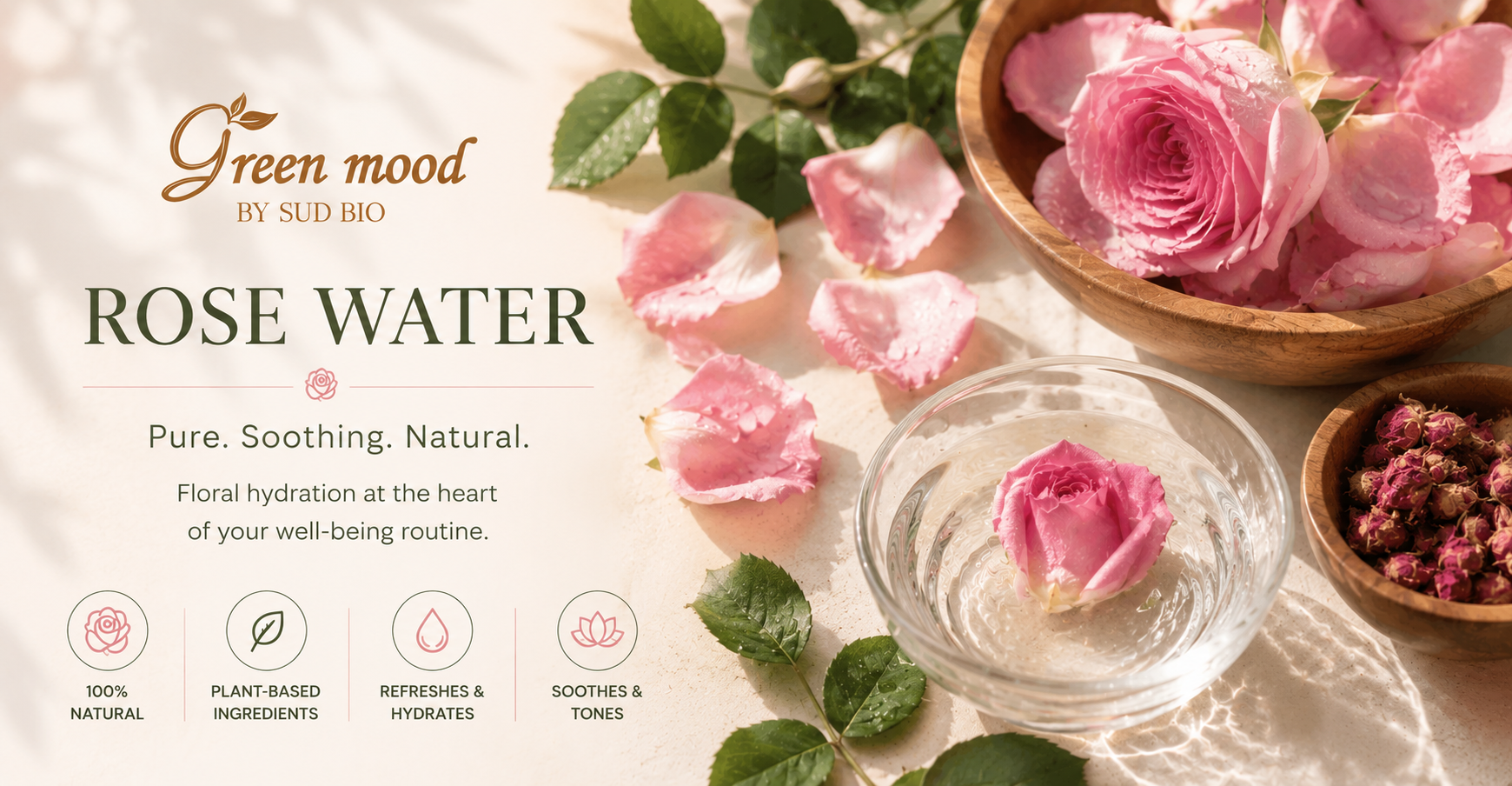
Rose water is one of the gentlest and most versatile products in natural skincare. Applied as a toner, a mist, or a light cleanse, it hydrates, soothes redness, and helps balance the skin — without alcohol, without fragrance, and without disrupting any routine already in place.
This guide covers what pure rose water actually does for the face, how to use it correctly for your skin type, and what to expect week by week. Everything below is written for steam-distilled, single-ingredient rose floral water — the grade Green Mood produces.
Quick answer
Rose water is good for the face because it hydrates, calms redness, and helps rebalance the skin after cleansing — for all skin types, including sensitive. Applied twice a day as a toner or mist, results on comfort and radiance are visible within a week; on texture and even tone, within three to four weeks. Its effectiveness depends entirely on purity: single ingredient, steam-distilled, alcohol-free, no fragrance.
What Is Rose Water, Exactly?
Rose water — also called rose floral water or rose hydrosol — is the aromatic water produced during the steam distillation of rose petals. In the traditional Moroccan process, fresh Damask rose petals (Rosa damascena) are placed with water in a copper still. Steam passes through the petals, carrying volatile compounds; the vapour is then cooled and separated. The lighter fraction is rose essential oil, the heavier fraction is rose water.
Pure rose water is not an infusion, a soak, or an oil dilution. It is the water that has captured the water-soluble aromatic molecules of the rose during distillation. That is why its scent is subtle rather than perfumed, and why the label of a pure product carries a single ingredient: Rosa damascena flower water.
Benefits of Rose Water for the Face
Pure rose water offers a clear set of benefits — some visible after one application, others building over several weeks of consistent use.
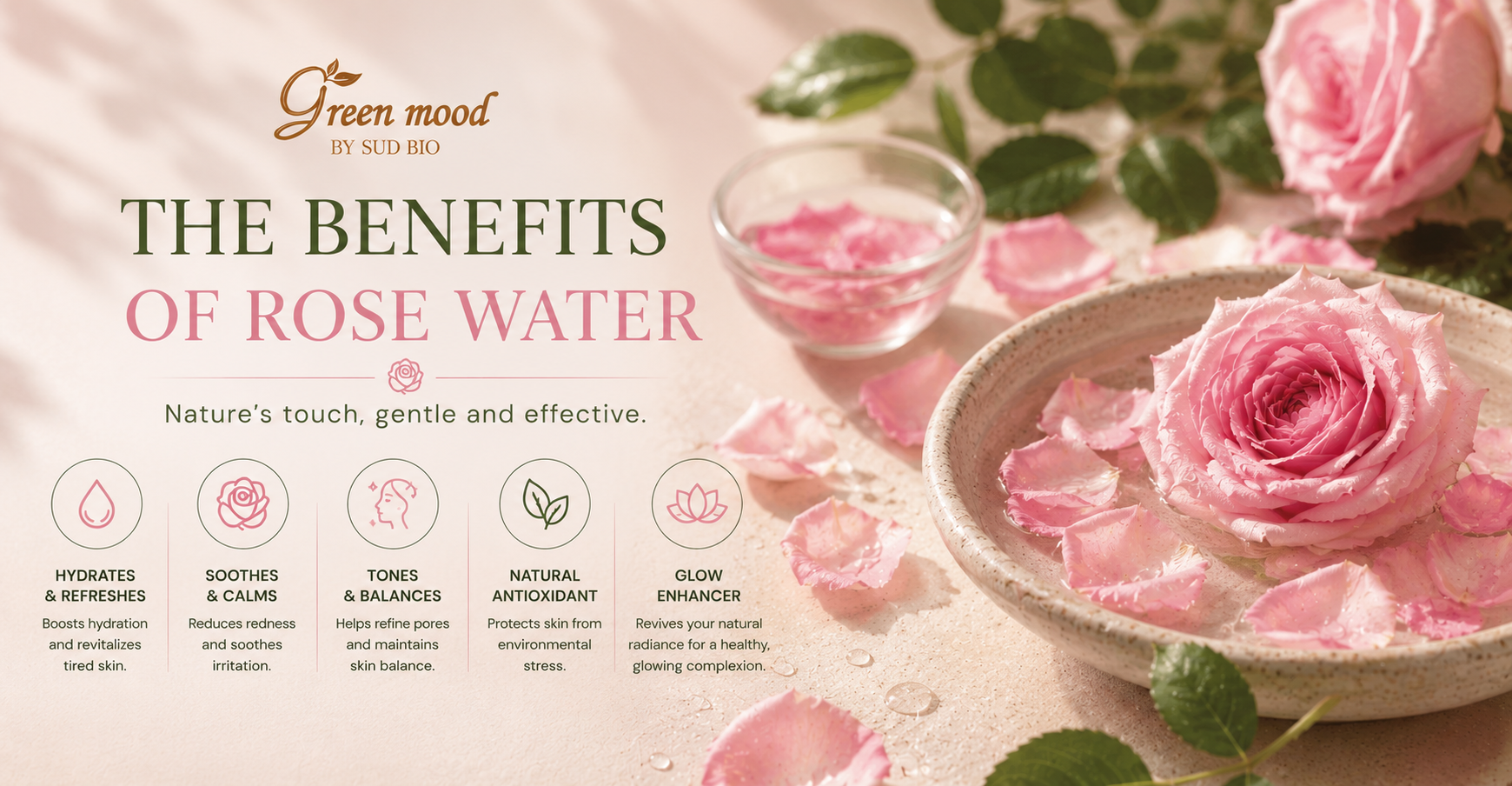
1. Light hydration without heaviness
Rose water is a humectant-type ingredient: it helps the outer layer of the skin retain moisture. Because it is water-based and alcohol-free, it hydrates without leaving a film — which is why it suits combination and oily skin as well as dry skin.
2. Soothing action on redness and sensitivity
Rose water contains natural anti-inflammatory compounds that help calm reactive skin. Applied to skin that feels tight after cleansing, after sun exposure, or during seasonal changes, it delivers a rapid comfort effect. This is where most first-time users notice the difference immediately.
3. Support for a balanced skin barrier
After cleansing, the skin’s pH is often temporarily raised, especially when strong cleansers are used. Rose water helps bring the skin back toward its natural mildly acidic pH, which supports barrier function and the skin’s own defence.
4. Refined-looking pores
Rose water has a mild astringent action, meaning it temporarily tightens the appearance of open pores. This is not a permanent structural change — pore size is largely genetic — but the visible refinement is real and welcome after cleansing.
5. Antioxidant protection
The compounds carried in rose distillate include natural antioxidants that help protect the skin against everyday oxidative stress from pollution, UV exposure and heat. Consistent daily use compounds this protection.
6. Support for even, radiant complexion
By hydrating, calming and helping the barrier function, rose water contributes to a fresher, more even-looking complexion. It does not lighten the skin — that would be a different ingredient — but dullness caused by dehydration and irritation improves.
7. Gentle help for acne-prone skin
Rose water shows mild antimicrobial activity in laboratory settings and, more relevantly for daily use, it helps calm the inflammation that surrounds active breakouts. It does not replace targeted acne care, but it works alongside it without irritation.
8. A better foundation for the rest of your routine
Applied on damp skin before serum or cream, rose water helps subsequent products spread more evenly and absorb more comfortably. Serums layer better, moisturisers glide better, makeup sits better.
-
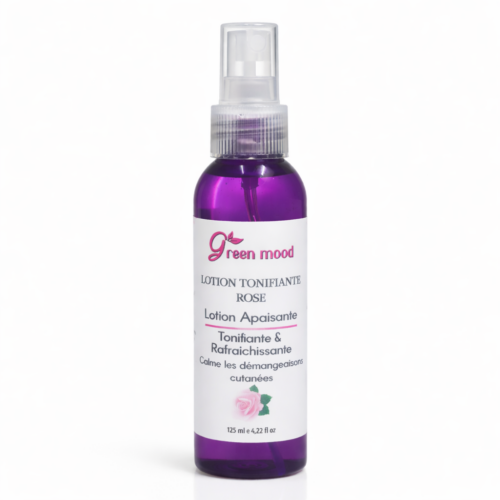 Best SellerMoroccan Ritual
Rose Water
43 MAD
Rose Water for Different Skin Concerns
The strength of rose water is its universality: it adapts to different needs without irritating. Below is a concern-by-concern breakdown.
Sensitive or reactive skin
Rose water is one of the most-recommended natural ingredients for sensitive skin. Its anti-inflammatory action calms redness, its water base avoids the stinging often associated with alcohol-containing toners, and its neutral pH supports the barrier. Apply twice a day on freshly cleansed skin. For rosacea-prone skin, patch-test first and introduce gradually.
Oily and combination skin
Rose water helps regulate the feeling of oiliness by hydrating the skin’s outer layer — dehydrated skin often over-produces sebum in compensation. The mild astringent action also refreshes the T-zone. Use as a mid-day mist to refresh without adding weight, and as a toner morning and evening.
Dry skin
On dry skin, rose water works best as a preparation step: apply on damp skin, then layer a hydrating serum, then a moisturiser. The rose water helps subsequent products penetrate more evenly and adds a first light layer of hydration.
Acne-prone skin
Rose water is gentle enough for daily use even during active breakouts. It helps calm the redness around blemishes and does not disturb any active treatment (salicylic acid, benzoyl peroxide, retinoids) applied afterwards. Apply after cleansing, allow to dry, then continue the routine.
Mature and dehydrated skin
Antioxidant support and consistent hydration are two of the most useful daily gestures for mature skin. Rose water contributes to both. Combine with a nourishing serum and an antioxidant-rich moisturiser for compounding results.
Under-eye area and dark circles
The under-eye area is thin, delicate, and often the first place tiredness shows. Soaking two cotton pads in cold rose water and pressing them under the eyes for five to ten minutes helps decongest the area and reduce puffiness. This is a comfort treatment, not a structural fix for dark circles caused by pigmentation or vascularity.
How to Use Rose Water on the Face: 6 Methods
The same bottle of rose water covers most of a skincare routine. Six methods, each targeting a different moment.
Method 1 — As a facial toner
- Cleanse the face with your usual gentle cleanser.
- Pat dry with a soft towel, leaving skin slightly damp.
- Apply rose water to a cotton pad, or spray directly into the palms.
- Sweep across the face and neck in gentle upward strokes.
- Do not rinse. Wait 30 seconds, then continue with serum and moisturiser.
Best moment: morning and evening, as the second step after cleansing.
Method 2 — As a hydrating facial mist
- Hold the spray 20 centimetres from the face.
- Close the eyes and mist evenly.
- Let the skin absorb; do not wipe.
Best moment: mid-day for a refresh, after a workout, on the plane, or after sun exposure. Safe over makeup.
Method 3 — As a gentle micellar-style cleanse
- Saturate a cotton pad with rose water.
- Press gently against the skin for a few seconds, then sweep across the face.
- Repeat with fresh pads until they come away clean.
Best moment: in the morning if you prefer a water-only cleanse, or to remove light makeup before a deeper cleanse in the evening.
Method 4 — Under serum and moisturiser
- After cleansing, apply rose water to slightly damp skin.
- Immediately follow with a hydrating serum — hyaluronic acid, niacinamide, vitamin C.
- Seal with a moisturiser suitable for your skin type.
Best moment: every morning and evening. This routine layering improves the absorption and comfort of the products that follow.
Method 5 — For the under-eye area
- Chill the rose water in the fridge.
- Soak two cotton pads and press under the eyes for 5 to 10 minutes.
- Follow with an eye cream or a light moisturiser.
Best moment: mornings, especially after a short night or when the eye area looks puffy.
Method 6 — In a DIY mask
- Mix one tablespoon of Moroccan clay (ghassoul or pink clay) with two to three tablespoons of rose water.
- Stir into a smooth paste.
- Apply to clean skin, leave for 10 minutes without letting it fully dry.
- Rinse with lukewarm water.
Best moment: once a week for a gentle purifying mask.
When and How Often to Apply
- As a toner: twice a day — morning and evening, after cleansing.
- As a mist: as often as the skin feels tight or dull — once or several times a day.
- As a cleanse: daily if you prefer a water-only morning cleanse.
- Under-eye compress: as needed, especially in the morning.
- Mask base: once a week.
Rose water is gentle enough for daily use morning and evening, on all skin types. There is no upper limit to how often it can be misted through the day.
What Results to Expect
Rose water is a comfort ingredient. Results build gradually and depend on how consistently it is used.
Immediately, after the first application
- Skin feels calmer and less tight
- Redness after cleansing subsides more quickly
- Complexion looks fresher within minutes
After 1 to 2 weeks of consistent use
- Reactive skin feels more predictable — fewer moments of tightness or irritation
- Serums and moisturisers absorb more evenly
- Makeup sits better on prepped skin
After 3 to 4 weeks
- Overall comfort of the skin improves
- Dullness caused by dehydration lifts
- Under-eye area looks less congested with regular compresses
After 2 to 3 months
- Barrier function feels more resilient — less reactive to seasonal changes
- Complexion appears more even and radiant
- Routine feels simpler because rose water replaces several other steps
-
Best SellerMoroccan Ritual
Rose Water
43 MAD
Common Mistakes to Avoid
Choosing a rose water that contains alcohol or fragrance
The most common mistake. A “rose water” that lists parfum, ethanol, or preservatives beyond a minimum stabiliser is a formulated toner, not a pure floral water. It may irritate sensitive skin and does not deliver the same soothing effect. Check the label — a pure product has one active ingredient: Rosa damascena flower water.
Rinsing it off
Rose water is a leave-on product. Applying it and then rinsing removes the ingredient before it works. Apply, wait, layer.
Storing it warm
Once opened, rose water keeps best in the fridge or in a cool, dark cupboard. Heat and light degrade the active compounds over time. Cold rose water also feels more refreshing on the skin.
Expecting it to replace targeted treatments
Rose water helps skin feel and look better. It does not treat pigmentation, deep wrinkles, active acne infections, or fungal conditions on its own. It works alongside targeted products, not instead of them.
Skipping the patch test on very reactive skin
Even the gentlest ingredient can trigger a reaction on very reactive skin. For rosacea, eczema-prone, or highly sensitive skin, apply to the inner forearm for two days before starting to use daily on the face.
How to Choose a Pure Rose Water
Five criteria separate a genuine rose water from a diluted or formulated one.
- One active ingredient. The label should show Rosa damascena flower water (INCI) as the single or overwhelmingly dominant ingredient.
- Steam-distilled, not blended. Look for the words “distilled” or “hydrosol”. A “rose water” made by dissolving rose extract or rose essential oil in water is not the same product.
- Alcohol-free. No ethanol, no denatured alcohol. Alcohol dries the skin and defeats the soothing purpose.
- No added fragrance. The natural scent of pure rose water is delicate. A strong or perfumed scent means added parfum.
- Verifiable origin. Damask rose grows in a few regions of the world — Morocco, Bulgaria, Iran, Turkey. A stated origin, ideally with a certification, is a mark of transparency.
A pure rose water has a light, fresh, slightly green floral scent that fades quickly. It should never smell like perfume, alcohol, or nothing at all.
Rose Water in Moroccan Skincare
Moroccan rose water comes principally from the Dades and M’Goun valleys in the south of the country, where Damask roses are cultivated at altitude and harvested in a short window each spring — typically in April and May. The petals are distilled shortly after picking to preserve their aromatic compounds.
In Moroccan homes and hammams, rose water has long served several roles: as a facial toner after cleansing, as a fragrance for the hair and skin, as an ingredient in traditional masks combined with clay or henna, and as a gesture of hospitality — sprinkled over guests at weddings and celebrations. This everyday familiarity is what shaped the modern skincare use of rose water, not the other way around.
The Green Mood Standard
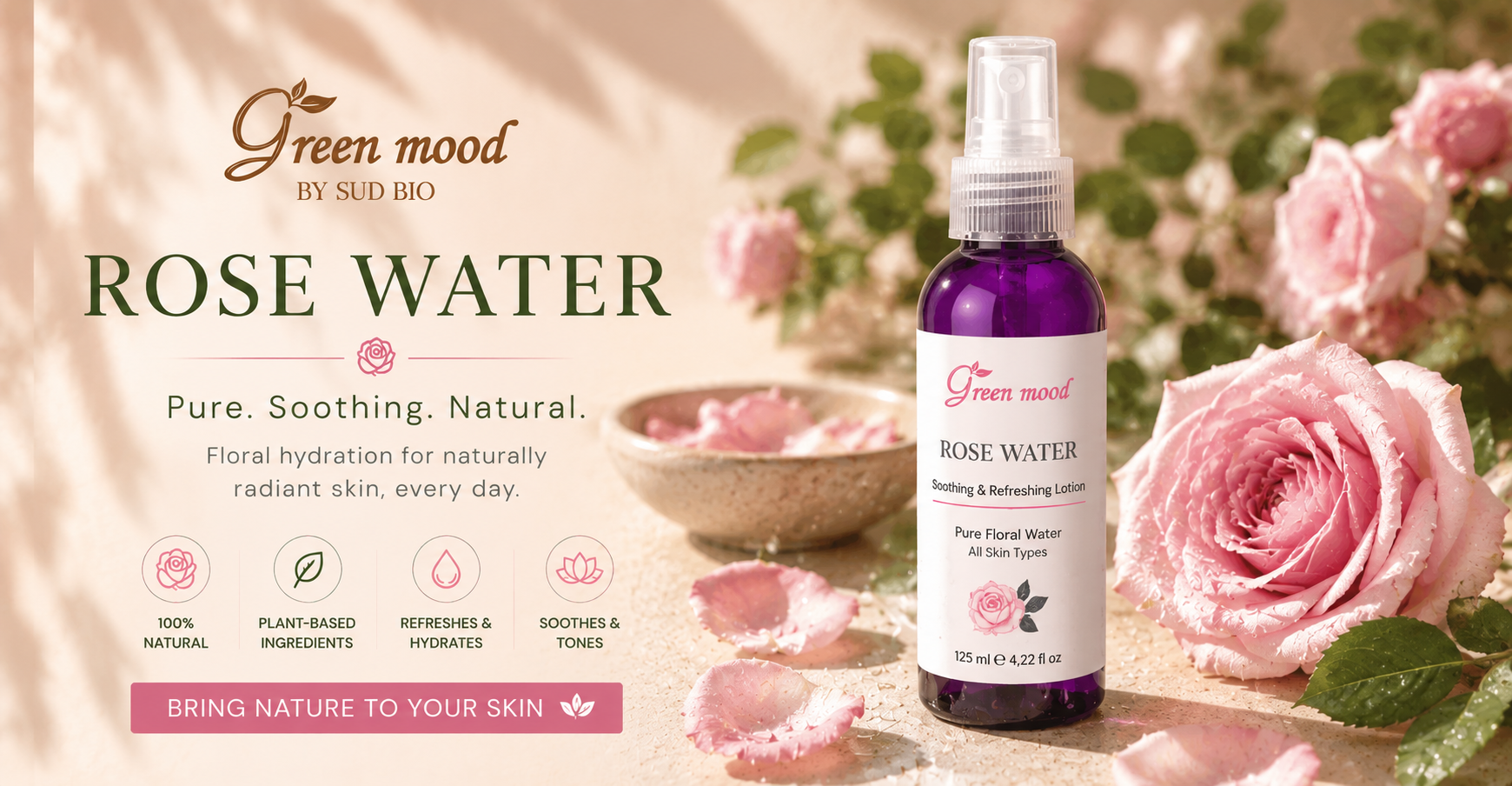
Green Mood’s Rose Floral Water is:
- Steam-distilled from Damask rose petals (Rosa damascena)
- Single-ingredient — no alcohol, no added fragrance, no synthetic preservative beyond what safety requires
- Produced under ISO 22716 cosmetic good manufacturing practice
- Sourced in Morocco, tied to the seasonal harvest
- Bottled in a spray format designed for daily use as a toner or mist
For the full face-care ritual around it, browse face care, toning solutions, and facial serums. To keep going on the same topic, see rose water for acne, rose water for sensitive skin, rose water as a toner, and how rose water is made.
Frequently Asked Questions
Is rose water good for your face every day?
Yes. Pure, alcohol-free rose water is gentle enough for daily use, morning and evening, on all skin types including sensitive skin.
What does rose water actually do for your skin?
Rose water hydrates the outer layer, calms redness, helps rebalance the skin’s pH after cleansing, temporarily refines the look of pores, and offers antioxidant support. It also prepares the skin so that serums and moisturisers absorb more evenly.
Can I use rose water instead of a toner?
Rose water is a natural toner — it can replace a conventional toner in most routines. If your existing toner contains active ingredients (glycolic acid, salicylic acid), rose water complements it rather than replaces it.
Is rose water good for oily skin?
Yes. Rose water hydrates without adding weight, helps calm the T-zone, and temporarily tightens the look of pores. It also helps regulate the dehydration that often triggers excess sebum.
Is rose water good for dry skin?
Yes, especially when layered under a hydrating serum and a moisturiser. Applied to slightly damp skin, it helps subsequent products spread and absorb evenly, adding a light first layer of hydration.
Does rose water help with acne?
Rose water helps by calming the inflammation and redness that surround breakouts, and it shows mild antimicrobial activity in laboratory conditions. It is not a stand-alone acne treatment but complements targeted care without irritating.
Does rose water help with dark circles?
Rose water compresses can help reduce puffiness and refresh the under-eye area. For dark circles caused by pigmentation or vascularity, results are limited — a targeted eye product is more effective for those.
How long does it take to see results?
Comfort and freshness: immediately. Barrier feel and calmer reactive skin: within one to two weeks. Overall radiance and even tone: within three to four weeks of twice-daily use.
Can rose water cause a reaction?
Pure rose water is one of the least irritating cosmetic ingredients. Reactions are rare and usually linked to added fragrance, alcohol, or preservatives in formulated “rose water” products. Patch-test on the inner arm before daily use if your skin is highly reactive.
Should I refrigerate rose water?
Not required, but it is helpful. Refrigeration preserves the aromatic compounds longer and makes the mist feel more refreshing on the skin — particularly for under-eye compresses.
Can I use rose water over makeup?
Yes, as a light mist held 20 centimetres from the face. It refreshes without disturbing the makeup and can help set a powder finish.
Is Moroccan rose water different from other rose waters?
The distillation process is similar across countries, but the rose variety, harvest timing, altitude, and quality of the raw material differ. Moroccan Damask rose from the M’Goun region has a distinctive aromatic profile and is harvested in a short spring window each year.
The Bottom Line
Pure rose water is one of the rare cosmetic ingredients that is simple, effective, and difficult to misuse. It hydrates, soothes, and helps balance the skin — for all skin types, at any age, in any routine. The two variables that determine your results are purity — steam-distilled, alcohol-free, single-ingredient — and consistency — twice a day, on freshly cleansed skin, followed by the rest of your routine.
Get both right, and a bottle of rose water becomes the most-used product in your bathroom.
Continue reading: rose water vs conventional toner · rose water toner for natural skin · how rose water is made.
I love it when folks come together and share thoughts. Great website, continue the good work!