🌍 Free shipping above 150 € worldwide.


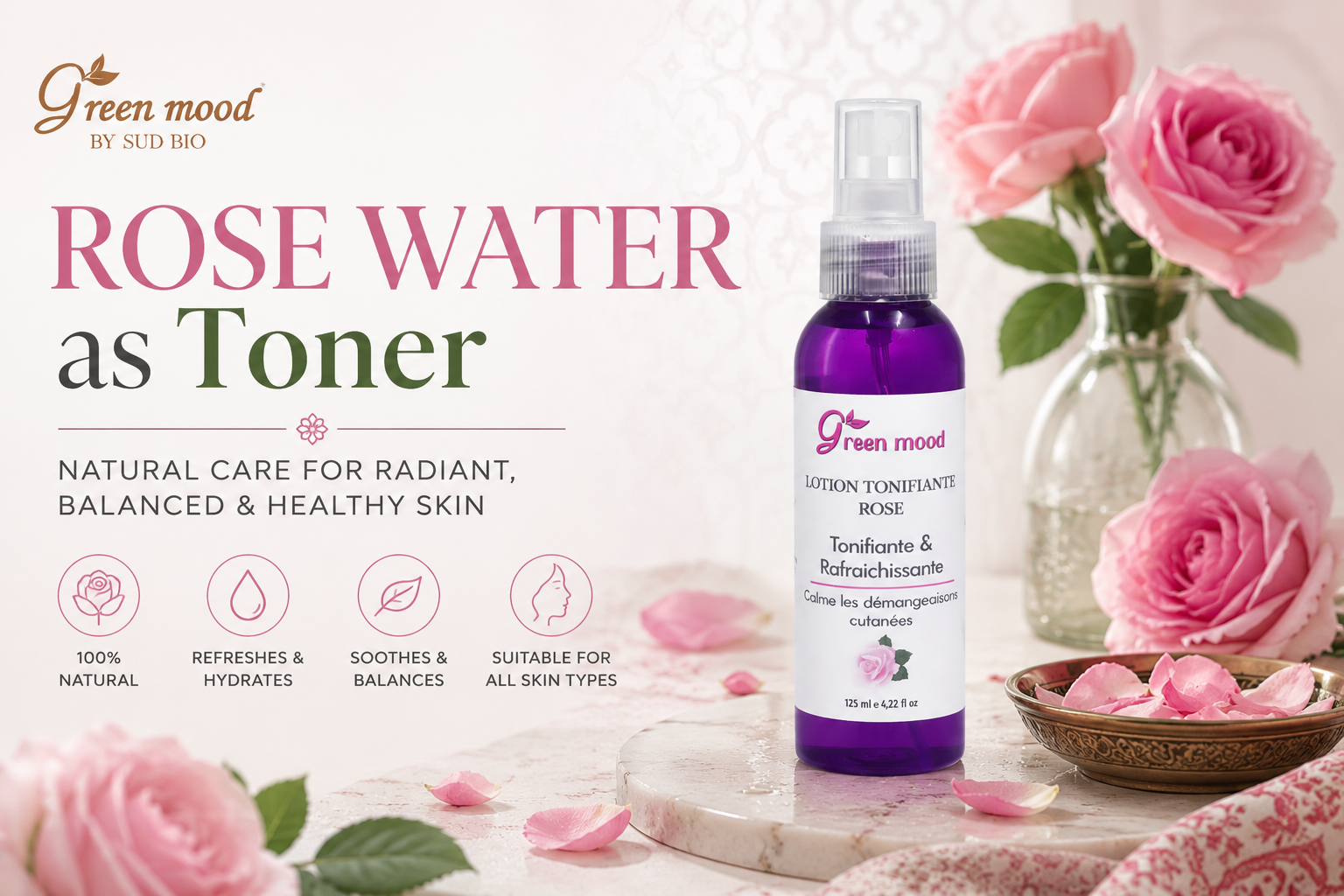
Rose water and toner both come after cleansing, both come in a bottle, and both go on with a cotton pad or a mist. That is where the similarity ends. In ingredients, purpose, and long-term effect on the skin, they are two different products — and the right choice depends on what your skin actually needs.
This guide breaks down the real differences, when to reach for each, and how to combine them without conflict.
Quick answer
Rose water is a single-ingredient natural floral distillate. A toner is a formulated skincare product that can contain acids, alcohol, humectants, and active ingredients. Rose water hydrates and soothes; a toner treats a specific concern (acne, exfoliation, oil control). Rose water suits daily use on any skin type. A toner suits targeted correction. Many people benefit from using both — a treatment toner two to three times a week, rose water every day.
What Is a Toner, Exactly?
A toner is a leave-on liquid product used after cleansing. Historically, toners were designed to remove cleanser residue and restore the skin’s pH balance after alkaline soaps. Modern formulations go well beyond that role.
Depending on the formula, a toner can be:
- Hydrating — enriched with humectants like glycerin, hyaluronic acid, or panthenol
- Exfoliating — containing alpha-hydroxy acids (AHA: glycolic, lactic) or beta-hydroxy acids (BHA: salicylic)
- Clarifying — targeting acne-prone skin with ingredients like niacinamide, zinc PCA, or witch hazel
- Astringent — traditionally alcohol-based, tightening pores and controlling oil
- Brightening — with vitamin C derivatives, tranexamic acid, or arbutin
Toners are formulated products. Their ingredient lists can be long, and their effect depends entirely on the formula. Some are excellent for their target skin type; others can be drying or irritating if used on the wrong skin.
What Is Rose Water, Exactly?
Rose water — also called rose floral water or rose hydrosol — is the aromatic water produced during the steam distillation of rose petals. In the traditional process, fresh Damask rose petals (Rosa damascena) are placed with water in a copper still. As the steam rises, it carries the volatile aromatic compounds through condensation, separating into two fractions: rose essential oil above, rose water below.
A pure rose water contains one active ingredient: Rosa damascena flower water. It is not a formulated toner. It is not an infusion. It is not a dilution of essential oil in water. It is a distillate — the water that has captured the water-soluble aromatic molecules of the rose during distillation.
This one-ingredient simplicity is exactly what makes rose water so gentle. There are no active acids to sensitise the skin, no alcohol to dehydrate it, no preservatives beyond what safety requires. The trade-off: rose water does not treat specific concerns the way a targeted toner does. It hydrates, soothes, and rebalances. That is its role.
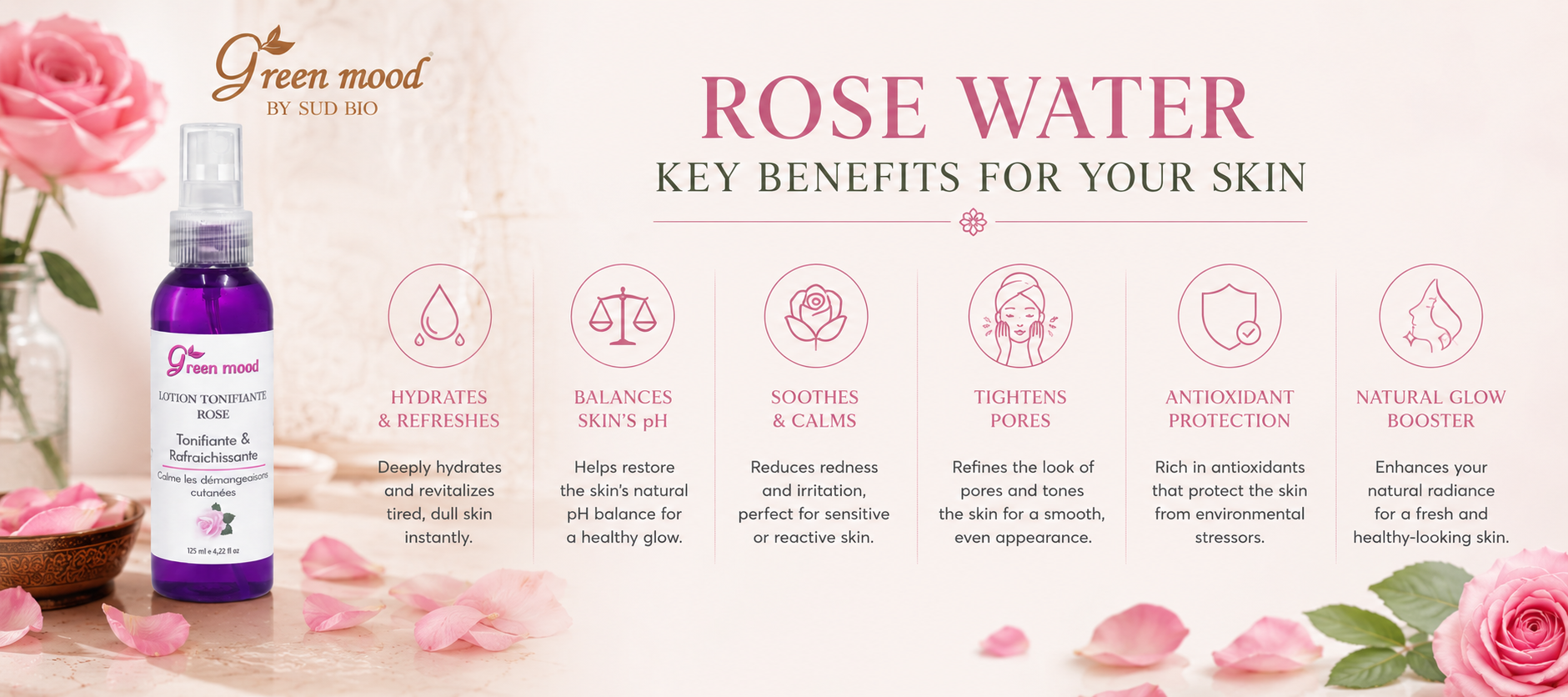
Rose Water vs Toner: Full Comparison
Side by side, here is how the two compare across the criteria that matter for a daily routine.
| Criterion | Rose water | Toner |
|---|---|---|
| Composition | Single ingredient — Rosa damascena flower water | Formulated — water, actives, humectants, preservatives |
| Production | Steam distillation of petals | Cosmetic laboratory formulation |
| Alcohol content | Alcohol-free | Varies — some contain 15–40% alcohol |
| Skin action | Hydrating, soothing, calming | Depends on formula — exfoliating, clarifying, hydrating |
| Skin compatibility | All skin types, including sensitive | Depends on formula — some are drying |
| Frequency of use | Twice a day, plus mid-day mist | Varies — daily or 2–3× a week for exfoliating toners |
| Target | General comfort, hydration, radiance | Specific concern — acne, texture, pores, tone |
| Sensitive-skin safety | High | Depends on formula |
| Multi-use versatility | High — toner, mist, cleanse, compress, mask base | Low — one dedicated function |
| Typical shelf life once opened | 6–12 months (refrigerated) | 6–24 months depending on formulation |
Key Differences Explained
1. Ingredients: minimal vs formulated
Rose water is a distillate — the label carries one active ingredient. A toner is a cosmetic formula — the label carries a list, sometimes long. Neither is inherently better; the difference matters when you know what your skin does and does not tolerate.
2. Action: soothe vs treat
Rose water calms redness, hydrates, and helps the skin feel balanced. A toner acts on a specific concern: an AHA toner exfoliates, a BHA toner clears pores, a niacinamide toner reduces oil and supports even tone. Rose water is baseline care. A toner is targeted care.
3. Compatibility: universal vs conditional
Pure rose water is one of the gentlest cosmetic ingredients. It suits almost any skin type. A toner suits the skin type it was formulated for — a strong exfoliating toner used on sensitive skin will irritate; a soothing hydrating toner used on very oily acne-prone skin may feel insufficient.
4. Long-term effect: barrier support vs correction
Consistent use of pure rose water contributes to a healthier-feeling barrier and a calmer complexion. Consistent use of a well-chosen active toner can visibly correct a specific concern — smoother texture, clearer skin, more even tone. Both effects are real; they operate at different levels.
5. Ritual: daily vs cyclical
Rose water fits every routine, every day, morning and evening. A treatment toner often fits a cyclical rhythm — an exfoliating toner two to three times a week, alternated with rest days. Rose water is not something you take a break from. An active toner often is.
-
 Best SellerMoroccan Ritual
Rose Water
43 MAD
When to Choose a Toner
A treatment toner earns its place in a routine when you have a specific concern that gentle hydration alone will not resolve. Look at a toner if you have:
- Recurring breakouts or acne — a BHA (salicylic acid) toner helps clear pore congestion
- Dull, uneven texture — an AHA (glycolic or lactic acid) toner gently exfoliates
- Uneven tone or post-acne marks — a niacinamide or vitamin C toner targets pigmentation
- Persistent excess oil — a clarifying toner with niacinamide or zinc PCA regulates sebum
- Enlarged pores that concern you — an astringent or BHA toner refines their appearance
Choose a formula matched to your concern and your skin’s tolerance. Read the ingredient list. If it contains 15% or more alcohol, or if it stings on application, it is likely too aggressive for daily use — even for oily skin.
When to Choose Rose Water
Rose water earns its place in every routine, and it becomes the primary choice when your goals are comfort, hydration, and simplicity. Reach for rose water when you want:
- Daily gentle care — a step you can use morning and evening, indefinitely, without a rest day
- Hydration without heaviness — for combination and oily skin that does not need heavier products
- A calming step for reactive or sensitive skin — during flare-ups, after sun, after retinol days
- Multi-purpose skincare — one bottle that replaces mist, cleanse, compress, and mask base
- A natural, minimal-ingredient routine — clean, verifiable, one-ingredient
- A dependable base — the layer under whatever serum or moisturiser comes next
For most people building a first considered skincare routine, rose water is the foundational step. It rarely does harm and reliably contributes to comfort.
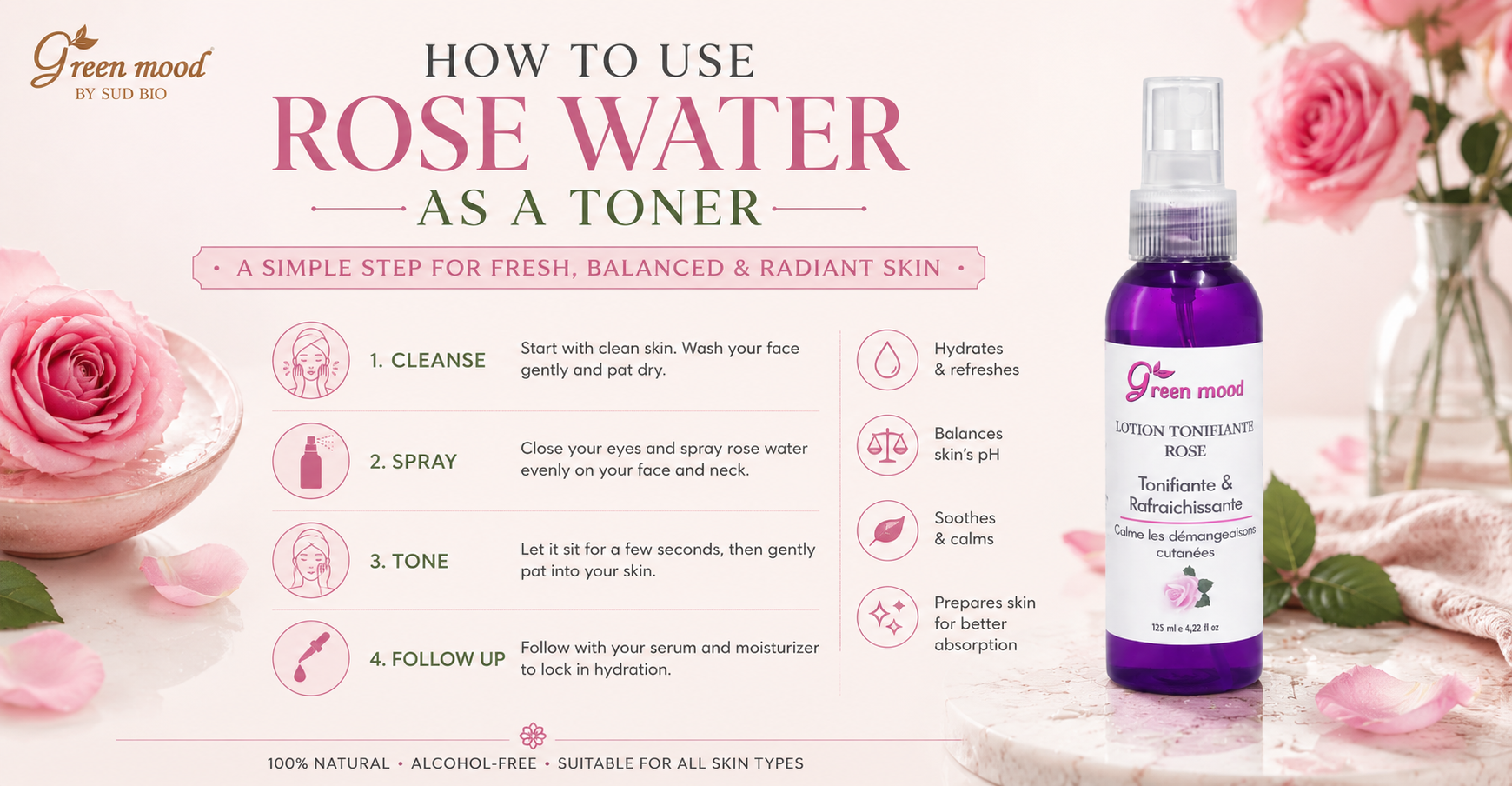
Can You Use Rose Water and Toner Together?
Yes — and for many routines this is the ideal setup. The two products complement each other rather than compete.
Morning routine with both
- Cleanse gently
- Apply rose water on damp skin to calm and hydrate
- Layer serum (vitamin C, hyaluronic acid, or your morning active)
- Moisturise
- Apply SPF
Evening routine with both — treatment day
- Cleanse thoroughly (double-cleanse if wearing SPF or makeup)
- Apply your treatment toner (AHA, BHA, or niacinamide)
- Wait 5 to 10 minutes
- Apply rose water to soothe and re-hydrate
- Layer serum and moisturiser
Evening routine with both — rest day
- Cleanse gently
- Skip the treatment toner
- Apply rose water
- Layer hydrating serum and moisturiser
The pattern is simple: use the treatment toner for its specific action, then use rose water to restore comfort and hydration. This combination often gives better results than using either alone, because it targets a concern while protecting the barrier.
Rose Water vs Toner by Skin Type
Sensitive or reactive skin
Primary choice: rose water. Most conventional toners are too strong for sensitive skin. Rose water calms without irritating. If a targeted concern needs treating (occasional breakouts, dull texture), introduce a very mild toner cyclically — once or twice a week — and always follow with rose water.
Oily and combination skin
Both, sequenced. Rose water hydrates without weight and controls the mid-day shine. A clarifying toner two to three times a week regulates sebum and clears the T-zone. This is one of the skin types that benefits most from combining the two.
Dry and dehydrated skin
Primary choice: rose water, plus a hydrating toner if desired. Skip alcohol-based, astringent, or strongly exfoliating toners. Rose water followed by a humectant-rich hydrating toner is an excellent combination for dry skin.
Acne-prone skin
Both, sequenced carefully. A BHA (salicylic acid) toner two to three times a week targets pore congestion. Rose water every day soothes surrounding inflammation and protects the barrier from over-treatment. This pairing tends to give better results than an aggressive toner used every day.
Mature and dehydrated skin
Both. A gentle AHA toner (lactic acid) two to three times a week supports cell turnover. Rose water daily maintains hydration and provides antioxidant support. Consistency matters more than intensity.
Cost, Shelf Life, and Convenience
Two practical points that often decide the daily choice.
Cost per use
Pure rose water is typically less expensive per millilitre than treatment toners with active ingredients. Because it works alone and does not require pairing with expensive actives, the cost of the daily routine step is lower.
Shelf life once opened
Pure rose water without added preservatives keeps 6 to 12 months once opened, best refrigerated. Formulated toners with preservatives can last 12 to 24 months. If you use a full bottle within a few months anyway, this rarely matters.
Storage and travel
Rose water in a spray bottle travels well and doubles as an in-flight mist. Treatment toners are usually applied at home with a cotton pad, less mobile in a daily bag.
Simplicity
Rose water requires no ingredient decoding, no compatibility check with other actives, no rest days. This simplicity matters when a routine is meant to be sustained for years.
How to Choose a Pure Rose Water
Not every product labelled “rose water” delivers the same result. Five criteria separate a genuine floral water from a diluted or formulated one.
- Single active ingredient. The label should list Rosa damascena flower water as the sole or overwhelmingly dominant ingredient.
- Steam-distilled. Look for the word “distilled” or “hydrosol”. A “rose water” produced by mixing rose extract or rose essential oil into water is not the same product.
- Alcohol-free. No ethanol, no denatured alcohol.
- No added fragrance. Pure rose water has a light, fresh floral scent. A strong perfumed smell means added parfum.
- Verifiable origin. Damask rose grows in a few regions of the world — Morocco, Bulgaria, Iran, Turkey. Origin should be stated and, ideally, certified.
The Green Mood Standard
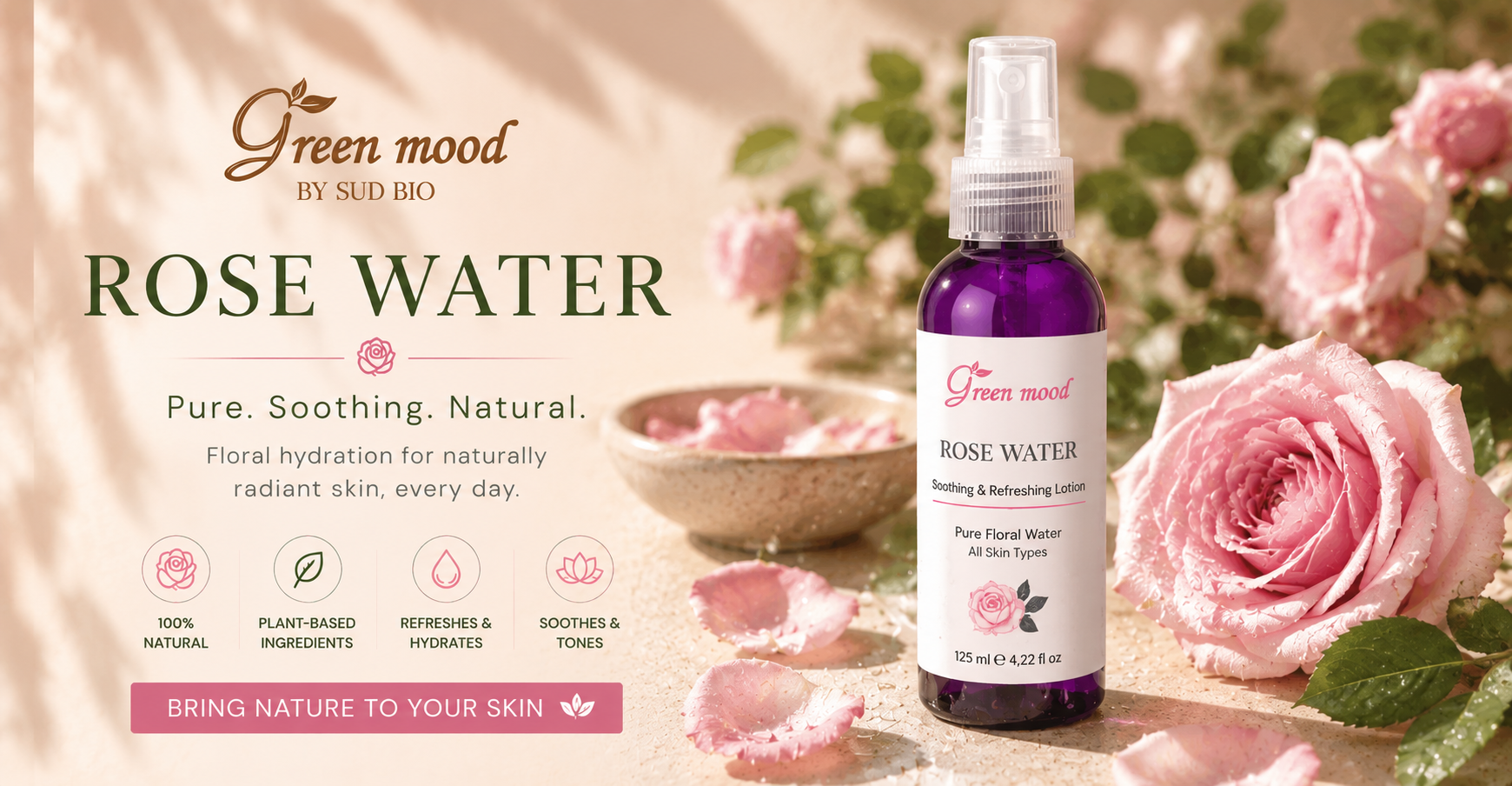
Green Mood’s Rose Floral Water is:
- Steam-distilled from Damask rose petals (Rosa damascena)
- Single-ingredient — no alcohol, no added fragrance, no synthetic additive beyond what safety requires
- Produced under ISO 22716 cosmetic good manufacturing practice
- Sourced in Morocco, tied to the annual spring harvest
- Bottled for daily use as a toner, mist, or compress base
To go further on the same topic: benefits of rose water for the face, rose water as a natural toner, rose water for sensitive skin, rose water for acne, and how rose water is made. For the full routine, browse face care and toning solutions.
Frequently Asked Questions
Is rose water the same as a toner?
No. Rose water is a single-ingredient natural floral distillate. A toner is a formulated skincare product that can contain acids, alcohol, humectants, and other actives. Rose water can be used as a natural toner, but it is not the same category of product.
Which is better: rose water or toner?
Neither is universally better. Rose water is better for gentle daily hydration, comfort, and sensitive skin. A treatment toner is better for targeted concerns like acne, uneven texture, or pigmentation. Many routines combine both.
Can rose water replace my toner?
For many people, yes — especially if the current toner is drying, alcohol-based, or irritating. If your toner treats a specific concern effectively without side effects, rose water complements rather than replaces it.
Can I use rose water and toner in the same routine?
Yes. Apply the treatment toner first, wait 5 to 10 minutes, then apply rose water to soothe and rehydrate before your serum. This combines targeted correction with barrier support.
Is rose water gentler than toner?
Pure rose water is one of the gentlest cosmetic ingredients available. Toners vary widely — some are very gentle, others are strongly active. Read the ingredient list; do not assume all toners are harsh or all rose waters are pure.
Do I need a toner if I use rose water?
Not necessarily. If your skin is comfortable, balanced, and free of specific concerns, rose water alone can serve the toning step. Add a treatment toner only when you have a target: breakouts, uneven texture, dullness, or oil.
Which is better for oily skin: rose water or toner?
Both, sequenced. A clarifying toner two to three times a week regulates sebum and clears the T-zone. Rose water every day hydrates without weight and keeps the barrier intact. This pairing outperforms either used alone.
Which is better for dry skin: rose water or toner?
Rose water, plus a hydrating toner if desired. Avoid astringent, exfoliating, or alcohol-based toners on dry skin. Rose water followed by a humectant-rich hydrating toner is an excellent combination.
Which is better for acne-prone skin?
A BHA toner (salicylic acid) two to three times a week targets pore congestion. Rose water every day soothes surrounding inflammation and helps the barrier recover from active treatment. Together, they perform better than an aggressive toner used daily.
Is rose water considered a “clean beauty” product?
When it is single-ingredient, steam-distilled, alcohol-free, and free of added fragrance, yes. Rose water is one of the most minimal-formulation products in natural skincare.
How do I know if my rose water is real?
Check the label. A real rose water lists Rosa damascena flower water as the single or overwhelmingly dominant ingredient, mentions steam distillation, contains no alcohol or added fragrance, and has a verifiable origin.
Should I refrigerate my rose water and toner?
Pure rose water benefits from refrigeration — it keeps longer and feels more refreshing. Most formulated toners contain preservatives and can be kept at room temperature; check the label for specific storage guidance.
The Bottom Line
Rose water and toner are two different tools for two different jobs. Rose water is baseline care — daily hydration, comfort, barrier support. A treatment toner is targeted correction — acne, texture, pores, tone.
The best routine for most people is not one or the other. It is both, sequenced correctly: a treatment toner two to three times a week for targeted action, rose water every day to soothe, hydrate, and protect the barrier. That combination gives visible results without compromising skin comfort.
Get the rose water right — steam-distilled, single-ingredient, alcohol-free — and you have the foundational step of a skincare routine you can sustain for years.
Continue reading: benefits of rose water for the face · rose water as a natural toner · rose water for sensitive skin.