🌍 Free shipping above 150 € worldwide.


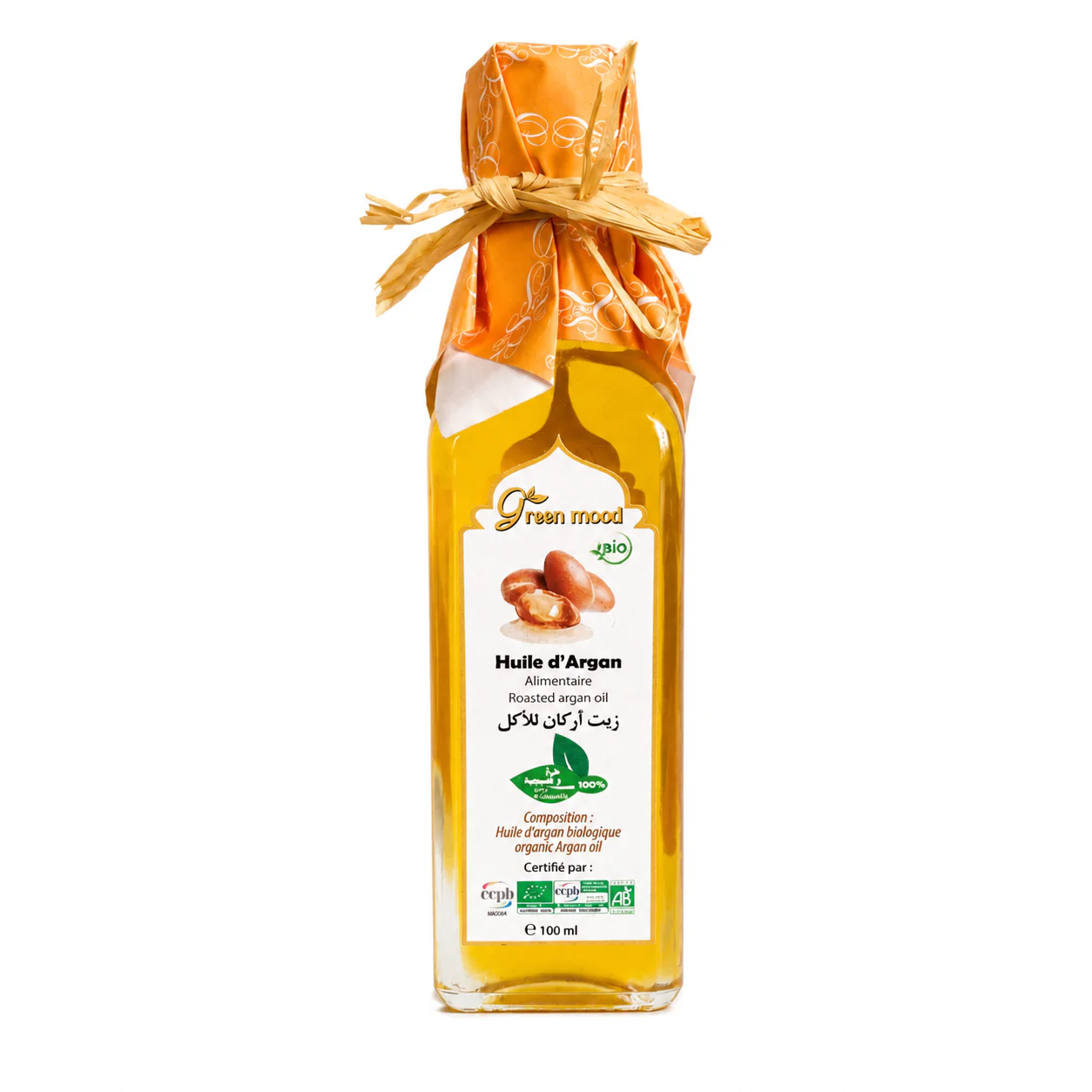
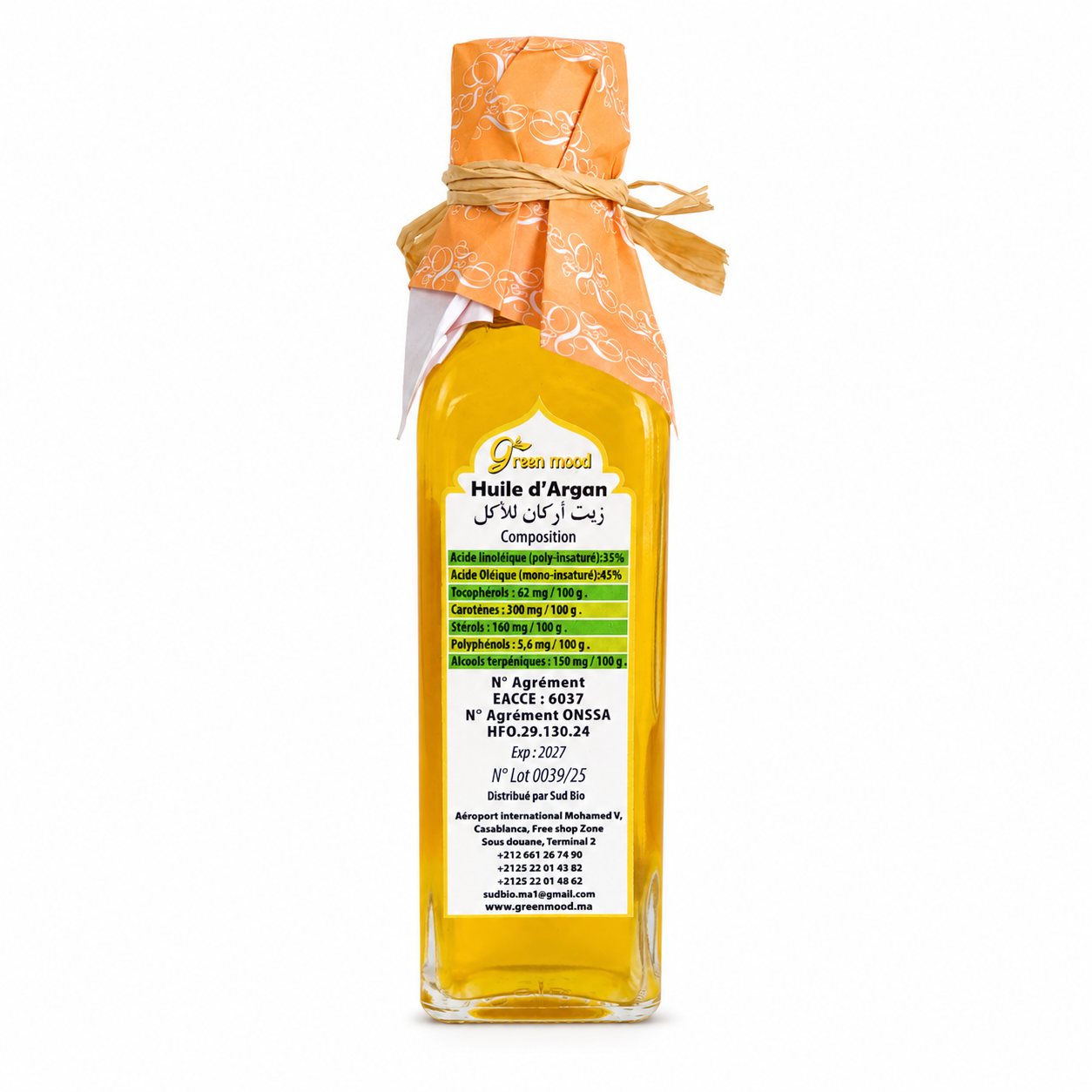
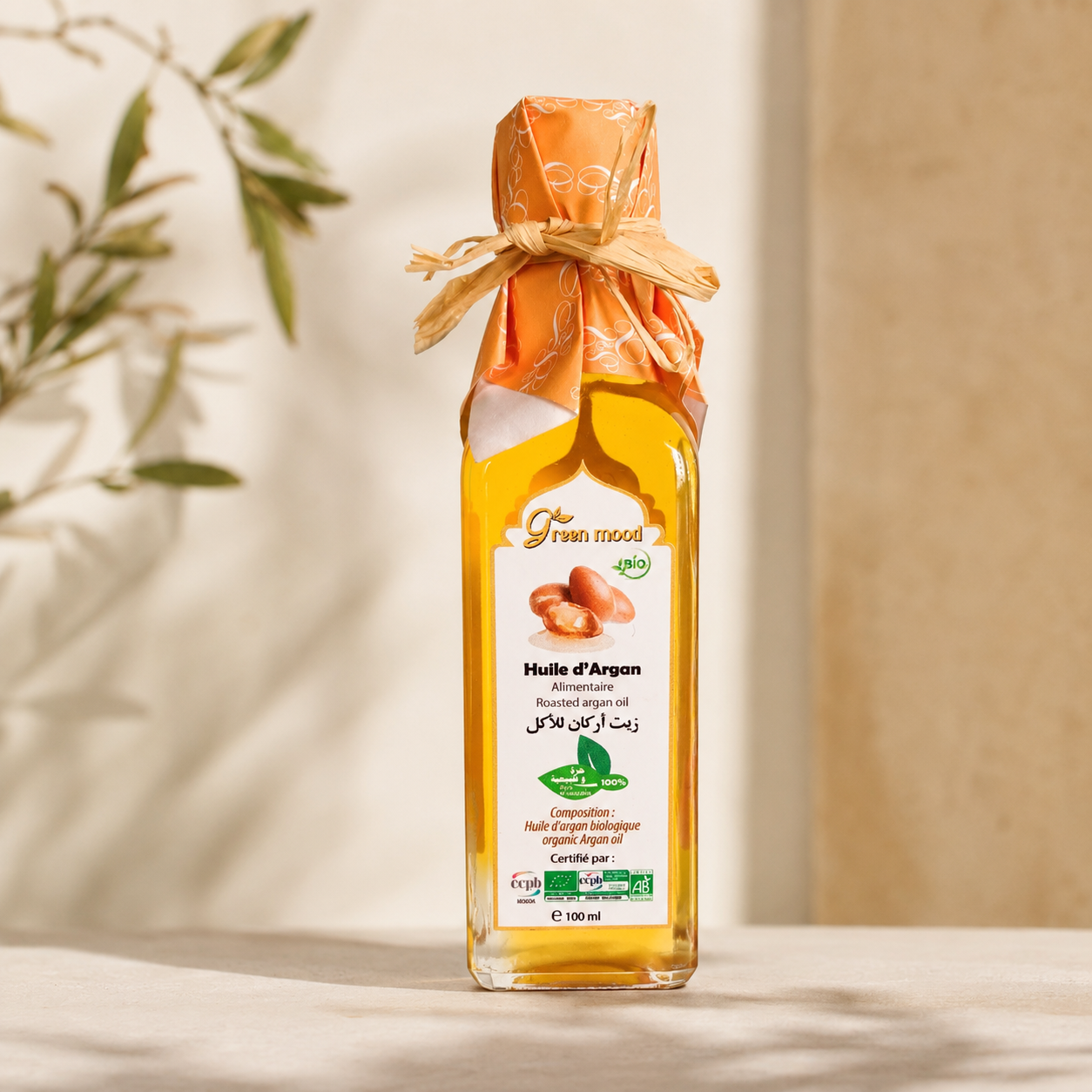
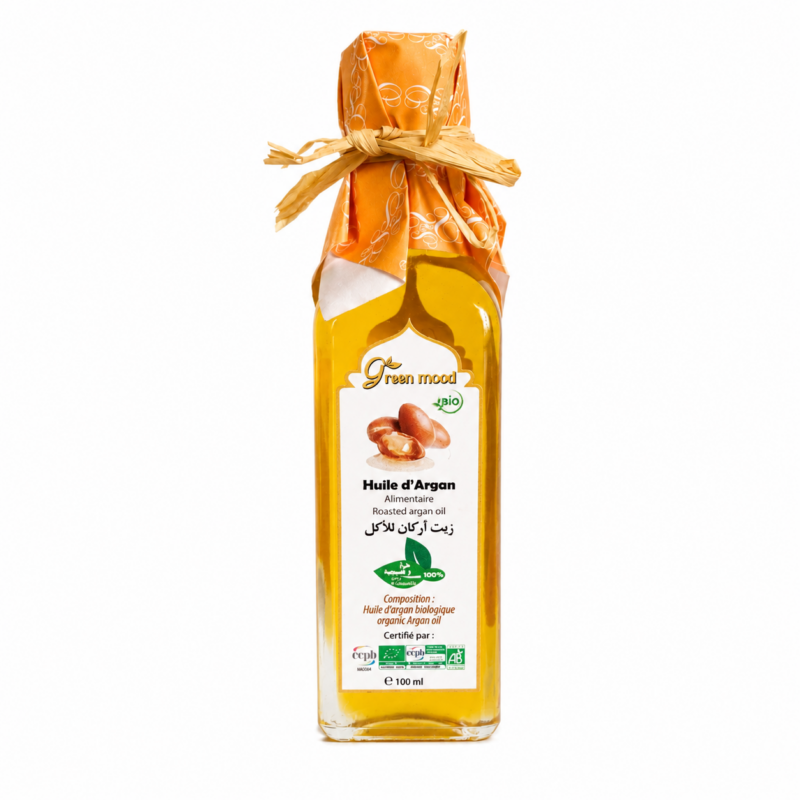
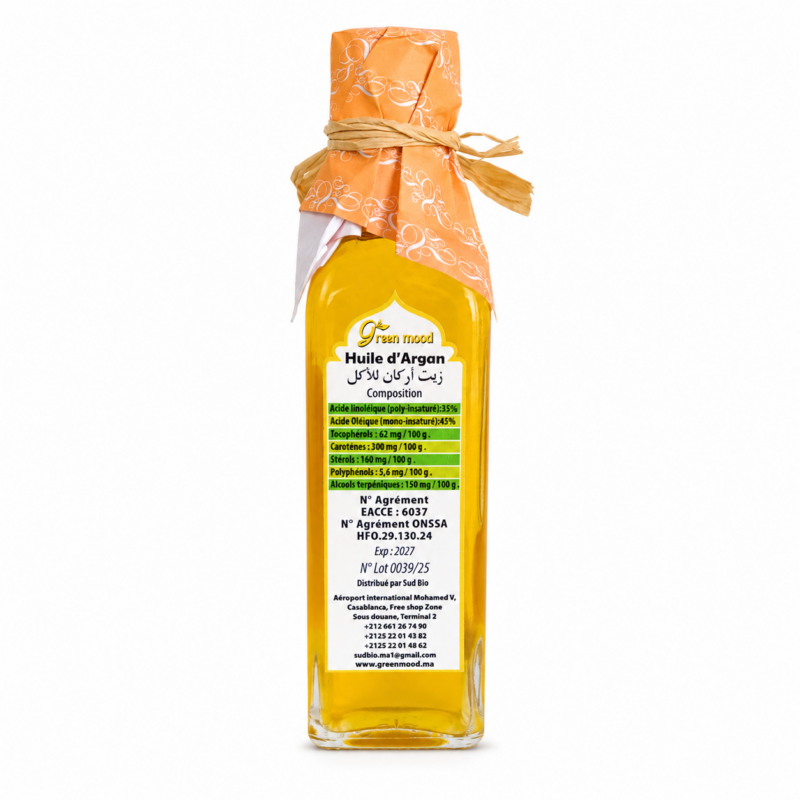
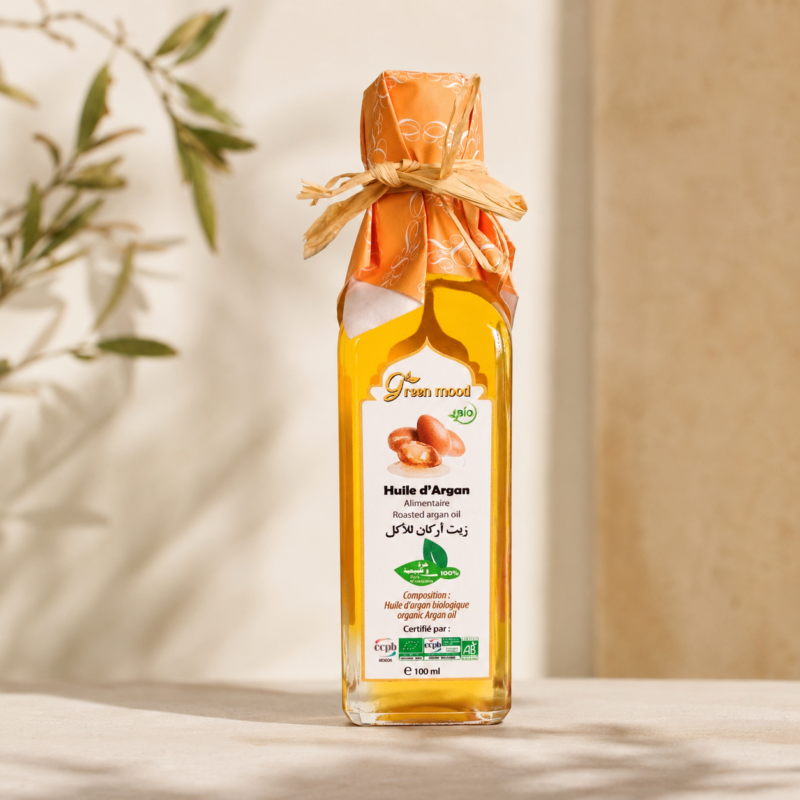
Culinary Argan Oil – 100 ml
194 MAD
Culinary Argan Oil – 100% Pure Moroccan Gourmet Oil
Premium culinary argan oil made from carefully roasted Moroccan argan kernels, offering a delicate nutty flavor and rich aroma for both traditional and modern cuisine.
Perfect as a finishing oil for salads, vegetables, couscous, dips, bread, and gourmet recipes.
- Cold-pressed from premium roasted Moroccan argan kernels.
- Rich in naturally occurring vitamin E, antioxidants, and healthy fatty acids.
- Elegant nutty flavor that enhances both savory and Mediterranean-inspired dishes.
- 🇲🇦 Authentic Moroccan culinary tradition with no additives or preservatives.
In stock
Culinary Argan Oil 100 ml – A Moroccan Gourmet Essential
In the south of Morocco, argan trees have been feeding families for generations. From their kernels comes a rare, nutty, deeply flavourful oil that Moroccan cooks have used for centuries — long before the world discovered its cosmetic side.
Green Mood’s Culinary Argan Oil is that oil: cold-pressed from roasted argan kernels, made to be drizzled, dipped, and celebrated at the table.
Green Mood’s Culinary Argan Oil (100 ml) is a premium, cold-pressed edible oil crafted from carefully selected Moroccan argan kernels. Its delicate nutty flavour and warm aromatic finish make it a versatile choice for enhancing salads, dips, roasted vegetables, grain bowls, and Mediterranean-inspired dishes.
Rich in healthy fats, natural antioxidants, and vitamin E, this artisanal oil brings both taste and character to your kitchen. It combines traditional Moroccan extraction methods with modern quality standards to deliver pure, natural flavour without additives — a refined finishing oil that turns simple ingredients into something memorable.
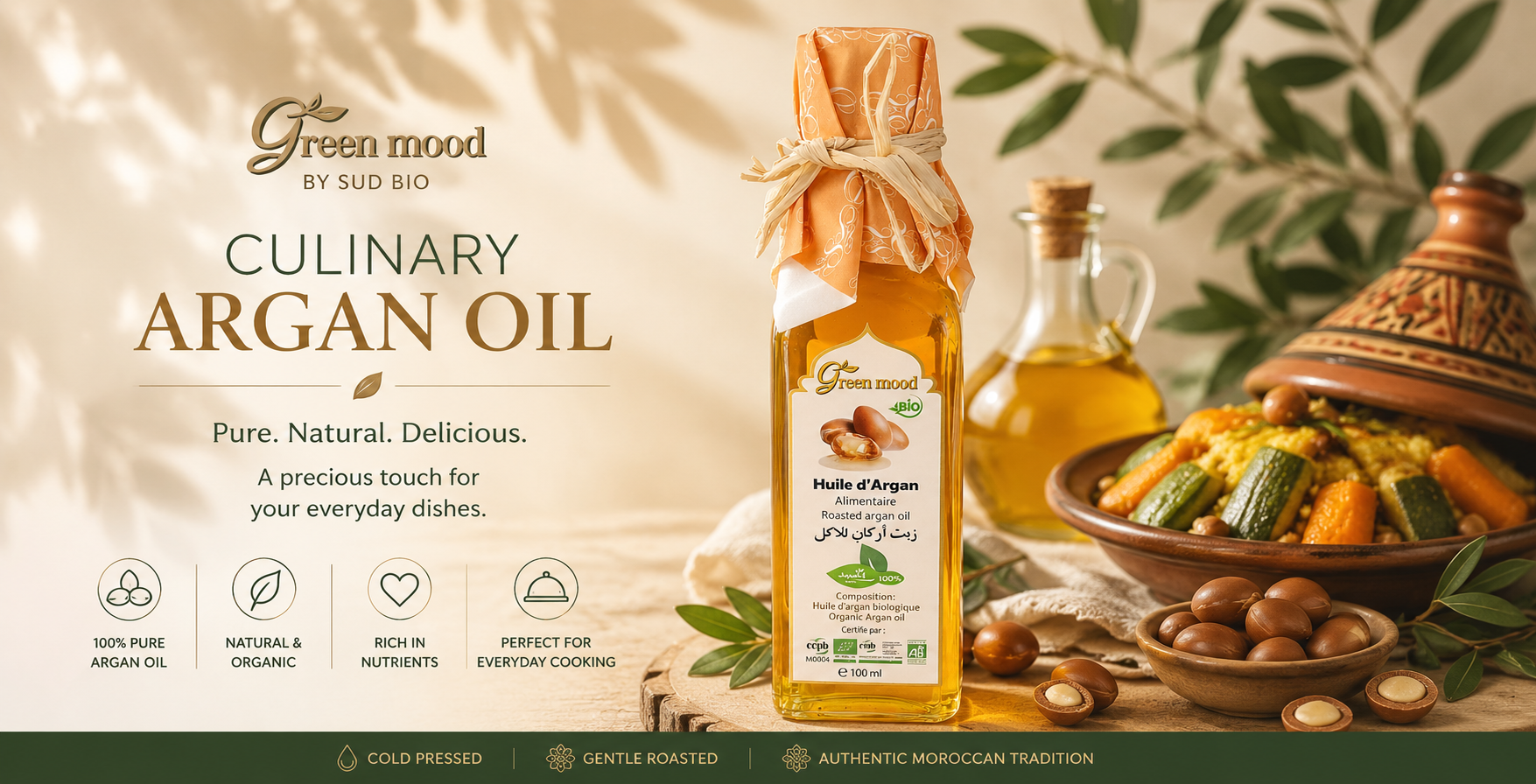

Culinary Argan Oil — A Premium Moroccan Gourmet Essence
Experience the authentic taste of Morocco with Green Mood’s Culinary Argan Oil. Harvested from Moroccan argan kernels and crafted with care, this gourmet oil adds depth and richness to salads, couscous, dips, roasted vegetables, and much more. Its distinctive nutty aroma and smooth finish make it a versatile pantry staple for home cooks and food lovers alike.
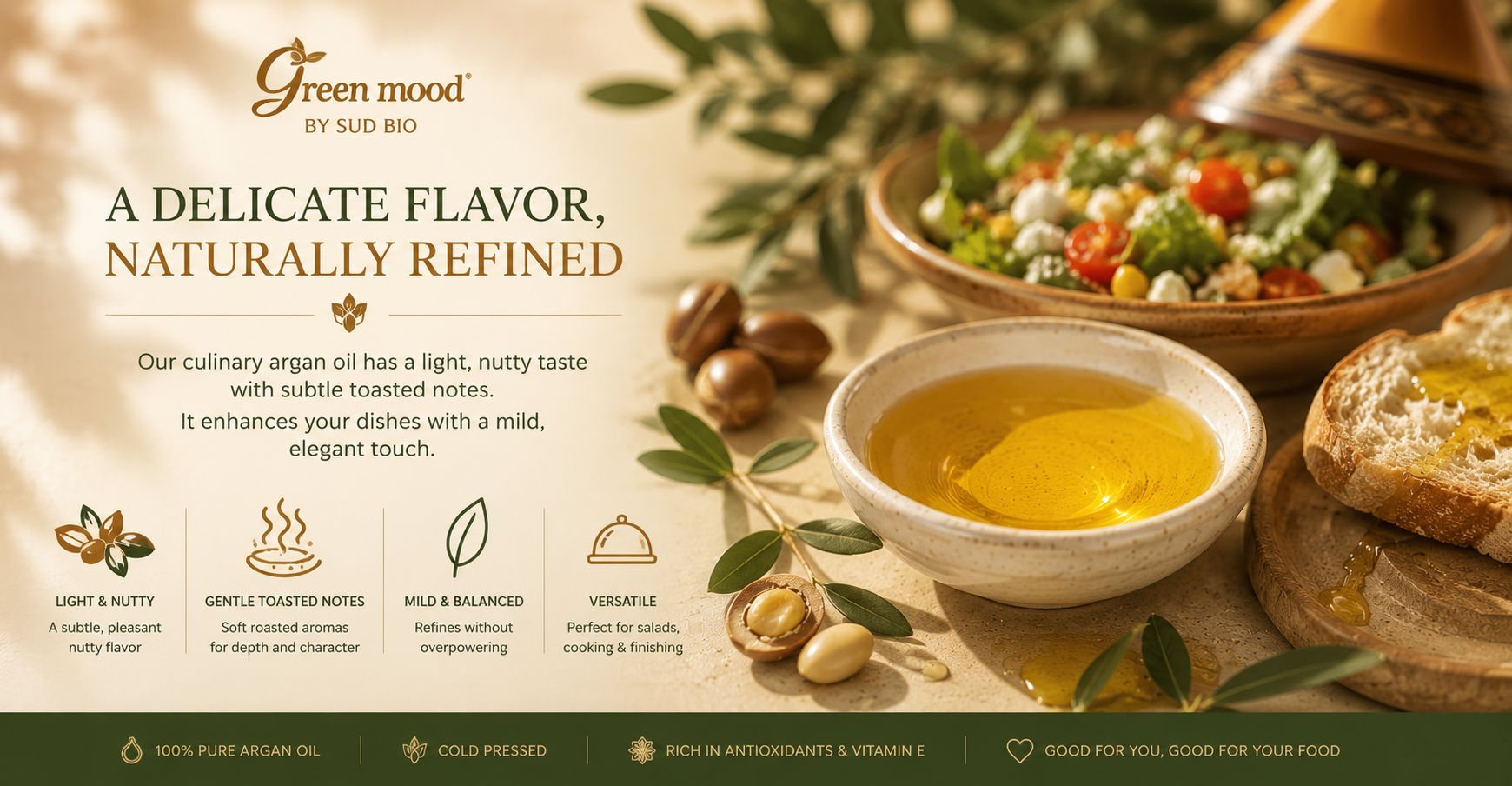
Unlike cosmetic argan oil, culinary argan oil is pressed from lightly roasted kernels. This roasting step is exactly what gives the oil its characteristic warm, hazelnut-like flavour — a taste that has defined Moroccan gourmet cuisine for centuries.
Why Choose Culinary Argan Oil?
Culinary Argan Oil is appreciated both for its unique gastronomic qualities and for its nutritional profile. Rich in monounsaturated fats, natural antioxidants, and vitamin E, this artisanal oil not only enhances the flavour of your dishes but also brings a genuine sense of place to the table.
Cold-pressed to preserve its delicate aromatic compounds, it is an ideal finishing oil that complements Mediterranean, Moroccan, and fusion cuisine with finesse and character.
Green Mood’s culinary argan oil brings you the true essence of Moroccan tradition — pure, artisanal, and full of flavour.
- Cold-pressed from roasted kernels — the source of its signature nutty taste.
- 100% pure edible argan oil — no additives, no blending, no solvents.
- Naturally rich in vitamin E, oleic and linoleic acids.
- Versatile — perfect for salads, dips, grains, roasted vegetables, and traditional Moroccan recipes.
- Made in Morocco — bottled at the source, in the argan region.
Culinary Argan Oil vs Cosmetic Argan Oil — What’s the Difference?
This is one of the most common questions people ask when they discover argan oil. Both come from the same tree (Argania spinosa), but they are two very different products:
Cosmetic argan oil is pressed from raw, unroasted kernels. It has a very mild, almost neutral scent and is used purely for skincare and hair care.
Culinary argan oil is pressed from lightly roasted kernels. The roasting step develops the deep, nutty aroma that makes it a gourmet ingredient. It is meant to be tasted, not applied on the skin.
In short: same tree, same fruit, but two completely different processes and two completely different uses. Culinary argan oil belongs in the kitchen — next to your olive oil, not next to your body oils.
-
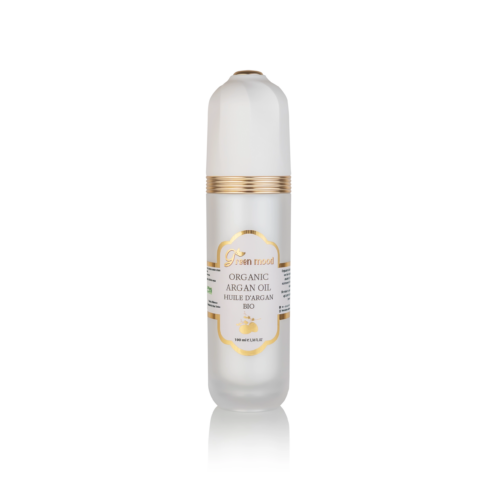 Best SellerPure Botanical
Pure Argan Oil
Price range: 194 MAD through 281 MAD
What Does Culinary Argan Oil Taste Like?
The flavour of culinary argan oil is one of its main attractions. It is often described as:
- Nutty, with a warm hazelnut-like character.
- Slightly toasted, thanks to the roasting of the kernels before pressing.
- Smooth and round in the mouth, without the peppery bite of a strong olive oil.
- Aromatic but never overpowering — a few drops are usually enough to season a whole dish.
This is why culinary argan oil is used mostly as a finishing oil: a small quantity added at the end of cooking, or drizzled directly on a plate, releases far more flavour than a large quantity used at the base of a recipe.
The Roasted Kernel Tradition — How Moroccan Culinary Argan Oil Is Made
The making of culinary argan oil is a slow, patient process that has been passed down through generations of Berber women in southern Morocco. It follows several steps:
- Harvesting — the argan fruits are collected once they have fallen from the tree, sun-dried, and cracked to reveal the kernels inside.
- Roasting — the kernels are lightly roasted, which develops the deep aroma unique to culinary argan oil.
- Grinding — the roasted kernels are ground into a thick paste.
- Cold pressing — the paste is pressed to release the oil, without heat and without solvents.
- Decanting — the oil is left to rest and clarify naturally.
This traditional method is what preserves both the flavour and the nutritional richness of the oil. It also explains why real culinary argan oil is a rare and precious ingredient — one bottle represents a considerable amount of work.
Health and Nutritional Profile of Culinary Argan Oil
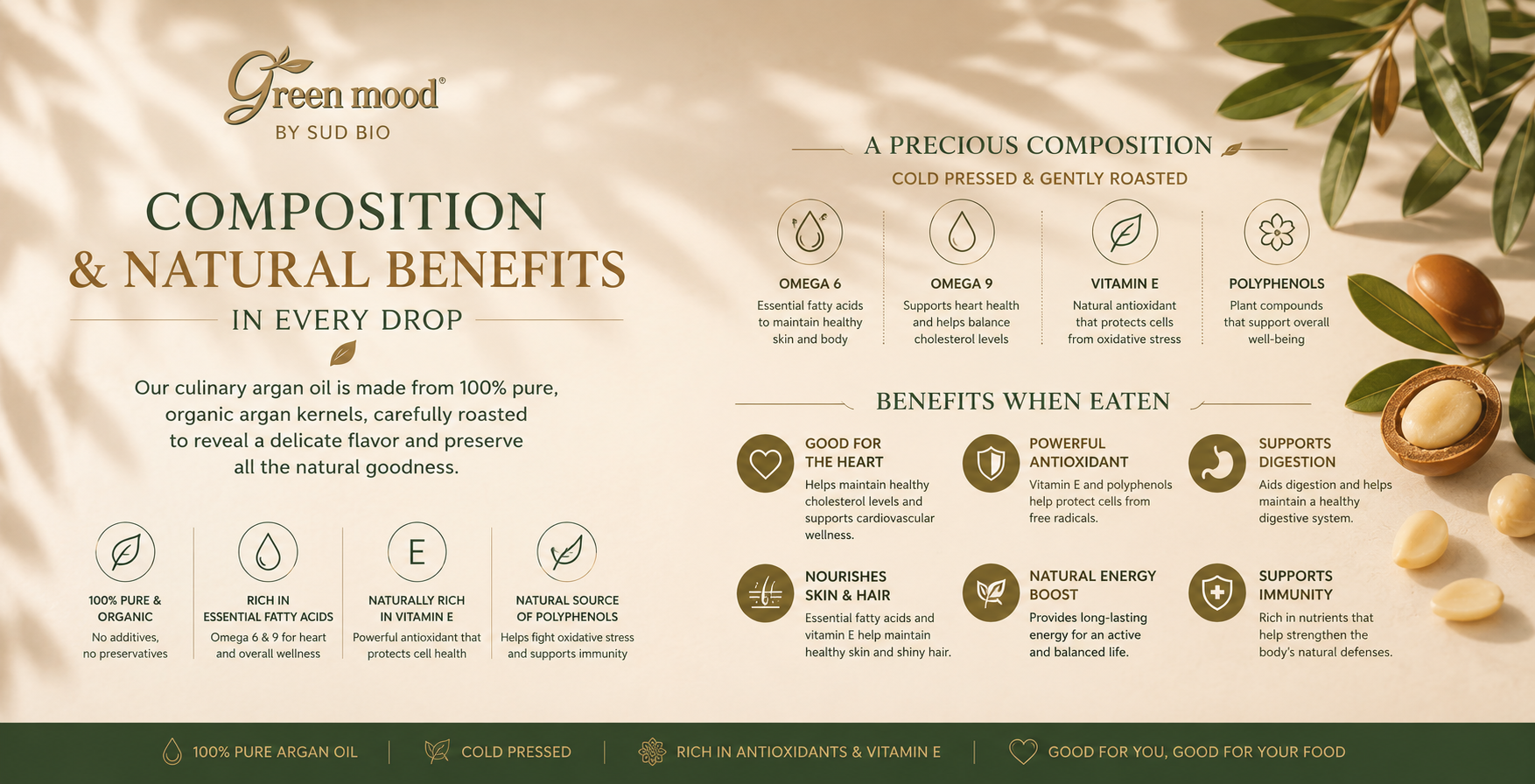
Beyond its flavour, culinary argan oil is appreciated for its natural composition. It is traditionally valued in Morocco for its contribution to a balanced diet, and modern nutritional analysis confirms a rich profile:
- High in monounsaturated fatty acids, particularly oleic acid.
- Contains linoleic acid (omega-6), an essential fatty acid.
- Naturally rich in vitamin E (tocopherols), a well-known antioxidant.
- Contains plant sterols and natural polyphenols.
- Free from cholesterol, additives, and preservatives.
Used regularly as a finishing oil in place of heavier fats, culinary argan oil fits naturally into a Mediterranean-style diet built on olive oil, vegetables, grains, legumes, and fish.
How to Use Culinary Argan Oil in Your Kitchen
The most important rule is simple: culinary argan oil is a finishing oil. High heat destroys its delicate flavour and its aromatic compounds. Add it at the end of cooking, or use it raw.
1. On salads and cold dishes
A few drops on a green salad, a tomato and cucumber salad, or a grain bowl bring an immediate nutty richness. Combine with lemon juice, a pinch of salt, and fresh herbs.
2. On couscous and tagines
Drizzle a spoonful over hot couscous just before serving to add a warm Moroccan finish. Works especially well with vegetable couscous, chicken tagines, and slow-cooked lamb dishes.
3. In hummus, dips, and spreads
Use it as the finishing oil on hummus, baba ganoush, labneh, or yoghurt-based dips. It adds a smoky-nutty top note that instantly elevates the dish.
4. On roasted vegetables
Roast your vegetables with olive oil, then drizzle culinary argan oil at the end. It works beautifully on roasted carrots, sweet potatoes, cauliflower, and butternut squash.
5. At breakfast
In Morocco, culinary argan oil is a classic breakfast oil. Drizzle it on fresh bread with a little honey, or use it to make amlou — the famous Moroccan spread of ground almonds, argan oil, and honey.
6. On grilled fish, meat, and eggs
Just before serving, add a small amount over grilled fish, roasted chicken, steak, or scrambled eggs. The heat of the food releases the aroma without cooking the oil.
7. In creative pairings
Try it with dark chocolate, vanilla ice cream, roasted nuts, dates, or citrus zest. Its nutty character makes it surprisingly versatile beyond savoury cooking.
What Is Amlou? The Iconic Moroccan Argan Spread
No article about culinary argan oil is complete without mentioning amlou — one of the most beloved Moroccan specialties.
Amlou is a rich, honey-sweet spread made from three ingredients:
- Ground roasted almonds
- Culinary argan oil
- Honey
It is traditionally eaten at breakfast with fresh Moroccan bread and mint tea, and is often described as “Moroccan Nutella” — although its flavour is far more complex and far more grown-up. If you want to taste culinary argan oil in its most iconic form, amlou is the recipe to try first.
A simple recipe: blend 200 g of roasted almonds until they turn into a paste, add 100 ml of culinary argan oil, then sweeten with 3 to 4 tablespoons of honey. Stir well and store in a jar in the fridge.
Culinary Argan Oil vs Olive Oil and Other Gourmet Oils
Culinary argan oil is not a replacement for olive oil — it is a companion. Here is how it compares to other gourmet oils you might already know:
- Vs olive oil: olive oil is your everyday cooking oil, used for sautéing, marinades, and salads. Culinary argan oil is a finishing oil, used at the end of cooking, in smaller quantities, for aromatic impact.
- Vs walnut oil: both have a nutty profile, but argan oil is warmer, more toasted, and less bitter.
- Vs sesame oil: toasted sesame oil is very present in Asian cuisine; culinary argan oil brings a similar aromatic role to Moroccan and Mediterranean dishes.
- Vs hazelnut oil: the flavour is close, but culinary argan oil has a distinctive Moroccan character that comes from the terroir of southern Morocco.
This is why chefs increasingly keep a small bottle of culinary argan oil next to their other finishing oils — it is a distinctive tool in the kitchen, not a substitute for daily cooking oils.
-
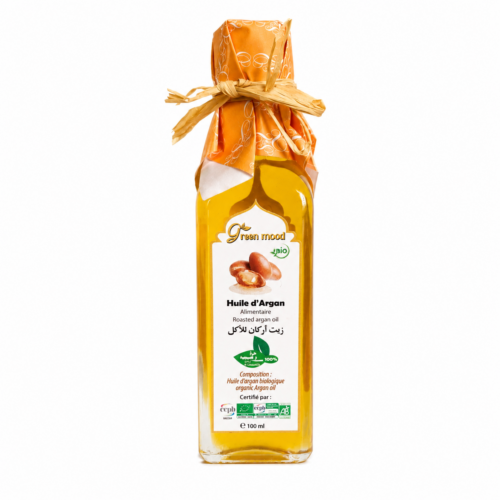
Culinary Argan Oil – 100 ml
194 MAD
Can You Cook With Culinary Argan Oil?
This is a frequent question, and the answer is nuanced.
What to avoid: high-heat cooking such as deep frying, aggressive sautéing, or long simmers. Excessive heat destroys the aromatic profile you paid for and reduces the nutritional value.
What works well:
- Adding the oil at the end of cooking, off the heat.
- Warming it gently in a pan with garlic or spices to build a flavour base.
- Drizzling it over food that is already hot, so the heat of the food releases the aroma.
Think of culinary argan oil the way a chef thinks of truffle oil or aged balsamic vinegar: a finishing touch, not a workhorse.
How to Store Your Culinary Argan Oil
Culinary argan oil is a natural product with no preservatives, so a few simple habits help preserve its flavour:
- Keep the bottle away from direct sunlight and heat sources.
- Store it in a cool, dry pantry — refrigeration is not required.
- Always close the cap properly after use to limit contact with air.
- Use it within a reasonable time after opening for the best flavour experience.
- Avoid pouring it near a hot stovetop to protect the aromatic compounds.
Stored properly, culinary argan oil keeps its colour, its scent, and its distinctive nutty character for months.
Why Choose Green Mood Culinary Argan Oil?
There are many argan oils on the market, and not all of them are truly culinary. Some are blended, some are extracted with solvents, some are made from unroasted kernels but labelled as “gourmet.” At Green Mood, our culinary argan oil is:
- Cold-pressed and artisanal — retaining flavour and nutrients.
- Pure and natural — no additives, no solvents, no blending.
- Produced in Morocco — with respect for tradition and the argan region.
- Made from carefully selected kernels — for a consistent, refined taste.
- Bottled in a practical 100 ml format — the ideal size to discover the oil or to keep it fresh at home.
Enjoy fast delivery, secure payment, and dedicated customer support.
Who Is This Culinary Argan Oil For?
This oil is designed for:
- Home cooks who want to bring a genuine Moroccan touch to their kitchen.
- Food lovers exploring Mediterranean and North African cuisine.
- Chefs and restaurants looking for a distinctive finishing oil.
- Anyone who values quality ingredients and wants to move beyond generic pantry oils.
- Travellers who tasted argan oil in Morocco and want to bring the flavour home.
- People building a Mediterranean-style diet based on olive oil, argan oil, grains, vegetables, and fish.
- Anyone looking for an original gourmet gift with a real story behind it.
FAQ — Everything About Culinary Argan Oil
Can I cook with culinary argan oil?
It is designed as a finishing oil, not a cooking oil. High heat destroys its aroma and reduces its nutritional value. Use it raw or add it at the end of cooking, off the heat.
What’s the difference between culinary and cosmetic argan oil?
Culinary argan oil is pressed from roasted kernels, giving it a nutty taste for the kitchen. Cosmetic argan oil is pressed from unroasted kernels and is designed for skin and hair care. They are not interchangeable.
What does culinary argan oil taste like?
It has a warm, nutty, slightly toasted flavour, close to hazelnut but with its own distinctive Moroccan character. It is smooth and aromatic without being bitter.
Is culinary argan oil healthy?
It is naturally rich in monounsaturated fatty acids, vitamin E, and antioxidants, and fits well into a Mediterranean-style diet. As with any oil, it is calorie-dense and used in small quantities.
How do I use culinary argan oil?
Drizzle it on salads, hummus, roasted vegetables, couscous, tagines, grilled fish, or fresh bread. It also serves as the base of amlou, the traditional Moroccan almond and honey spread.
Can I use it every day?
Yes. A small drizzle at the end of a meal is a common habit in southern Morocco. It is a finishing oil, so a little goes a long way.
How should I store the bottle?
In a cool, dry pantry, away from direct sunlight and heat. Refrigeration is not required. Always reclose the cap properly after use.
How long does culinary argan oil last after opening?
Stored correctly, it keeps its flavour for several months. For the best sensory experience, use it within a reasonable time after opening.
Is your culinary argan oil pure?
Yes. It is 100% pure argan oil, cold-pressed from Moroccan kernels, with no additives, blending, or solvents.
Is it suitable for a vegan or vegetarian diet?
Yes. Culinary argan oil is a plant-based ingredient and fits vegetarian, vegan, and Mediterranean-style diets.
What can I pair it with?
It pairs well with almonds, honey, dates, citrus, tomato, avocado, roasted vegetables, grilled fish, couscous, hummus, dark chocolate, and vanilla ice cream. It is more versatile than many people expect.
Where does your culinary argan oil come from?
It is produced in Morocco, in the argan region of the south of the country, following traditional artisanal methods.
Bring the Taste of Morocco to Your Kitchen
A bottle of Green Mood Culinary Argan Oil is more than a gourmet ingredient — it is a small piece of Moroccan heritage, ready to bring depth, character, and warmth to your everyday cooking. From a simple salad to a family couscous, it turns ordinary meals into a genuine culinary experience.
Explore more of our natural pantry range in our Culinary Oils collection, or discover our full selection of Natural Oils from Morocco.
0 out of 5 stars (based on 0 reviews)
There are no reviews yet. Be the first one to write one.